Permissions granted, never reviewed
Access handed out request by request over several years. Nobody can say who can see what any more, and the first time anyone checks is during an audit.
Salesforce managed services · 24/7 monitoring · admin, automation and integration support
Most orgs do not fail from neglect. They fail from years of reasonable requests granted exactly as asked, by admins with no time to question them. We take ownership of platform health on a monthly cycle: the queue gets answered, and the thing underneath it gets better rather than worse.





Pressure we surface early
Failure modes we surface before taking anything on: permissions granted ad hoc for years, three automations firing on the same object in an order nobody can predict, fields added and never removed, reports nobody trusts, and a request queue measured by how fast it closes rather than what it leaves behind.

Access handed out request by request over several years. Nobody can say who can see what any more, and the first time anyone checks is during an audit.
Workflow Rules and Process Builder passed end of support on 31 December 2025. They still execute, but a defect found today does not get fixed. Most orgs have not registered this as a risk.
A Flow, a Process Builder and a trigger all firing on save, in an order nobody can reliably predict. Every change becomes a gamble, so changes stop being made.
Hundreds of fields, a fraction populated, page layouts nobody wants to touch. Users learn which boxes to ignore, and the reporting inherits that judgement.
The clearest signal that reporting has failed. If people rebuild the numbers outside Salesforce, the platform has stopped being the source anyone works from.
Technical debt is now the most commonly reported admin challenge, and it is what stops Agentforce rollouts. An agent grounded on inconsistent data is confidently wrong in front of a customer.
Service models
Every plan includes architecture, QA and documentation. Higher plans buy more capacity, more work moving at once and faster response.
From
$1,500/mo
Billed monthly
Your Salesforce looked after, with an architect behind every change.
Get startedYour team can include
Choose Momentum if you:
Includes:
From
$3,200/mo
Billed monthly
A developer, architect and QA building your roadmap every month.
Choose VelocityYour team can include
Choose Velocity if you:
Everything in Momentum, plus:
From
$6,400/mo
Billed monthly
Two builds at once, with AI and integration specialists on the team.
Choose ScaleYour team can include
Choose Scale if you:
Everything in Velocity, plus:
From
$10,500/mo
Billed monthly
A senior-led team that owns the technology roadmap with you.
Get startedYour team can include
Choose Strategic if you:
Everything in Scale, plus:
From
$15,400/mo
Billed monthly
Your external technology department.
Talk to usYour team can include
Choose Embedded if you:
Everything in Strategic, plus:
Every plan carries the SynconAI standard, month to month, with no onboarding fee. Compare all 46 capabilities.
Who we work with
Operations wants the queue answered. IT wants access it can defend. The in-house admin wants their week back. Finance wants to know whether any of it is working. A good engagement answers all four in the same monthly review. Tap a group to pre-scope the conversation form.

What platform ownership covers
These are the places debt accumulates and the places it gets removed. They are written the way an operations lead or a platform owner describes their week, not as a feature list copied off a product page.
Permission set and permission set group design, access reviews on a cycle, and cleanup of the grants that accumulated one request at a time. Salesforce cancelled the permissions-on-profiles retirement in June 2026, so this is an improvement you schedule rather than a deadline you panic about.
Sharing model, session and password policy, login IP ranges, and field-level security, reported as a prioritised backlog rather than a PDF nobody actions. Note Salesforce Optimizer is retired, so health reporting points at Org Check.
Migration off Workflow Rules and Process Builder, which passed end of support on 31 December 2025, onto Flow. The harder half is consolidating the several automations firing on the same object so the order of execution is predictable again.
Validation rules, duplicate and matching rules, picklist hygiene, and a retirement path for fields nobody has populated in two years. Layouts that show people what they need rather than everything anybody ever asked for.
A reporting layer people work from instead of exporting. Custom report types built properly, dashboards owned by someone, and the several hundred stale reports removed so the ones that matter are findable.
A sandbox strategy and a promotion path, so changes stop being made in production. Three Salesforce releases a year reviewed against what your org actually uses, tested on the preview window, and reduced to a short list of decisions.
Scope of delivery
From the first access review through to a run-state backlog, across Flow, Health Check, permission sets, Data 360 and Agentforce, scoped with named owners, a response standard, and targets on the debt backlog your sponsor can review.
Cheap support is expensive twice. Once when a rotating pool re-learns your org every month, and again when the fastest way to close a ticket is the way that adds the next problem.

Security, permissions, automation, data model, reporting and integration health captured as numbers before anything changes, then turned into a prioritised and costed backlog.
Joiner, mover and leaver handled properly, permission set design, periodic access reviews, and the evidence trail an auditor will ask for.
Workflow Rules and Process Builder retired onto Flow, overlapping automations consolidated, and error handling added so a silent failure is noticed by us rather than by your customer.
Duplicate management, validation, field retirement and layout rationalisation, with an Data 360 path when the problem is really that the truth lives in several systems. Adjacent Data 360 programmes when lineage needs hardening.
Sandbox strategy, promotion path, regression checks and preview-window testing, so three releases a year stop being three surprises a year.
A named team on the request queue, planned improvement and debt reduction, with a monthly review of org health. Available as part of managed services.
The cleanup that decides whether an Agentforce rollout survives: consistent data, retired knowledge, and automation an agent can be permitted to trigger without anybody holding their breath.
Partnership criteria
Offshore ticket desks sell hours. Staffing firms sell a person. SynconAI sells ownership of platform health: the queue answered on a stated standard, and a debt backlog with targets, run by architects who will tell you when a request should not be built the way it was asked for. Learn more about our Salesforce consulting partner approach.
The same people every month, who already know why your opportunity stages are unusual and which integration breaks at quarter end. Re-explaining your org is the hidden cost of cheap support.
A request that will cost five years of debt gets challenged before it is configured. That conversation is the difference between administration and order taking.
Health Check score, permission sprawl, automations per object, unused fields, request ageing. Captured before we start and reported every month. If they are not moving, the review says so.
Explicit split of who owns what, so nobody is stepping on anybody. We are equally happy being the escalation path, the overflow capacity, or the entire administration function.
Access reviews on a cycle, a promotion path with a record, and change control your second line can evidence without a scramble the week the auditor books time.
The United States and Australia hubs running the same operating cycle, the same change control and the same monthly review, with local commercial follow-up.
Requests
Almost every request lands in one of these six shapes. What separates administration from order taking is the ten minutes spent between the ask and the build, working out what the person needs rather than what they wrote. Every request runs the same four beats, and most of them stop at the second.
SynconAI request handling for administration engagements. The second beat is the one that gets skipped everywhere else, and it is the one that decides how the org ages.
Usually a reporting question wearing a data model costume. Often the field exists under a different name, or the need is a formula, or it belongs on a different object. Sometimes the answer really is a field, and then it gets a description and an owner.
Copying a person is how permission sprawl starts. We work out which permission set covers the job, add it to the right group, and take the opportunity to check whether the original grant was ever right.
Sometimes the report, more often the data underneath, occasionally two teams meaning different things by the same word. We fix the number and then fix the reason people had to check it in a spreadsheet.
Preview-window testing exists so this is a conversation in advance rather than an incident after. When it still happens, we trace it, fix it, and add the affected path to the regression list.
Built in Flow, never in Workflow Rules or Process Builder, and checked against what already fires on that object. Adding a fourth automation to a save order nobody can predict is not automation, it is a future outage.
Which decision does it support, and who owns it when the definition changes. A dashboard without an owner becomes another stale report inside a quarter, and we have usually just deleted several hundred of those.
Reference model
"The org is a mess" is not something anyone can act on. This is the stack we assess against, because a permissions problem, an automation problem and a data model problem need different fixes, different owners and different timelines. We design toward Salesforce Well-Architected outcomes, Trusted, Easy and Adaptable, and every finding is written against one of these layers so it can be priced, sequenced and argued about properly. Edition, licences and release stage govern what is available to you; your account team and the release notes remain authoritative.
SynconAI assessment model for administration engagements. Aligns with Salesforce Architects diagrams language; your edition still governs what you can configure.
SynconAI org assessment model
AI readiness
The cleanup is not a prerequisite anybody enjoys funding. It is the one that decides whether the pilot survives
Most stalled Agentforce rollouts are not model problems. An agent grounded on duplicate accounts, fields that mean three different things by team, and knowledge articles nobody retired will be confidently wrong in front of a customer, which is worse than being unavailable. The administration work that makes an agent viable is the same work that makes the org viable: consistent data, a permission model that decides what an agent may see, retired knowledge, and automation predictable enough to be triggered safely. We do that first and sequence agents after. Capability availability follows your edition and region. Details on our Agentforce services page.
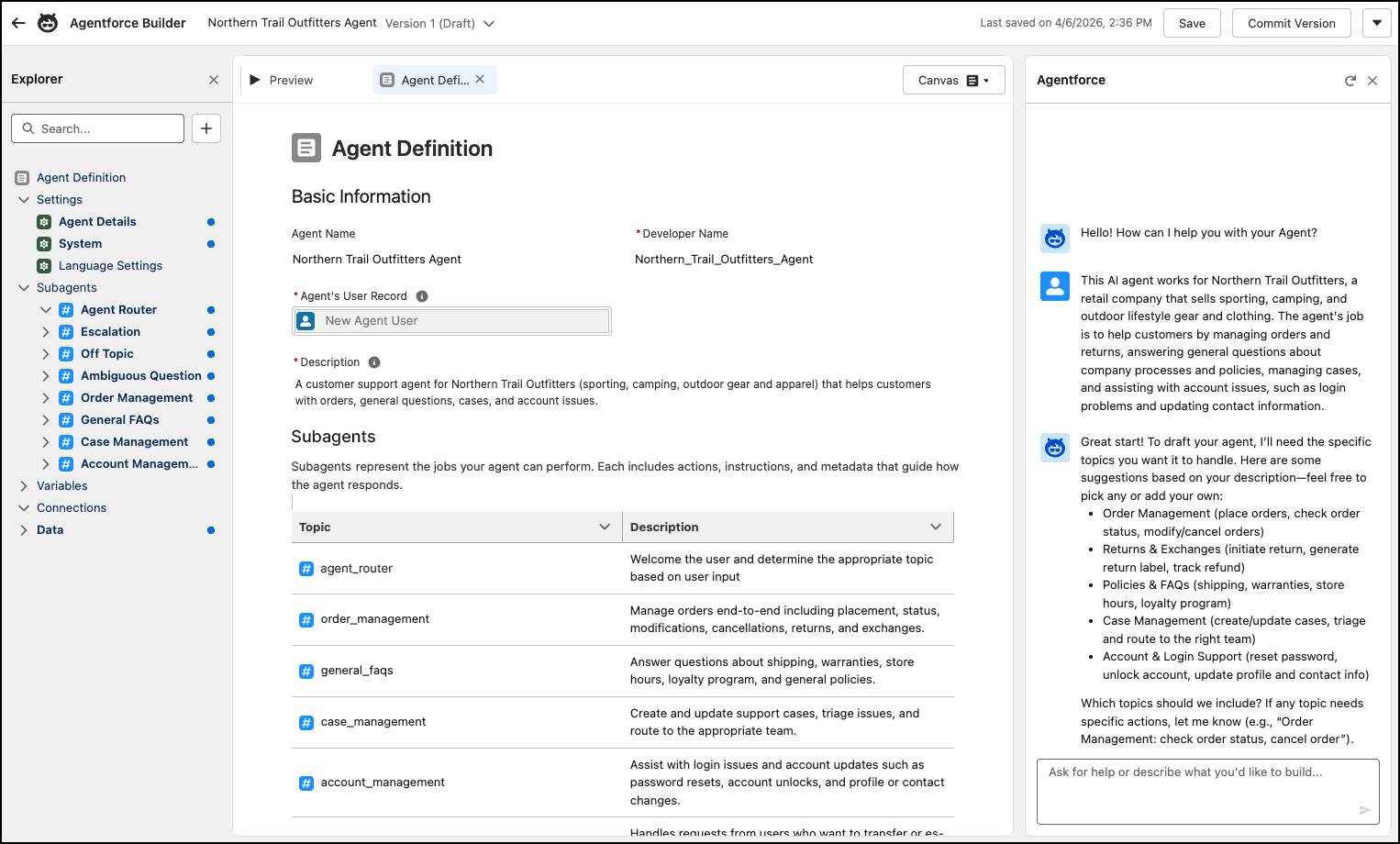
Duplicates resolved, field definitions agreed across teams, and superseded knowledge articles retired, because every one of them is an answer an agent might give.
An agent sees what its running user can see. A permission model nobody has reviewed in three years is not a foundation you want an autonomous reader standing on.
Anything touching price, credit, access or contractual language stops at a named approver. Drafting is where the value is; committing is where the exposure is.
Delivery method
Six stages that repeat every month once we are running, not a one-off project plan. Sponsors get a baseline, a named team, a response standard and a debt backlog with targets. Same method as our broader Salesforce consulting practice.
Access, administrator holders, integration users and failing jobs reviewed first, because these are live exposure rather than backlog. Anything urgent is closed in the first weeks.
The org health baseline: what is used, what is dead, what is quietly failing. Captured as numbers before anything changes, so improvement can be shown rather than claimed.
Users, permissions, data quality, reporting and the day-to-day request queue, run against a stated response standard, with every change going through the promotion path.
The debt backlog worked on a schedule: automation consolidated, permissions redesigned, unused fields retired, stale reports removed. Targeted, measured, and reported separately from the queue.
Three Salesforce releases a year reviewed against what your org uses, tested on the preview window, and reduced to a short list of decisions rather than becoming a project each time.
Architecture review before a request becomes the next five years of debt, plus the monthly readout on org health. Delivered as part of managed services, or paired with Salesforce development when the backlog needs code.

Client reviews
Verbatim reviews from SynconAI Salesforce, administration and Agentforce engagements across the United States, Australia and globally. Anonymised clients are labelled by sector.
Salesforce Select Partner23+ Salesforce certificationsDelivery across USA, Sydney & India
Simply Outstanding
“SynconAI Consulting are Simply the Best in the Business When it comes to Salesforce implementation and AI-powered solutions, SynconAI are in a league of their own. Their expertise, dedication, and ability to deliver results that truly move the needle sets them apart from every other consulting partner we've worked with. What they achieved with our Sales Cloud, Service Cloud, and custom Agentforce agent has completely transformed how we operate streamlining our pipelines and our customer service, and automating tasks that used to consume hours of our team's time. They don't just implement technology they transform businesses. If you want the best, you work with their team.”
“I had a very urgent deadline for our project reporting to be delivered and needed to build the module, dashboard and output reports in Salesforce. SynconAI were very responsive - they met with me online, responded to my emails quickly and took calls - whatever was needed to progress the work quickly. We are thrilled with the outcome and will continue to work with SynconAI in the future to continue to build our Salesforce capability and platform.”
“The team at SynconAI were fantastic, and promptly delivered on each project. They were able to guide us through every stage and made sure we were satisfied with the outcomes on multiple scopes of work.”
“They have been great and helping us transform out business by bringing what I conceptualize to life. Great at translating process/workflow needs into a solution. Been a pleasure work with and they're a critical part of our team and will be instrumental into bringing about my vision.”
“Working with SynconAI was a seamless and highly professional experience from start to finish. They took the time to deeply understand our business processes before designing and implementing a Salesforce solution tailored specifically to our operational needs. The team demonstrated strong technical expertise across Salesforce configuration, automation, integrations, reporting, and user experience design.”
Frequently asked questions
Straight answers about org health checks, Flow migration off unsupported automation, permission sets, release management, technical debt and AI readiness, across the USA and Australia.
A ticket queue closes requests. It does not decide whether a request should be built the way it was asked for. Most of the technical debt we are asked to clean up was created by well-meaning admins granting every request exactly as worded. We take ownership of platform health: the request queue is part of it, but so are permissions design, automation consolidation, release management and a debt backlog with actual targets.
Starter suits a small org with a steady, bounded request flow: it is capped at twenty admin tasks a month and answers next business day. Growth is the common starting point once automation and integrations are in scope, because the task cap is the thing most teams hit first. Enterprise is for orgs running multiple clouds, Apex, or an AI programme that needs a same-day response. You can move up mid-term without restarting the engagement.
Starter is next business day over email and Slack. Growth is 24 hours. Enterprise is under six hours on priority items, with a 24/7 global support option. Those are response commitments rather than resolution commitments: a password reset and a broken integration both get answered inside the window, but they do not take the same time to fix.
They still run, but they passed end of support on 31 December 2025, which means defects found after that date are not fixed. If your org depends on either, you are running unsupported automation today. That is usually not an emergency, but it is a migration to plan deliberately rather than discover during an incident. Salesforce provides a Migrate to Flow tool, and consolidation is the harder half of the work.
No, and be careful who tells you otherwise. Salesforce cancelled the permissions-on-profiles retirement in June 2026 and no longer enforces the Spring 2026 end-of-life date. It still recommends a permission-set-led model, and we still think that is the right direction for most orgs, but it is an improvement you schedule rather than a deadline you panic about.
Security settings and sharing, permission and profile sprawl, overlapping or duplicated automation, unused fields and objects, stale reports and dashboards, validation and duplicate rules, integration users and API consumption, storage, and licence utilisation. Salesforce Optimizer has been retired in favour of Org Check, so health reporting should point at the current tooling. We turn the findings into a prioritised, costed backlog.
Salesforce, Agentforce, Flow and Data 360 are trademarks of Salesforce, Inc. SynconAI is an independent Salesforce consulting partner: we advise on licensing and work alongside your Salesforce account executive, and we design, build and run what goes on top of it. Product screenshots are reproduced for illustrative purposes; availability varies by edition and release, and your account team and the Salesforce release notes remain authoritative.
Free architect conversation
60 seconds to brief us. A certified architect replies within one business day.
 Sales Cloud
 Service Cloud
 Field Service
 Experience Cloud
 Marketing Cloud Next
 Revenue Cloud AdvancedSalesforce CPQ
 Data 360
 Financial Services Cloud
 Nonprofit Cloud
 Health Cloud
 CRM Analytics & Einstein
 Agentforce