





Sales Cloud is the Salesforce CRM your sales team works in every day: leads, accounts, opportunities and forecasts in one place.
Salesforce Sales Cloud consulting · pipeline & forecasting · adoption · Einstein & Agentforce · certified partner
Nobody trusts the forecast. That is almost never the forecasting tool. It is that a stage means three different things to three teams.
- One definition per stage, with exit criteria a manager can point at, so pipeline review stops being a debate about whose number is right
- Fewer required fields, filled in honestly. A short form completed truthfully beats a long one completed defensively, and adoption follows the moment the CRM starts giving time back
- A forecast that reconciles, so the number in Sales Cloud is the number quoted to the board, not an input to somebody's spreadsheet
- Agentforce and Einstein switched on after the data is worth grounding on, so an agent cannot be confidently wrong in front of a customer
Almost nobody buying Sales Cloud consulting is buying a first implementation. Adoption is patchy, the forecast gets rebuilt in a spreadsheet, and someone upstairs is asking about AI on top. We fix the definitions and the data first.
Proven Success With
16+ architect-level certifications · 5.0 from 5 client reviews













Watch: the 2-minute overview
Your sales team should be selling, not maintaining Salesforce
From the first inquiry to the final handoff: how we build Sales Cloud around your sales cycle, connect it to the rest of the business, and keep improving it after go-live.
New to Sales Cloud?
What is Sales Cloud?
Reps update deals there, and managers see the pipeline and the forecast without asking anyone for a spreadsheet.
It includes Flow to automate admin work and, depending on your edition, Einstein and Agentforce AI features.
Pressure we surface early
The forecast is discussed in Salesforce and decided in a spreadsheet
What we find in almost every org: a stage meaning three different things to three teams, opportunities created the week they close, twenty required fields filled in defensively, and a board number nobody can trace to a record.

Two versions of the number
The forecast in Salesforce and the forecast quoted upstairs differ, so somebody rebuilds it by hand every month. That gap is not a reporting problem. It is the clearest measurement you have of how much the system is trusted.
Stage 3 means whatever you need it to
One team moves a deal on a demo, another on a proposal, a third when the champion replies. Conversion rates then compare things that are not comparable, and nobody can say whether the pipeline is genuinely healthier than last quarter.
Twenty required fields, twenty defensive answers
Ask a rep for information that does not help them sell and you will get information that does not help you forecast. The real deal stays in a notebook, and the CRM gets whatever is needed to make the save button work.
Three records for one customer
Duplicates from imports, form fills and manual entry quietly break account hierarchies, whitespace analysis and territory rules. Then a rep calls a customer who is already in an active deal with a colleague.
Opportunities created retrospectively
A deal appears at stage five, three days before it closes. Nothing about the sales cycle, the win rate or the pipeline coverage means anything after that, and no scoring model can learn from history that was written backwards.
The agent inherits the ambiguity
The moment an agent can answer a question about pipeline, an internal inconsistency becomes something a customer or an executive hears stated with total confidence. No amount of prompt tuning fixes a stage that means three things.
Who we work with
Four people are in this conversation, and only one of them can settle what a stage means
Sales Cloud programs stall when the work is treated as configuration. Stage definitions, what qualified means and whether a forecast may be adjusted are commercial decisions owned by the people carrying the number. Tap the group closest to you to pre-scope the conversation form at the foot of the page.

Journeys
From first touch to renewal, with one definition at every step
Every stage below is a place where a definition either exists or does not. Where it does not, the data downstream is noise. We scope phase one around the steps your own numbers say are leaking.
- CaptureA lead reaches an owner in minutes, deduplicated on the way in
- QualifyOne working definition of qualified, applied the same way by every team
- WorkStages that move on evidence, with the admin around them automated
- CommitA forecast that reconciles, so the number quoted is the number in the system
SynconAI journey spine for Sales Cloud workshops. Einstein and Agentforce assist inside these stages; nothing commits a price, a discount or a promise without a named human.
Lead capture that does not create duplicates
Web forms, events and lists landing against matching and duplicate rules, routed by territory or round robin, with a response-time clock so nobody discovers a three-day-old lead on a Friday.
A qualification bar that means something
One definition of qualified with the evidence required to claim it. It matters most at the marketing-to-sales handover, which is where most of the arguing about lead quality actually comes from.
Opportunity stages with exit criteria
Written criteria per stage, guidance shown in the record at the moment it is needed, and reporting that can finally answer where deals genuinely stall rather than where they get parked.
Forecasting that reconciles
Categories, roll-ups and adjustments designed so the number leadership quotes is the number in Salesforce. If someone still rebuilds it in a spreadsheet, we have not finished.
Territory, quota and coverage
Assignment rules and territory models that survive a reorganization, with whitespace and coverage reporting that works because the account hierarchy is not full of duplicates.
Handover to delivery and renewal
Closed won that actually starts something: the record carries what was sold and on what terms, so onboarding does not begin with a forwarded email thread and a phone call.
What we actually build
The six patterns that come up in almost every Sales Cloud engagement
These are the areas we most often rebuild, and they reflect how sales leaders and revenue operations describe the problem rather than a feature list copied from a product page. Most engagements start with two of them.
Sales process & stage design
Definitions · exit criteria · guidanceOne agreed meaning per stage with the evidence needed to move, surfaced in the record at the moment a rep needs it rather than in a document nobody opens.
Adoption & field rationalization
Fewer fields · honest answersRequired entry cut back to what someone will genuinely complete, page layouts reorganized around the sale, and the rest derived, defaulted or automated away.
Forecasting that reconciles
Categories · roll-ups · adjustmentsDesigned so the number in Sales Cloud is the number quoted to the board. If it still gets rebuilt in a spreadsheet, the job is not finished.
Lead, territory & assignment
Routing · coverage · whitespaceRules that get a lead to the right person quickly and territory models that survive a reorganization, built on an account hierarchy that is not full of duplicates.
Einstein & Agentforce
Scoring · assistance · gatesSwitched on once the history is worth learning from, scoped to what an agent may answer, with a named human on anything that commits a price or a promise.
Data quality & governance
Duplicates · validation · change controlMatching and duplicate rules, validation that guides rather than blocks, and a change process so the org does not re-accumulate the sprawl we just removed.
Scope of delivery
What we deliver on Salesforce Sales Cloud
From a written read of the org through to run-state support across Sales Cloud, Collaborative Forecasts, Flow, Agentforce, Data 360 and MuleSoft, scoped with named owners, a baseline and pilot exit criteria your sales leadership can review.
Sales Cloud programs stall when the stage definitions, the forecast rules and the required-field list stay unsettled. We scope the work with a baseline, pilot gates and change control on one roadmap your leadership team can defend.
Org read & discovery
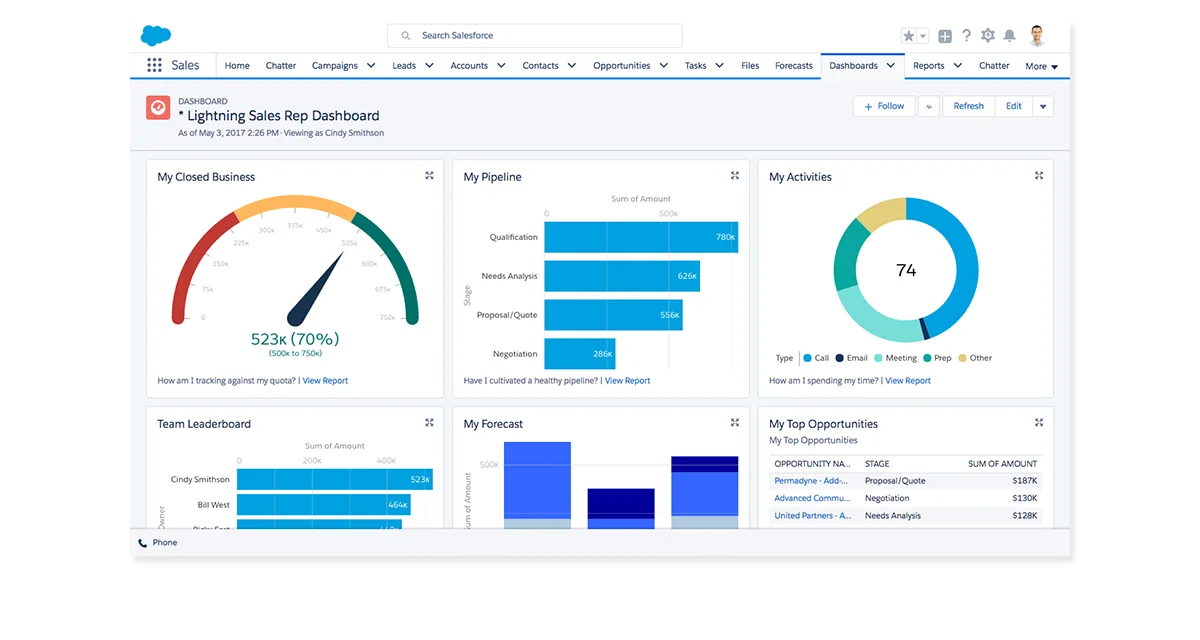
Fields populated versus fields required, automation mapped, forecast variance measured, and an honest plan check with your Salesforce account team before the backlog commits.
Process & stage design
Stage definitions, exit criteria and qualification standards agreed with the people who own the number, then built into the record rather than into a slide deck.
Integration & data quality
Marketing, finance and ERP joins via native tooling or MuleSoft, plus duplicate management and the cleanup that makes reporting and AI grounding possible. Adjacent Data 360 programs when lineage needs hardening.
Governance & change control
A change process, ownership for definitions and dashboards, and release management so the three Salesforce releases a year stay routine rather than becoming projects.
Enablement & adoption
Training built around what changed and why, for reps, managers and the admins who own configuration, rather than a single champion who leaves in six months.
Managed services
A named team for the run-state backlog, releases and reporting changes, optionally as managed services.
Einstein & Agentforce
Scoring, summarization and agent assistance switched on when the data supports it, scoped so nothing commits unsupervised. See Agentforce implementation.
Governed AI
Agentforce for sales, with a named human on anything that commits
Assistance around the deal, not an unsupervised negotiator
Accounts, opportunities and contacts stay on your data model; Agentforce is how Salesforce surfaces governed assistants on top of them. We settle the underlying definitions first, then scope agents using subagents (formerly topics), actions and instructions your sales leadership can read out loud: research and account briefing, meeting summarization, drafted follow-up, next-step suggestion and CRM update drafting. Anything touching price, discount, contractual language or a commitment to a customer stops at a named approver. Availability follows your edition and region. Details on our Agentforce consulting page.
Research & account briefing
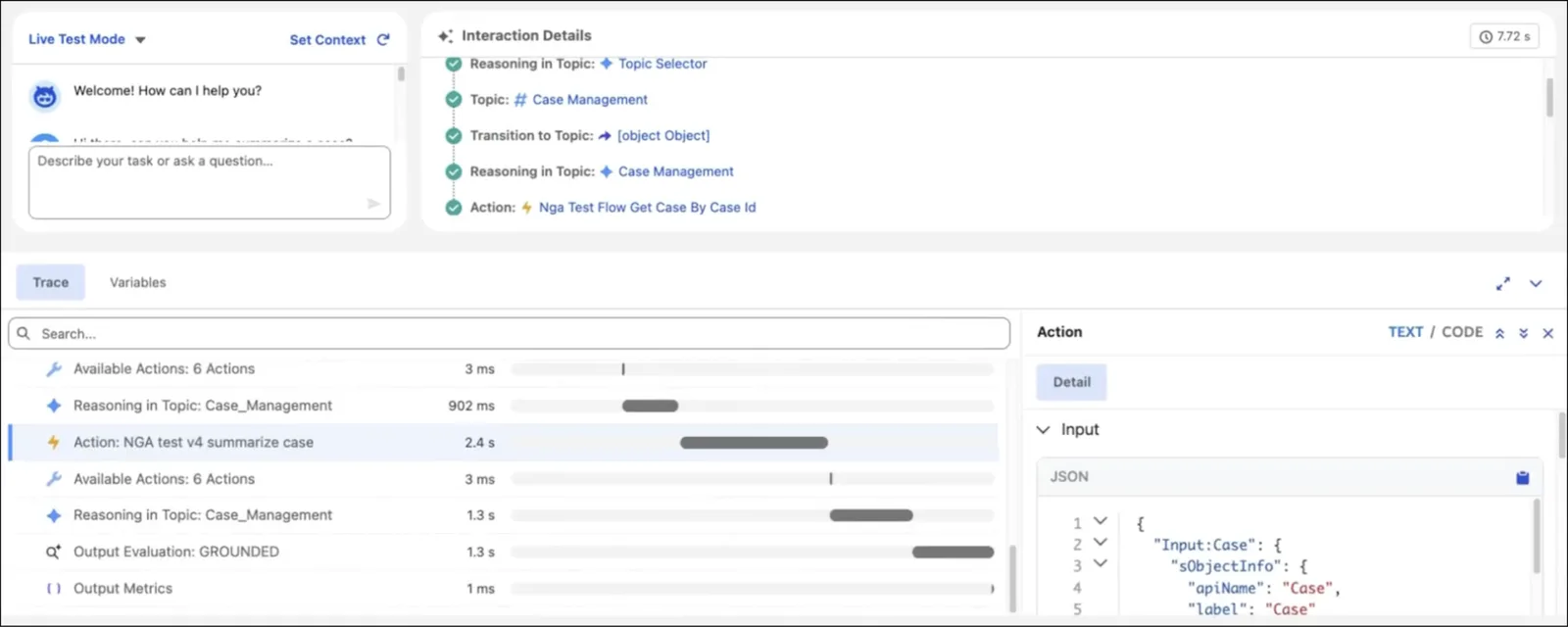
Pull together what is already known about an account before a call, from records rather than from guesswork, so preparation stops being twenty minutes of tab switching.
Summary & next step
Summarize a long opportunity history or a call, and propose the next step against the stage exit criteria you agreed, which only works because those criteria are now written down.
Draft & hand off
Draft the CRM update or the follow-up email, then stop at the approval, so a person decides what reaches the record and what reaches the customer.
The number that matters
A forecast is trustworthy when nobody rebuilds it afterwards
There is one clean test for whether a forecast is trusted, and it is not accuracy. It is whether anyone re-does it in a spreadsheet before it reaches the board. If they do, the gap between the two numbers tells you exactly how much the system is believed, and closing that gap is a definitions and adjustment-rule problem rather than a reporting one. We measure the gap first, then design forecast categories and roll-ups so the number in Salesforce is the number quoted.
Forecast variance
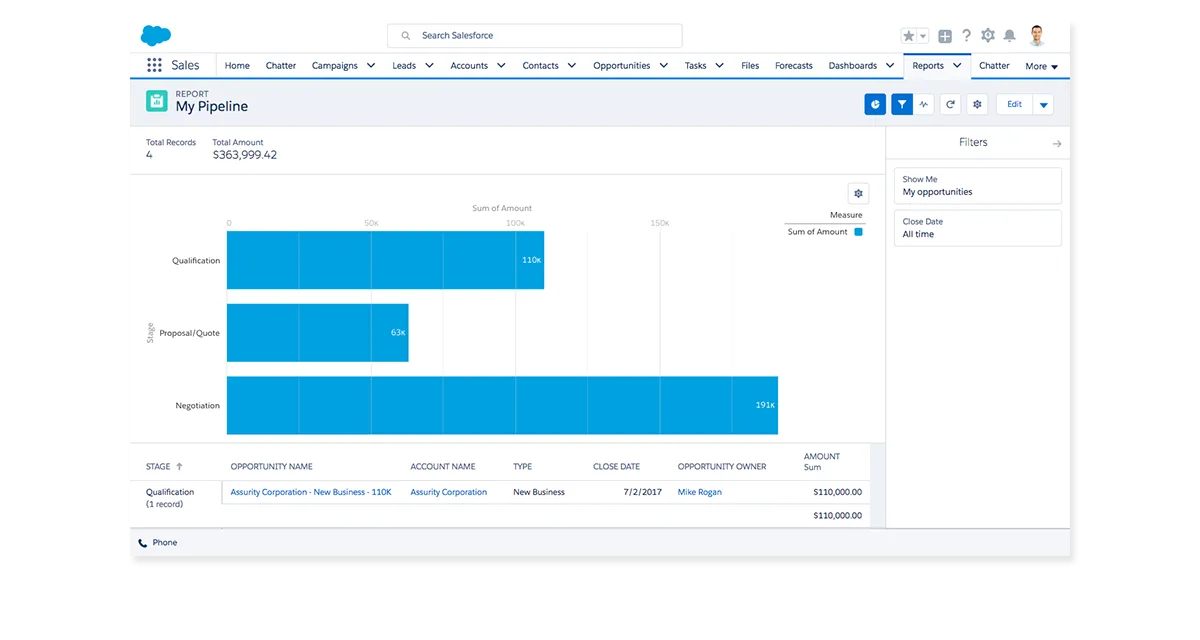
Committed versus actual by period and by team, plus how much of the number was adjusted outside Salesforce. The second figure is the one nobody reports and the one that tells you the most.
Pipeline honesty
Stage conversion, time in stage, close-date slippage and how many opportunities are created within days of closing. A high number there means the sales cycle you report is fiction.
Adoption, measured properly
Field completion on the records that drive the forecast, duplicate rates, and how many reports people actually open. Logins tell you nothing; a populated next step tells you a lot.
Delivery method
How we deliver Sales Cloud engagements
Six beats we repeat on every engagement, with transparent gates and no surprise scope, from reading the org through to running it. Sponsors get a written assessment, named owners and pilot exit criteria rather than a never-ending slide. Same method as our broader Salesforce consulting practice.
Read the org
Fields required versus populated, automation on the core objects mapped, forecast variance measured, duplicate rates scored, and time with reps watching how deals actually get worked. You keep the write-up either way.
Agree the definitions
Stage meaning, exit criteria, what qualified means and whether a forecast may be adjusted, decided with the people who own the number and written down before anything is configured.
Cut and build
Fields removed, layouts reorganized around the sale, Flow taking the admin, and duplicate rules put in, all built so an administrator can safely change it after we leave.
Test with real deals
Scenario runs against historical opportunities rather than invented clean ones, forecast reconciliation checked end to end, and agent evaluation sets where AI is in scope.
Adopt
Phased by team or segment, enablement delivered by role and built around what changed, the baseline compared honestly, and a rehearsed rollback with a named owner.
Run
Hypercare, the ongoing backlog, three releases a year absorbed as decisions, and quarterly checks that the field list and dashboard set have not started growing again. Optionally continue with managed services or ongoing Salesforce administration.

Cost and timing
What it costs and how long it takes
The review is free
A 60-minute architecture review of your Sales Cloud setup, with a written plan you keep.
A fixed-scope proposal first
Before any work starts you get a written proposal: a fixed-scope project with milestones, or a monthly plan. You approve it, or you do not.
Timing follows scope
How long it takes depends on what is in scope. The proposal states the milestones, so you see the timeline before you commit.
Client reviews
What clients say about working with our architects
Verbatim reviews from SynconAI Salesforce and Agentforce engagements across the United States, Australia and globally. Anonymized clients are labeled by sector.
Salesforce Select Partner16+ architect certificationsDelivery across USA, Sydney & India
Simply Outstanding
“SynconAI Consulting are Simply the Best in the Business When it comes to Salesforce implementation and AI-powered solutions, SynconAI are in a league of their own. Their expertise, dedication, and ability to deliver results that truly move the needle sets them apart from every other consulting partner we've worked with. What they achieved with our Sales Cloud, Service Cloud, and custom Agentforce agent has completely transformed how we operate streamlining our pipelines and our customer service, and automating tasks that used to consume hours of our team's time. They don't just implement technology they transform businesses. If you want the best, you work with their team.”
Sales CloudService CloudAgentforce
Jack BennettConsumer Goods & Retail · United States
“I had a very urgent deadline for our project reporting to be delivered and needed to build the module, dashboard and output reports in Salesforce. SynconAI were very responsive - they met with me online, responded to my emails quickly and took calls - whatever was needed to progress the work quickly. We are thrilled with the outcome and will continue to work with SynconAI in the future to continue to build our Salesforce capability and platform.”
Sales CloudService CloudNonprofit Cloud
Salesforce Managed ServicesAustraliaSalesforce Verified
“The team at SynconAI were fantastic, and promptly delivered on each project. They were able to guide us through every stage and made sure we were satisfied with the outcomes on multiple scopes of work.”
Sales CloudSlackFlowAgentforceMuleSoft
ManufacturingAustraliaSalesforce Verified
“They have been great and helping us transform out business by bringing what I conceptualize to life. Great at translating process/workflow needs into a solution. Been a pleasure work with and they're a critical part of our team and will be instrumental into bringing about my vision.”
Sales CloudFinancial Services CloudArchitectureAI
Financial ServicesUnited StatesSalesforce Verified
“Working with SynconAI was a seamless and highly professional experience from start to finish. They took the time to deeply understand our business processes before designing and implementing a Salesforce solution tailored specifically to our operational needs. The team demonstrated strong technical expertise across Salesforce configuration, automation, integrations, reporting, and user experience design.”
SalesforceExperience CloudCustom DevelopmentAutomationReporting
Salesforce ImplementationSalesforce Verified
Read next
Our insights on Sales Cloud

Field note12 min
Adoption is not a training problem
A diagnostic for low Sales Cloud adoption: the six causes behind it, the signal each one leaves in the org, and the intervention that actually fits.
SynconAI Delivery Team19 Mar 2026

Guide12 min
Opportunity stages that mean something in a forecast
Opportunity stages defined on buyer evidence: exit criteria per stage, what to do with probability percentages, close-date slippage, and changing a stage model safely.
SynconAI Architecture Team26 Mar 2026

Guide11 min
Lead management that survives the marketing handover
Lifecycle stages both departments would define the same way, the lead-to-account boundary, routing that holds under volume, and a recycling path for the leads you rejected.
SynconAI Architecture Team23 Mar 2026
Frequently asked questions
Sales Cloud, answered honestly.
Straight answers about adoption, stage definitions, forecast accuracy, Einstein scoring, Agentforce readiness, licensing and where we work, for organizations that already own Sales Cloud.
Occasionally, but usually not. When a whole team avoids a tool, the tool is asking for something that does not help them sell. Twenty required fields on an opportunity produces twenty fields filled in defensively, not twenty fields of insight. We watch how deals actually get worked, including the parts happening in notebooks and spreadsheets, then cut the form back to what someone will complete honestly and automate the rest. Adoption follows when the CRM starts giving time back rather than taking it.
Almost never from the forecasting tool. It comes from stage definitions meaning different things to different teams, close dates slipping without anyone recording why, and a number that gets adjusted in a spreadsheet after it leaves the system. Fix the definitions and the evidence required to move a stage, and the forecast starts reconciling. If the number in Salesforce and the number in the board pack differ, that gap is the actual problem and it is worth naming out loud.
That your pipeline data means one thing. An agent answering a question about pipeline reads whatever is in the records, so if a stage means three different things across three teams, the agent will pick one and say it confidently to whoever asked. That was a tolerable internal inconsistency when only humans read it. It stops being tolerable the moment an agent can answer on your behalf. We usually sequence definitions and hygiene first, then agents, and we will say so even when the AI budget is the one that is approved.
Only if your history can support it. Scoring learns from what happened before, so an org where opportunities are created late and closed retrospectively will produce a model that confidently reflects your bad data. If your history is reasonable, scoring is genuinely useful for prioritisation. We will look at the data first and tell you which of the two you have, rather than switching it on and letting the team quietly lose faith in it.
By resisting the urge to build everything. First implementations fail most often from over-configuration: every field someone asked for, every stage anyone could imagine, and a launch nobody can navigate. We start with the smallest process that supports how you actually sell, get it adopted, and add on evidence. It is less impressive in a kickoff deck and considerably more likely to be in use a year later.
Yes, and it starts with reading the org rather than proposing a rebuild. Objects and fields in use versus fields populated, automation firing on the core objects, reports people actually open, and what the sales team does when the system gets in the way. You get that assessment as a document whether or not you continue with us, and it frequently shows that less needs rebuilding than expected.
Salesforce, Sales Cloud, Einstein, Flow, Agentforce and Data 360 are trademarks of Salesforce, Inc. SynconAI is an independent certified Salesforce consulting partner and is not created by, affiliated with, or endorsed by Salesforce, Inc. Product screenshots are reproduced for illustrative purposes; the interface varies by edition and release.
Free architect conversation
Talk to an architect, not a sales rep.
60 seconds to brief us. A certified architect replies within one business day.