End of sale, 27 March 2025
Salesforce CPQ went end of sale on 27 March 2025. No new customers, and no new CPQ licences for existing ones. That is the entire scope of the change.
Salesforce CPQ support & optimisation · quoting performance · migration decision support · certified partner
Decide during 2026 and move on your own commercial calendar. Meanwhile there is real value left in the CPQ you own: most of that ninety-second quote is an unpruned catalogue and over-firing price rules. Fixing it also makes any future migration cheaper.



The correction, before anything else
A migration is much easier to sell with a countdown attached, which is why so many CPQ customers now believe they are on one. Here is what Salesforce has actually said, and what it has not. We would rather you took a decision from this list than from a deck.

Salesforce CPQ went end of sale on 27 March 2025. No new customers, and no new CPQ licences for existing ones. That is the entire scope of the change.
End of sale is not end of life. If you already run Salesforce CPQ you can keep running it, keep renewing your licences and keep raising support cases. Salesforce has published no end of life or end of support date, so anyone quoting you a deadline is quoting a deadline that does not exist.
Partner commentary estimates 2029 or later based on how Salesforce has retired products before. That is an inference, not an announcement, and it should be described as one. The sensible planning position is to decide during 2026 and move when your commercial calendar allows, not because a slide told you to panic.
The successor is Revenue Cloud Advanced, rebranded around the Spring 2026 release as Agentforce Revenue Management. It is a different product rather than an upgrade in place: a different data model, different pricing engine and a different approach to configuration.
There is no supported one-click path from Salesforce CPQ to Revenue Cloud Advanced. A move is a re-implementation of the pricing and product model, informed by what you have, and it is the moment to fix the product catalogue rather than carry twelve years of it across.
New capability lands in Revenue Cloud Advanced rather than CPQ, so this is worth deciding deliberately during 2026. It is not worth cutting over in a hurry, at quarter end, on a date somebody else chose.
What we actually fix
These reflect how deal desks and revenue operations describe the problem rather than a feature list. The thing we most often advise leaving alone is the platform itself: in a majority of health checks the CPQ is capable of what you need, and the configuration on top of it is what has drifted.
Measured before and after, because the outcome that matters is whether a rep will use the tool rather than rebuild the quote in a spreadsheet and re-key it.
Rules that fight each other separated, evaluation narrowed to when it is actually needed, and bundle depth reduced to what the business genuinely sells.
Designed around who genuinely needs to approve what, so a discount does not queue behind four people, three of whom approve everything without reading it.
Retiring products and options nobody has quoted in years. It makes every quote faster today and any future migration materially smaller.
An honest read on whether Revenue Cloud Advanced is right for you yet, with the cost of moving and the cost of waiting both written down.
A named team for new products, pricing changes and the quarterly release, because sprawl is a maintenance problem and returns the moment nobody owns it.
Scope of delivery
From a measured health check through to run-state support across Salesforce CPQ, Advanced Approvals, Salesforce Billing, the Revenue Cloud Advanced decision, and MuleSoft for the ERP join, scoped with named owners, a measured baseline, and no invented deadline.
We will happily be paid to make your existing CPQ fast again. That is precisely why you can trust us when we say a migration is the right call, and why you can trust us when we say it is not.
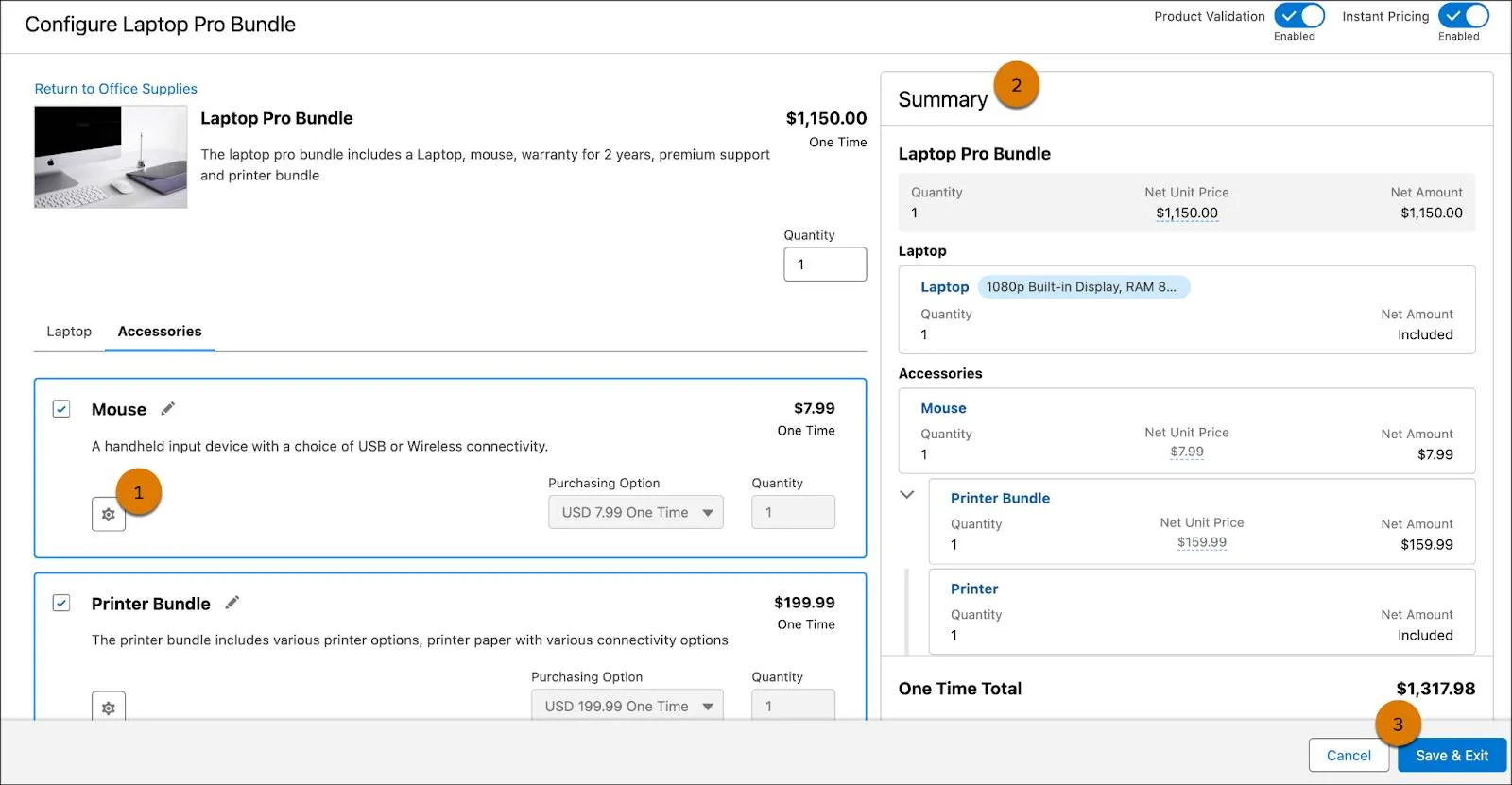
Quote cycle time, price rule count and evaluation frequency, bundle depth, approval hops and catalogue age, turned into a costed backlog you keep whether or not you engage us.
Untangling rules that conflict or over-evaluate, and flattening bundles nobody can safely change, which is the usual reason a quote takes ninety seconds to price.
Approval chains rebuilt around real authority, with discount thresholds that reflect the commercial policy rather than an accretion of past exceptions.
The join from quote to invoice, plus amendments and renewals, because a quote that prices correctly and bills wrong is not a working process. The ERP stays authoritative for the ledger.
Both costs quantified, and when the answer is to move, a Revenue Cloud Advanced re-implementation sequenced so quoting never stops.
A named team for new products, pricing changes and quarterly releases, optionally as managed services.
Retrieval, drafting and explanation, with a named human on anything that commits price, discount or contractual language. See Agentforce implementation.
The decision
Any partner who answers this before reading your estate is guessing. These are the questions we work through, in order. Three pointing the same way is usually decisive; a split means staying and cleaning up first.
SynconAI decision spine for CPQ workshops. We reach the recommendation with you rather than presenting one, because you are the only party who knows your roadmap.
Usually the catalogue and the rules. If a cleanup gets quote time back to something reps will tolerate, the pressure to move drops sharply and you have bought yourself the time to choose properly.
New capability now lands in Revenue Cloud Advanced. If your next two years involve usage-based pricing or models CPQ handles awkwardly, that is a real reason to move rather than a manufactured one.
A renewal, a reorganisation, a product launch or a systems change already in flight. Moving alongside one of those costs far less disruption than moving because a countdown appeared in a deck.
The single biggest source of migration estimate uncertainty. Until somebody reads it, any number you have been quoted for the move is a placeholder wearing a spreadsheet.
This is a product and pricing model rebuild, not a data load. It needs your commercial people, not just your admins, and if they are already committed elsewhere the answer is next year.
Frequently the honest answer is nothing, because there is no published end of life date. Naming that plainly is often what lets a team stop panicking and start planning.
Who we work with
Catalogue rationalisation is technically trivial and organisationally hard, because retiring a product means telling somebody their product is not being quoted any more. That is a commercial conversation, and it is where CPQ cleanups usually stall. Tap the group closest to you to pre-scope the conversation form.

Reference architecture
This is the diagram we bring to the first workshop. Read upwards: the product catalogue and price book determine what configuration can do, configuration determines what quoting feels like, and quoting determines whether the contract and the invoice are correct. Which is why a quoting problem is so often a catalogue problem, and why a billing dispute is so often a quoting one. We design for Salesforce Well-Architected outcomes (Trusted, Easy and Adaptable) and document how Salesforce CPQ relates to the ERP and finance systems that stay authoritative for the ledger. Every pattern depends on edition, package version and GA status; your account team and the release notes remain authoritative.
SynconAI reference topology for workshops. Aligns with Salesforce Architects diagrams language; edition and package version still govern what you can configure.
SynconAI quote-to-cash stack
Governed AI
Retrieval and drafting, with a named approver on every commitment
Products, price rules, quotes and approvals stay on your data model; Agentforce is how Salesforce surfaces governed assistants on top of them. We scope agents using topics, actions and instructions your deal desk can read out loud: finding the right product in a large catalogue, explaining how a price was arrived at, summarising what changed between quote versions, and drafting the covering note. Committing a price, approving a discount, and generating contractual language all stop at a named approver, not because the model cannot draft them, but because the cost of one confident mistake in revenue is asymmetric. Availability follows your edition and region. Details on our Agentforce consulting page.
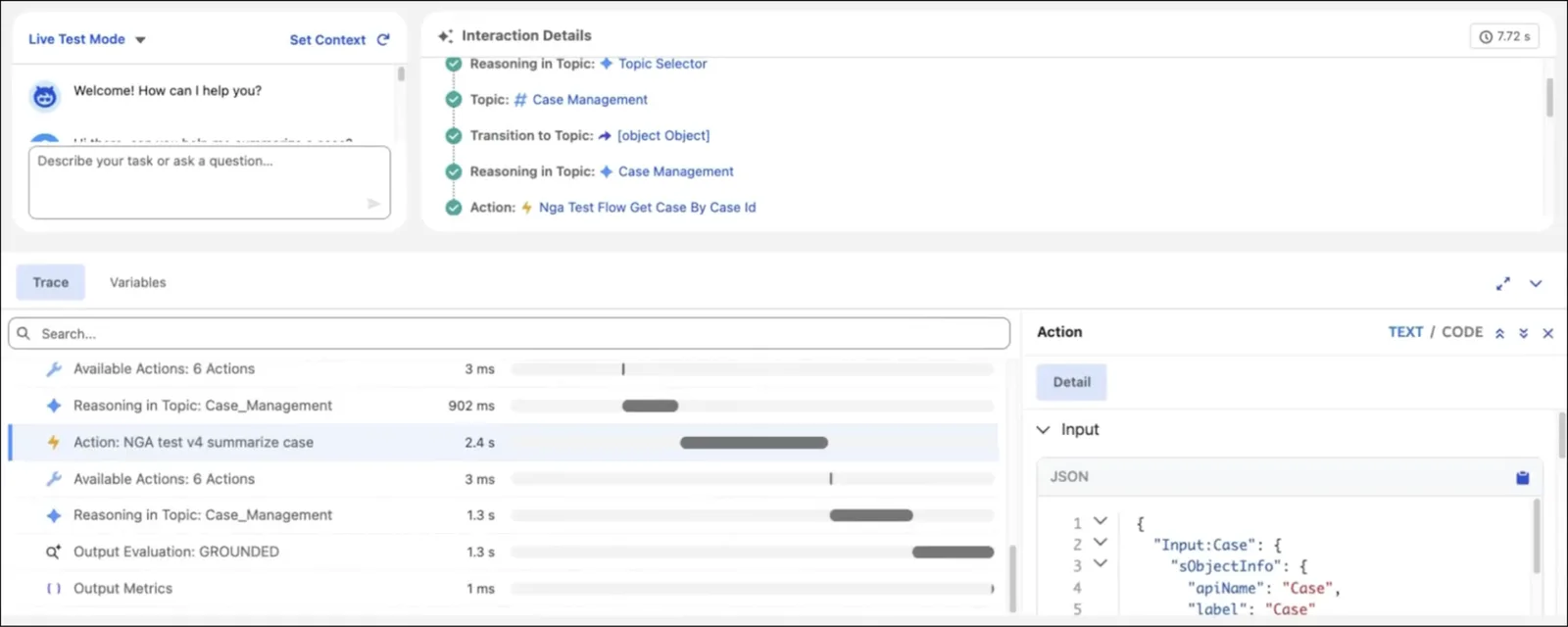
Guided retrieval across a large catalogue, which is most useful in exactly the estates where the catalogue is too big, while you are still deciding whether to prune it.
Why this number came out, which rules applied and in what order. Useful for the rep, and quietly invaluable for the person maintaining the rules.
The covering note, the renewal summary, the version comparison. Everything that commits a price, a discount or a contractual term routes to a named approver by design.
Honest scoping
This is the part that generates the most confusion, so it is worth stating plainly. Salesforce CPQ went end of sale on 27 March 2025. No new customers, and no new CPQ licences for existing ones. That is the entire scope of the change. If you already run CPQ, you can keep renewing what you hold. What you cannot do is add new CPQ licences, which matters if you are growing the sales team. We are a certified Salesforce consulting partner rather than a licence reseller, so we have no margin riding on any of this; we map what you actually need and work alongside your Salesforce account executive. Salesforce owns the contract and the pricing, and remains authoritative on entitlements.
Keep running, keep renewing your existing licences, keep raising support cases. The practical constraint is growth: adding seats is where end of sale actually bites, and it is worth planning around before you need them.
The one situation with a genuine time pressure, and it is a commercial one rather than a technical deadline. Worth raising with your account executive early rather than in the quarter you need the seats.
If you are moving, the licensing shape differs from CPQ and is worth modelling before the migration is scoped rather than after. We do that with you and your account executive, on your side of the table.
If you do not have a Salesforce account executive yet, we will make the introduction. The FAQ covers the end of sale position in full, including why we will not quote you an end of life date that has not been published.
Partnership criteria
A lot of firms currently have a strong commercial reason to tell you that Salesforce CPQ is dying. We do not: we are equally happy being paid to make your existing CPQ fast again as we are to run a migration, and that is exactly what makes the recommendation worth something. Learn more about our Salesforce consulting partner approach.
No end of life date has been published, so we do not quote one. Partner estimates of 2029 or later are inferences and we describe them as inferences.
A decision needs two numbers. Most proposals only contain one, which is how a migration comes to look inevitable rather than optional.
Time to price on your largest real quotes, rule count and evaluation, bundle depth, catalogue age. You keep the assessment whether or not you engage us.
The cheapest performance work available and the only work here that cannot be wasted, because it pays whether you stay or move.
Hubs in Delaware, Sydney and Hyderabad, a named team on your business hours, and travel onsite for model workshops, go-lives and executive sessions.
The same architects for new products, pricing changes and package upgrades, so the model does not quietly drift back into the sprawl we just removed.
Delivery method
Six beats we repeat on every engagement, with transparent gates and no surprise scope. Note that the decision sits at step four, not step one: recommending a direction before measuring the estate is how a migration gets sold rather than chosen. Same method as our broader Salesforce consulting practice.
Quote cycle time on your largest real quotes, active price rules and evaluation frequency, bundle depth, approval hops, catalogue age, and the custom Apex actually read. You keep the write-up either way.
Fix what makes reps route around the tool: conflicting price rules, bundles nobody can safely change, and approval chains that queue a discount behind people who never read it.
Retire the products, options and rules nobody has needed in years. The cheapest performance work available, and the only work here that pays off whichever direction you eventually choose.
Stay on CPQ, or move to Revenue Cloud Advanced, with the cost of moving and the cost of waiting both quantified and both presented. The recommendation comes with its assumptions attached.
If moving: a re-implementation plan on your commercial calendar, sequenced by segment or product line, with both systems in parallel and a rollback written before any cutover date is promised.
Ongoing support for new products, pricing changes and package upgrades, so quoting stays fast and the catalogue does not re-accumulate. Optionally continue with managed services or ongoing Salesforce administration.

Client reviews
Verbatim reviews from SynconAI Salesforce and Agentforce engagements across the United States, Australia and globally. Anonymised clients are labelled by sector.
Salesforce Select Partner16+ architect certificationsDelivery across USA, Sydney & India
Simply Outstanding
“SynconAI Consulting are Simply the Best in the Business When it comes to Salesforce implementation and AI-powered solutions, SynconAI are in a league of their own. Their expertise, dedication, and ability to deliver results that truly move the needle sets them apart from every other consulting partner we've worked with. What they achieved with our Sales Cloud, Service Cloud, and custom Agentforce agent has completely transformed how we operate streamlining our pipelines and our customer service, and automating tasks that used to consume hours of our team's time. They don't just implement technology they transform businesses. If you want the best, you work with their team.”
“I had a very urgent deadline for our project reporting to be delivered and needed to build the module, dashboard and output reports in Salesforce. SynconAI were very responsive - they met with me online, responded to my emails quickly and took calls - whatever was needed to progress the work quickly. We are thrilled with the outcome and will continue to work with SynconAI in the future to continue to build our Salesforce capability and platform.”
“The team at SynconAI were fantastic, and promptly delivered on each project. They were able to guide us through every stage and made sure we were satisfied with the outcomes on multiple scopes of work.”
“They have been great and helping us transform out business by bringing what I conceptualize to life. Great at translating process/workflow needs into a solution. Been a pleasure work with and they're a critical part of our team and will be instrumental into bringing about my vision.”
“Working with SynconAI was a seamless and highly professional experience from start to finish. They took the time to deeply understand our business processes before designing and implementing a Salesforce solution tailored specifically to our operational needs. The team demonstrated strong technical expertise across Salesforce configuration, automation, integrations, reporting, and user experience design.”
Frequently asked questions
Straight answers about the 27 March 2025 end of sale, why there is no end of life date, quoting performance, the Revenue Cloud Advanced decision, licensing and where we work.
It is end of sale, not end of life, and the difference matters commercially. Salesforce put CPQ into end of sale on 27 March 2025: no new customers, and no new CPQ licences for existing ones. If you already run it you can keep running it, keep renewing, and keep raising support cases. Salesforce has published no end of life or end of support date at all. Anyone giving you a deadline is giving you a number Salesforce has not published, usually because a migration is easier to sell with a countdown attached.
Nobody outside Salesforce knows. Partner commentary estimates 2029 or later, inferred from how Salesforce has retired products before, and we will describe that as the inference it is rather than dress it up as a date. What we would say with confidence is that end of sale means the investment has moved: new capability lands in Revenue Cloud Advanced, not in CPQ. That is a reason to plan deliberately during 2026, not a reason to cut over in a hurry.
No. Revenue Cloud Advanced, rebranded around the Spring 2026 release as Agentforce Revenue Management, is a different product rather than an upgrade in place. Different data model, different pricing engine, a different approach to configuration. That is why there is no supported one-click migration: moving is a re-implementation of your product and pricing model, informed by what you already have but not a copy of it.
It depends on two things, and we will tell you which applies. If your CPQ works and your roadmap does not need the new capability, waiting is legitimate and you should spend the time cleaning the catalogue instead, which makes any future move cheaper. If you are hitting limits, planning significant new revenue models, or your commercial calendar has a natural window, then decide during 2026 and move on your terms. What we will not do is manufacture urgency to bring a project forward.
Usually, yes, and it is normally cheaper than people expect. The common causes are a product catalogue that has never been pruned, price rules that evaluate far more often than they need to, and bundle structures several levels deeper than the business requires. We measure quote time before and after, because the outcome that matters is whether a rep will use the tool rather than build the quote in a spreadsheet and re-key it.
Yes, and it starts with reading what exists rather than proposing a rebuild. Product catalogue, price rules, bundles, approval chains and any custom Apex around them, plus what the sales team actually does when the tool gets in the way, which is usually the most informative part. You get that assessment as a document whether or not you continue with us.
Salesforce, Salesforce CPQ, Revenue Cloud, Agentforce and Data 360 are trademarks of Salesforce, Inc. SynconAI is an independent certified Salesforce consulting partner and is not created by, affiliated with, or endorsed by Salesforce, Inc. Product availability and retirement timelines are set by Salesforce; the Salesforce release notes and your account team remain authoritative. Screenshots are reproduced for illustrative purposes.
Free architect conversation
60 seconds to brief us. A certified architect replies within one business day.
 Sales Cloud
 Service Cloud
 Field Service
 Experience Cloud
 Marketing Cloud Next
 Revenue Cloud AdvancedSalesforce CPQ
 Data 360
 Financial Services Cloud
 Nonprofit Cloud
 Health Cloud
 CRM Analytics & Einstein
 Agentforce