Channel silos
Store, web, marketplace, and care each hold a different shopper picture, then campaigns and agents amplify the mismatch at purchase and return.
Retail & consumer goods · omnichannel · CPG · DTC · brownfield rescue
Omnichannel retailers and CPG brands lose margin when loyalty, service, and stock truth live in different tools. SynconAI designs Salesforce as the engagement and orchestration layer with honest POS, OMS, and ERP boundaries, edition honesty, and runbooks your COO can defend.
Pressure we surface early
Failure modes we surface early: e-commerce and store channels disagreeing on the shopper, loyalty engines that never see OMS inventory, and service queues that cannot share case context. Agents inventing refunds without a human gate make it worse.

Store, web, marketplace, and care each hold a different shopper picture, then campaigns and agents amplify the mismatch at purchase and return.
Points, tiers, and offers fire without inventory freshness SLAs, so agents promise what the warehouse cannot ship and finance cannot reconcile.
Contact centre and store associates cannot see the same order, return, or loyalty state, so SLA clocks reset and shoppers repeat their story.
Trade calendars and funding live in spreadsheets while retail-account planning sits in CRM, so field execution and HQ reporting never share one plan of record.
Segments we design for
A multi-banner retailer, a CPG brand, a DTC brand, and a rescue program do not share one backlog template. Scoreboards differ: omnichannel conversion and loyalty, retail execution and trade ROI, cart-to-fulfill cycle time, and spine honesty after go-live. Tap a segment to pre-scope the conversation form.

How we read the platform shift
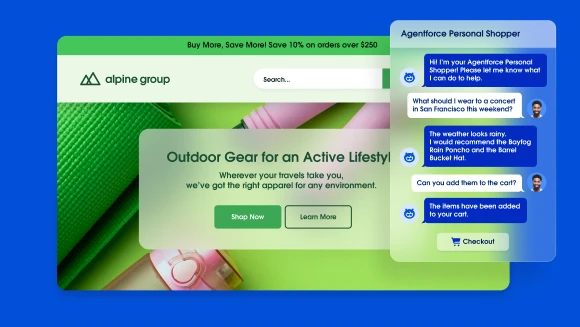
Executives increasingly expect AI agents inside the CRM suite, not only copilots beside it. For retail and consumer goods, that means Agentforce assisting service intake triage, knowledge retrieval, order-status prep, loyalty FAQ for agents, and internal SOP copilots on live Service Cloud and Loyalty records. SynconAI scopes topics and actions after process ownership is clear, and keeps human approval on pricing, promotions that create contractual commitments, refunds beyond policy, and personalised product advice that implies obligation. See our Agentforce services for how we design governed copilots that ops leaders can run.
Week one discovery
Before configuration starts, we pressure-test shopper and retail-account ownership, POS and OMS system-of-record boundaries, and the pilot metrics retail and CPG leaders will actually steer on. Delivery phases come later; these answers decide whether a pilot is honest.
Which team owns shopper identity across store, web, and loyalty, retail-account planning for CPG, and RACI across marketing, commerce, care, and field before any automation scales?
Which stock, order, fulfillment, and financial posting facts remain authoritative in POS, OMS, ERP, and warehouse systems of record, and which engagement facts live in Salesforce only?
Which discover-to-purchase conversion, fulfill cycle time, loyalty redemption accuracy, or retail-execution metrics must move for a defined cohort before we expand banners, brands, or regions?
Proof for retail, commerce, and CPG leaders
Care and loyalty operations
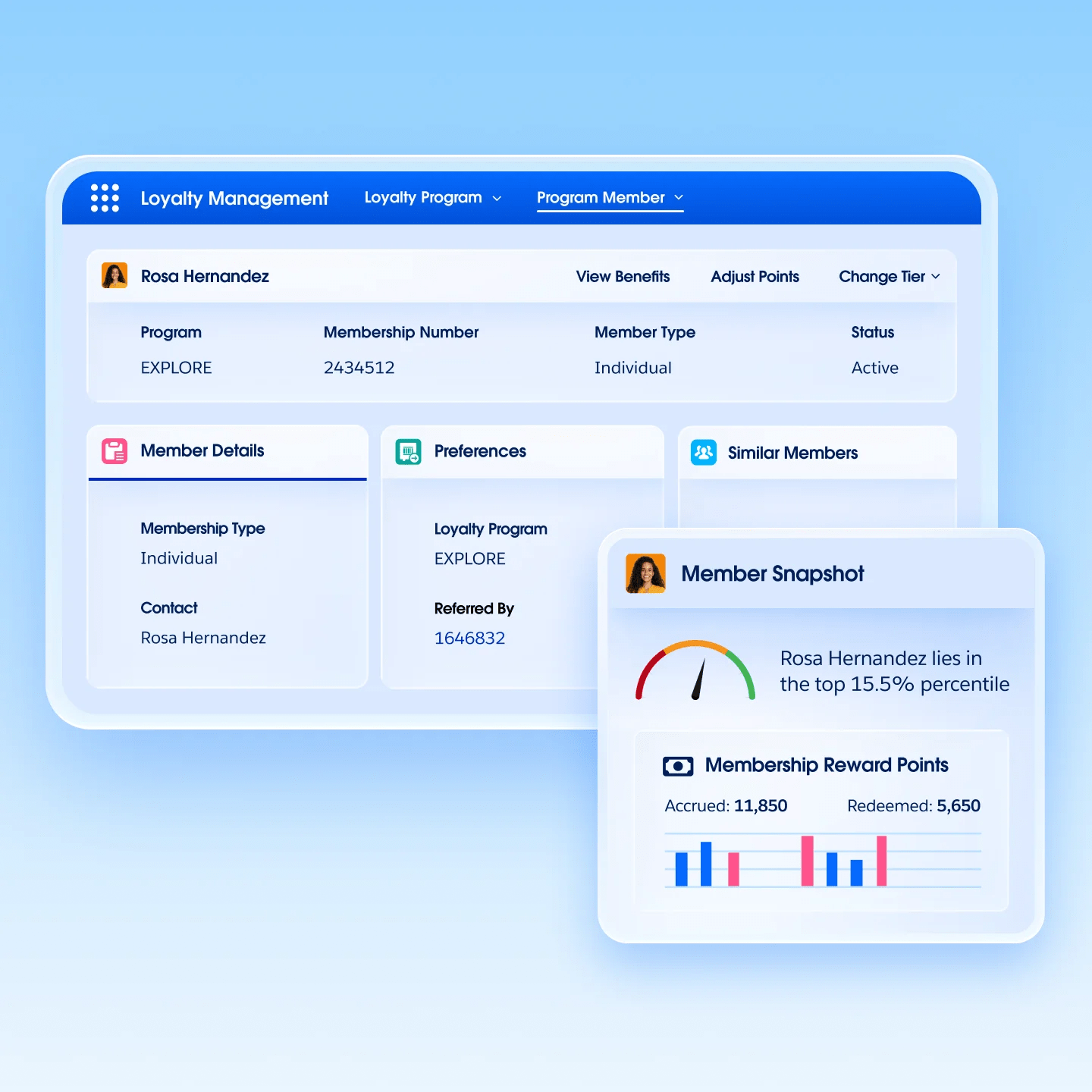
Day-to-day care and loyalty work runs on cases, knowledge, entitlements, order status, and loyalty balances, not on a slide that claims CRM replaces inventory. We implement Service Cloud and Loyalty Management as the coordination surface, with integration contracts that keep POS, OMS, ERP, and inventory authoritative for stock, fulfillment, and financial posting. That honesty is what keeps fulfill and loyalty reporting credible after go-live.
When associates and contact-centre agents share one shopper graph, Service Cloud becomes the contract-aware care surface: order status, return adjacency, loyalty entitlements, and completion flows that still reconcile to OMS and inventory when those remain systems of record.
What we actually build
These are the operational areas we most often wire with integration contracts and lifecycle clarity before configuration scales. They reflect how retail COOs, commerce leads, and CPG account teams describe work along discover → purchase → fulfill → loyalty, not a licence checklist pasted from a product page.
Marketing Cloud and Data 360 patterns for shopper and retail-account engagement: audiences, journeys, and offer eligibility that share one identity story before cart or loyalty commits.
Commerce Cloud and Consumer Goods Cloud for cart, checkout, and retail-account order capture with clean handoff into OMS and ERP without losing order context.
Order, ship, and return status on the shopper graph with written contracts into POS, OMS, and inventory. CRM orchestrates engagement; stock and fulfillment remain systems of record unless your architecture says otherwise.
Service Cloud intake across store associate and contact-centre queues, entitlements, and escalation with identity rules in place before Agentforce topics touch live queues.
Loyalty Management with Marketing and Service so tiers, points, and save offers share the same shopper graph care already trusts, not a separate spreadsheet of invented balances.
MuleSoft or native integration patterns plus Data 360 identity where purchase and loyalty depend on governed profiles your architects can explain.
Scope of delivery
From operating-model clarity to run-state operations on Consumer Goods Cloud, Commerce Cloud, Marketing Cloud, Service Cloud, Loyalty Management, Data 360, and MuleSoft, scoped with RACI, integration SLAs, and pilot exit criteria your COO can review.
Retail programs stall when CRM, POS and OMS boundaries, and discover-to-loyalty paths stay vague. We scope Salesforce with integration SLAs, pilot gates, and change control on one roadmap your steering forum can defend.

Discover-to-loyalty flows, object model, and honest edition checks with your account executive before backlog commits.
Shopper, retail-account, order, and care patterns aligned to how you sell in store, on web, and through trade, not a generic product catalogue alone.
POS, OMS, ERP, and inventory feeds via MuleSoft or native patterns; identity in Data 360 where your architecture supports it. Adjacent Data 360 programs when lineage needs hardening.
Access reviews, retention, and change control so Salesforce stays defensible after go-live, including Agentforce topic ownership.
Role-based training for merchandisers, care leads, store coordinators, CPG field teams, and admins who own configuration, not one-off superusers.
Run-state backlog for releases, integrations, and analytics refresh, optionally with managed services.
Operations copilots on CRM records: intake, knowledge, order-status prep, and summary, scoped with human approval on price, refunds, and offers. See Agentforce services.
Partnership criteria
Global SIs sell transformation narratives. Boutiques sell speed. SynconAI sells architect-led discover-to-loyalty on Salesforce with honest POS, OMS, ERP, and inventory boundaries, edition-aware backlog, and runbooks ops leaders can operate after hypercare. Learn more about our Salesforce consulting partner approach.
We respect point of sale, order management, ERP, and warehouse systems of record while making CRM the engagement, care, and loyalty workflow system executives actually use.
The United States and Australia hubs with shared playbooks for omnichannel retail, CPG brands, e-commerce and DTC, and rescue programs.
Time-boxed pilots with measurable fulfill cycle time, care SLA, and loyalty redemption metrics, not open-ended transformation language.
We tie backlog to what your tenant can run today, including Consumer Goods Cloud, Commerce, Marketing, Service, Loyalty, and Data 360 entitlements.
RACI for schema, integration, and Agentforce topic changes your second line can defend in an audit or board review.
Same architects for backlog, release alignment, and integration monitoring, not a handoff to a generic queue that never saw discovery.
Honest scoping
SynconAI does not sell licences. We do stop steering decks from assuming entitlements your tenant cannot run. Your account executive and contract stay authoritative; we translate requirements into phased delivery finance and operations can approve without rework mid-build.
Core shopper and care data models, a defined discover or purchase path, and portal or case foundations when phase one is CRM discipline, not every automation on the roadmap.
Extra automation headroom, storage, and AI features where your risk review allows. We match sandbox strategy and regression scope to how fast your release train actually moves.
When Flex Credits, Data 360, Slack, or analytics entitlements are in contract, we sequence agents and production topics after grounding and governance, not before offer and refund approval rules are signed.
Adjacent needs such as lifecycle nurture, Slack coordination for care and store teams, or deeper Data 360 work share the same change-control RACI so retail CRM does not become a silo.
Before programs scale
CRM becomes a liability when shopper identity, order rules, and integration contracts are vague. Objections we hear often: "We already have OMS," "CRM tried to replace inventory before," "AI will invent refunds." We partner with commerce, care, and IT on data governance and SLAs so Agentforce stays in operations scope, not unsupervised offer experiments.

Account and contact resolution before portals, agents, or loyalty plays touch production data.
Commerce, care, and finance aligned on what each channel may quote, refund, and commit before automation scales.
Contracts, retries, observability, and owner RACI so outages do not become silent data drift between purchase and fulfill.
Evaluation sets, sampling, and steering readouts before additional banners, brands, or regions go live.
Guardrails so copilots support intake and documentation hygiene, not off-record shopper commitments outside CRM.
Permission sets, sharing, and guarded flows so flows and agents cannot read or write outside approved scope.
Need a governed data layer first? We deliver Data 360 programs alongside retail CRM when identity and lineage need hardening.
Discuss readinessJourneys
Omnichannel retail, CPG, DTC and rescue programs share one requirement: a single shopper and retail-account graph, with written rules for what stays in POS, OMS and inventory. We scope phase one to your segment rather than shipping a template.
SynconAI journey spine for retail workshops. Agentforce assists ops inside these stages; it does not invent unsupervised price or refund decisions.
Shopper engagement, merchandising, and cart hygiene on Marketing and Commerce Cloud before inventory promises harden and backlog fights the warehouse.
Order capture and status without forcing CRM to own stock or financial posting when POS, OMS, and ERP remain systems of record.
Service Cloud case intake, entitlement clocks, and knowledge for store and digital care lines that live or die on throughput and first-contact resolution.
Retail-account planning, trade-adjacent workflows, and field execution on Consumer Goods Cloud. Context on the visit matters: account history, planogram adjacency, and contract entitlements, not only a task subject.
Loyalty Management with Marketing and Service views that reflect purchase and care status so redemption and save offers are not fought over mismatched balances.
Shared shopper identity, order visibility, and care entitlements across banners and marketplaces tied to inventory and finance signals your ops teams already trust.
Reference architecture
CIO and enterprise architects need one diagram that shows where Salesforce ends and POS, OMS, ERP, and inventory begin. We design for Salesforce Well-Architected outcomes: Trusted, Easy, and Adaptable. We document how Salesforce objects, Data 360 (Data Cloud), and MuleSoft-led integrations relate to your commerce catalog, order management, warehouse, and ERP repositories so finance and IT share the same contract language. Every pattern depends on edition, region, and GA status; your account executive and release notes remain authoritative.
SynconAI reference topology for workshops. Aligns with Salesforce Architects diagrams language; edition and region still govern what you can configure.
SynconAI retail topology
Governed AI
Operations assistance, not unsupervised offers or refunds
Accounts, cases, orders, and loyalty history still live on your CRM data model; Agentforce is how Salesforce surfaces governed assistants on top. We redesign the workflow first, then scope agents using topics, actions, and instructions your risk committee can name: care intake triage, knowledge retrieval, order-status prep, loyalty FAQ for agents, case summarisation, and internal SOP copilots. Model outputs that affect price, promotions, refunds, or contractual language require human validation before they reach a shopper. Purchase decisions should follow capabilities that are GA in your edition and region. Details on our Agentforce services page.
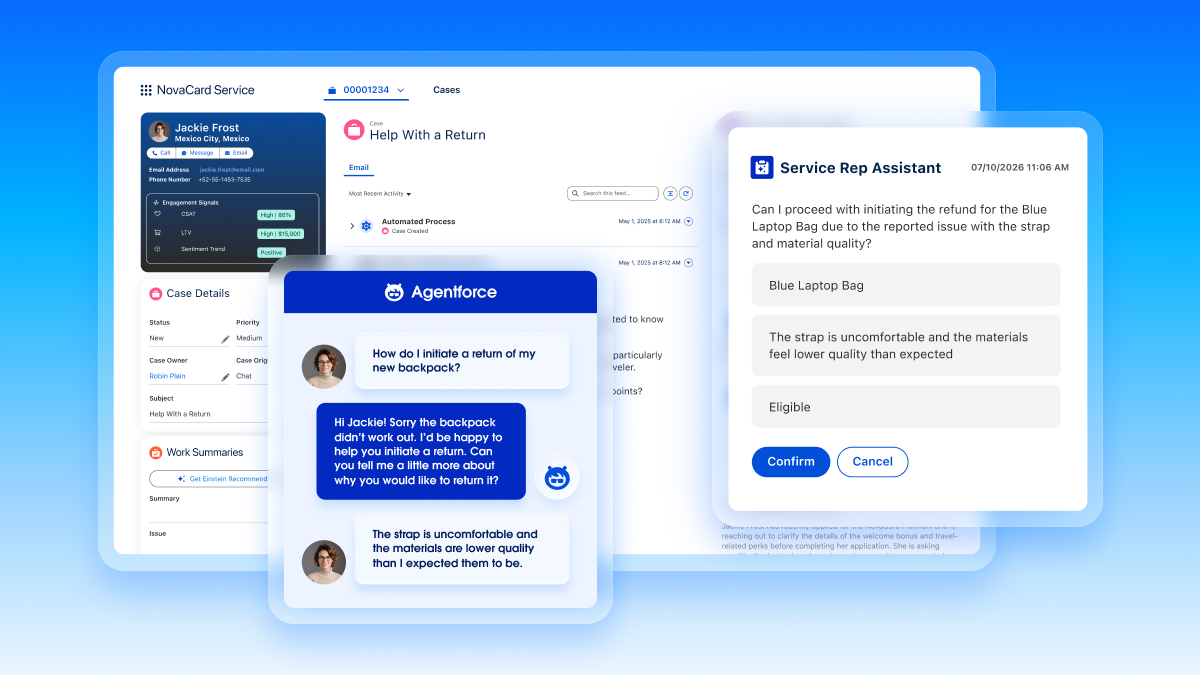
Route and classify inbound care and loyalty requests with topics and actions that never commit price or refunds without a named approver.
Retrieve approved SOPs and summarise case or order context for agents and associates who need throughput, not guesswork.
Support order-status prep and loyalty FAQ for Service Cloud objects your teams already own, still reconciling stock truth to POS and OMS.
Evidence for steering forums
COOs and care leaders need discover-to-purchase signals, fulfill cycle visibility, loyalty redemption accuracy, and service performance fed by governed datasets and documented refresh SLAs. We do not invent conversion or margin metrics from CRM alone when POS, OMS, and ERP remain the commercial backbone.
Journey, cart, and exception queues so marketing and commerce stop arguing from different spreadsheets and conflicting status views.
Backlog, clock breaches, and channel mix so store and contact-centre leads can tune staffing and self-service deflection.
Latency, error budgets, and replay discipline for POS, OMS, ERP, and inventory interfaces, surfaced the way operations already reads service dashboards.
Governance & operating model
Enterprise buyers ask what happens when the partner leaves. We document RACI across marketing, commerce, care, loyalty, finance and IT — including what stays in POS, OMS and inventory versus Salesforce. Scoped for audit, not checkbox theatre.
Promotion paths, regression suites, and blackout windows that respect peak retail calendars and loyalty campaign freezes.
Evidence packs for privileged roles, integration users, and break-glass accounts your auditors can follow.
Owners for prompts, tools, evaluation sets, and rollback when quality drifts in production.
Pair retail CRM with a governed data program when identity and lineage need hardening before scale. See Data 360 services.
Plan governance workshopDelivery method
Six beats we repeat on every engagement: transparent gates, no surprise scope, from discovery through operate. Transformation leads get a roadmap, RACI, and pilot exit criteria, not a never-ending slide. Same method as our broader Salesforce consulting practice.
Discover-to-loyalty flows, POS and OMS inventory, loyalty gaps, and pilot success measures with commerce, care, and finance in the room.
Object model, shopper path, inventory contracts, and loyalty journeys signed off by business and IT before build starts.
Sandbox-first Commerce, Service, Loyalty, Consumer Goods Cloud, and integrations with reusable test assets your admins can extend after go-live.
Scenario suites, UAT with operations, and sampling plans before production traffic hits live queues or store associates.
Phased banners, brands, or channels; monitoring hooks live; rollback rehearsed with a named command centre.
Hypercare, release alignment, integration monitoring reviews, and backlog for analytics and Agentforce updates. Optionally continue with managed services.

Client reviews
Anonymised outcomes from governed rcg Salesforce and Agentforce programs with SynconAI.
Salesforce Select Partner16+ architect certificationsDelivery across USA, Sydney & India
Omnichannel retail service on Salesforce
“SynconAI kept POS and OMS as systems of record and still gave our care team one shopper graph. Loyalty and returns stops fighting stock truth.”
CPG field and account execution
“Consumer Goods Cloud finally matched how our field team works with retail accounts. Integration contracts stayed boring after go-live.”
Governed Agentforce for retail ops
“Agentforce stayed limited to ops assistance with human approval on refunds and offers. Risk signed off without slowing the pilot.”
Frequently asked questions
Straight answers about Salesforce for omnichannel retail, CPG brands, e-commerce and DTC, and brownfield rescue across the USA and Australia.
Salesforce is the engagement and commercial orchestration layer across discover, purchase, fulfill, and loyalty: Consumer Goods Cloud for account and field execution, Commerce and Marketing for shopper journeys, Service Cloud for care and returns adjacency, Loyalty Management for rewards, and Data 360 plus MuleSoft when identity and inventory or order feeds must stay governed. POS, OMS, ERP, and warehouse systems usually remain systems of record unless your architecture explicitly consolidates those domains.
Usually no. Most retailers and CPG brands keep point of sale, order management, inventory, and ERP as systems of record. Salesforce owns the shopper and retail-account graph, campaign and loyalty engagement, service cases, and many B2B account workflows. Integration contracts keep order, stock, and fulfillment status honest without pretending CRM is the inventory ledger.
Retail chains emphasise omnichannel shopper journeys, store and e-commerce service, loyalty, and returns. Consumer goods brands emphasise retail-account planning, trade promotion adjacency, field execution, and distributor or broker motions. We keep one platform spine and vary objects, journeys, and reporting to the operating model.
We scope Agentforce to operations assistance: service intake triage, knowledge retrieval, order status prep, loyalty FAQ for agents, and internal SOP copilots. Pricing, promotions that create contractual commitments, refunds beyond policy, and personalised product advice that implies obligation stay under human approval.
POS and e-commerce platforms, OMS and inventory, ERP and finance, loyalty engines or card hosts, CDP adjacency, telephony or CCaaS, and sometimes warehouse or 3PL feeds. We prefer MuleSoft or native patterns with freshness SLAs, retries, and observability.
Topics and actions are limited to approved knowledge and operational steps. Outputs that affect price, promotion eligibility, refund amounts, or contractual language require human confirmation. We separate client-facing agents from internal copilots and log where retail risk requires it.
Phase one usually covers a defined shopper or retail-account path, service or loyalty surface if in scope, identity rules for Data 360, and the first POS or OMS integration contracts. We exit with pilot criteria, RACI, and a roadmap rather than a never-ending transformation slide.
Yes. SynconAI delivers architect-led Salesforce programs for retail and consumer goods organisations across the USA and Australia, with the same governance method and local commercial follow-up.
Free architect conversation
60 seconds to brief us. A certified architect replies within one business day.
 Sales Cloud
 Service Cloud
 Field Service
 Experience Cloud
 Marketing Cloud Next
 Revenue Cloud AdvancedSalesforce CPQ
 Data 360
 Financial Services Cloud
 Nonprofit Cloud
 Health Cloud
 CRM Analytics & Einstein
 Agentforce