Revenue Cloud Advanced · also sold as Agentforce Revenue Management · product & pricing model · CPQ migration · certified partner

Moving to Revenue Cloud Advanced is a rebuild, not a data load. That is the good news. It is your one chance to leave a decade of catalogue behind.

  • Two names, one product. Revenue Cloud Advanced was rebranded around the Spring 2026 release as Agentforce Revenue Management, and you will meet both in decks and contracts
  • Not an upgrade in place. Different data model, different pricing engine, a different approach to configuration, and no supported one-click migration from Salesforce CPQ
  • You are not on a countdown. CPQ went end of sale on 27 March 2025, but no end of life date has been published, so adopting this is a decision on merit and on your calendar
  • Amendments are what break implementations. Everyone tests new business thoroughly and mid-term change lightly, and then a real customer upgrades, adds seats in another currency and co-terms

Most catalogues carry ten years of products and price rules nobody has quoted in years. Each one slows quoting and makes change riskier. We write the commercial model down before configuring anything, and decide deliberately what follows you across.

  • No deadline we cannot evidence
  • Certified Salesforce partner, not a reseller
  • Amendments tested on your real deals

Proven Success With

Before anything else

What Revenue Cloud Advanced actually is, including the name confusion

Buyers arrive at this page having read three descriptions that do not quite agree, usually because the product was renamed mid-cycle and because a migration is easier to sell with a deadline attached. Here is the position we would want if we were on your side of the table.

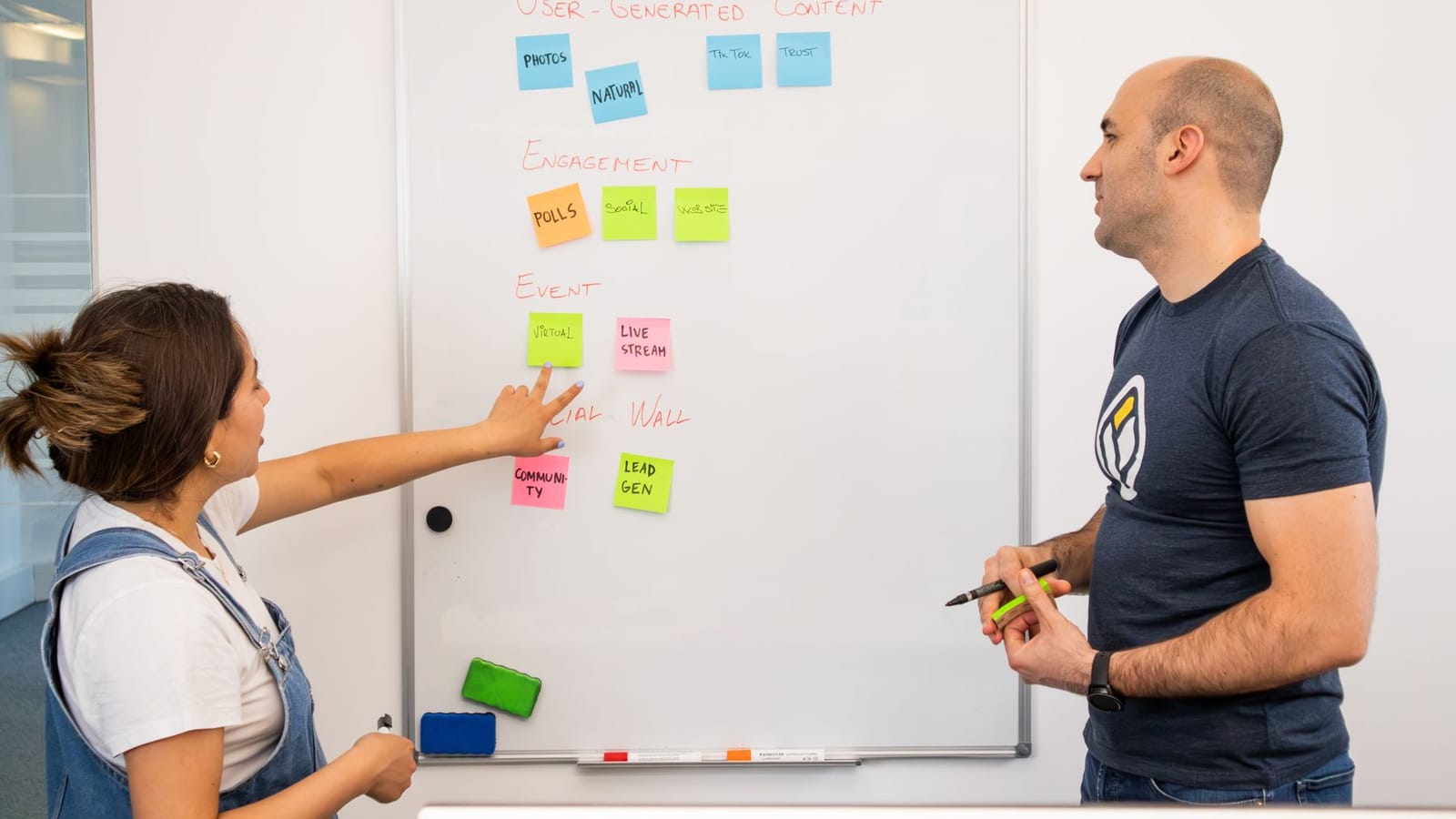
Colleagues working through a commercial model together at a whiteboard.
Why the naming matters: a proposal that switches between the two names mid-document is showing naming drift rather than describing two products. It is also worth searching both names, or you will miss half the material.Photo: Pexels (Walls.io).
Naming

Two names, one offering

Revenue Cloud Advanced was rebranded around the Spring 2026 release as Agentforce Revenue Management. Both names describe the same offering, and you will see them used interchangeably in decks, contracts and documentation. If a proposal switches between them mid-document, that is naming drift rather than two products.

No countdown

Why this became the forward path

Salesforce CPQ went end of sale on 27 March 2025. End of sale is not end of life — no end of life date has been published, so existing customers can keep running and renewing.

Plan on this

Not CPQ with a new name

Revenue Cloud Advanced is not CPQ with a new name. Different data model, different pricing engine, a different approach to product configuration. There is no supported one-click migration, and any plan that treats the move as a data load has misunderstood the work.

The upside

The one chance to leave things behind

Moving is a re-implementation of the product and pricing model, informed by what you run today rather than copied from it. Carrying a decade of unused rules across is how a clean platform becomes the old one again.

Scope

It does not end at the quote

The revenue lifecycle does not stop at the quote. Contracts, amendments, renewals, invoicing and revenue recognition are where implementations that only tested a new sale come apart, because real customers change their minds mid-term.

The practical read

Adopt it because it fits, not because of a date

New capability lands here rather than in CPQ, which is a genuine reason to plan the move. It is not a reason to cut over at quarter end on somebody else's timetable, and we will say so even when it shortens our own engagement.

See the revenue lifecycle

The lifecycle

Quote to cash, and the six places revenue actually leaks

Most implementations are scoped around the quote. The leaks are downstream, when a customer changes their mind mid-term. Each item below is cheaper to design in now than to discover at the first co-termed amendment.

  1. QuoteConfigured and priced fast enough that nobody opens a spreadsheet
  2. ContractWhat was agreed, on terms the system can act on later
  3. AmendMid-term change, co-terming and renewal, where most builds break
  4. RecogniseInvoiced and recognised without finance correcting it by hand

SynconAI revenue lifecycle spine for Revenue Cloud Advanced workshops. Agentforce assists inside these stages; nothing commits price, discount or contractual language without a named approver.

Mid-term upgrades and add-ons

The customer buys more before the term ends. Simple to describe, and the single most common place a model that only ever tested new business produces a number nobody can defend.

Co-terming to an existing contract

Aligning a new purchase to an existing end date, with the proration that implies. It is arithmetic until multiple currencies and mid-period pricing changes arrive, and then it is a design decision.

Usage and consumption pricing

Where the commercial model stops being a price book and starts being a calculation. Worth modelling deliberately, because retrofitting usage onto a subscription-shaped implementation is expensive.

Renewals that do not need rebuilding

A renewal should be generated from the contract, not reconstructed by a rep from last year's quote. When it is reconstructed, your renewal pricing quietly becomes whatever each individual remembered.

The join from quote to invoice

A quote that prices correctly and produces an invoice finance has to correct by hand is not a working process. That correction work is also invisible in every metric except finance headcount.

Approvals and discount governance

Thresholds and authority that reflect real commercial policy, so the controls apply to the deals that matter rather than to the ones that happen to go through the system politely.

Tell us where yours leaks

What we actually build

The six patterns behind almost every Revenue Cloud Advanced engagement

These reflect how commercial leaders and finance describe the problem rather than a feature list. Note that two of the six are about what you leave behind, which is where most of the value of a re-implementation actually sits.

Product & pricing model design

Written before configured

What you sell, how it is priced, what a customer may change and when. The last of those decides whether amendments work, and it is a commercial decision.

Catalogue rationalisation

What does not come across

Usually a fraction of what exists today. The discipline to leave the rest behind is most of the value of moving, and it gets harder the later you raise it.

Quoting & guided selling

Fast enough to be used

Configuration a rep will actually use, priced quickly enough that nobody rebuilds the quote in a spreadsheet and re-keys it afterwards.

Contracts, amendments & renewals

The part that breaks

Mid-term change, co-terming and renewal designed in from the start and tested against your real historical deals rather than clean invented ones.

Billing & revenue recognition

Quote to invoice

Built so finance is not correcting by hand, with the ERP staying authoritative for the ledger and the boundary agreed before anything is built.

Ongoing revenue operations

So it stays deliberate

A named team for new products, pricing changes and the three releases a year, so the model stays designed rather than accreting the way the last one did.

Scope your phase-one backlog

Scope of delivery

What we deliver on Revenue Cloud Advanced

From the commercial model workshop through to run-state revenue operations across Revenue Cloud , also sold as Agentforce Revenue Management, plus Salesforce CPQ migration, Agentforce inside the revenue flow, and MuleSoft for the ERP join. Scoped with named owners and a quarter end simulated before the first real one.

We will not quote a duration before reading how you sell. The estimate that matters comes after the model workshop, because the answer depends on how complicated your commercial model genuinely is rather than on how big the company is.

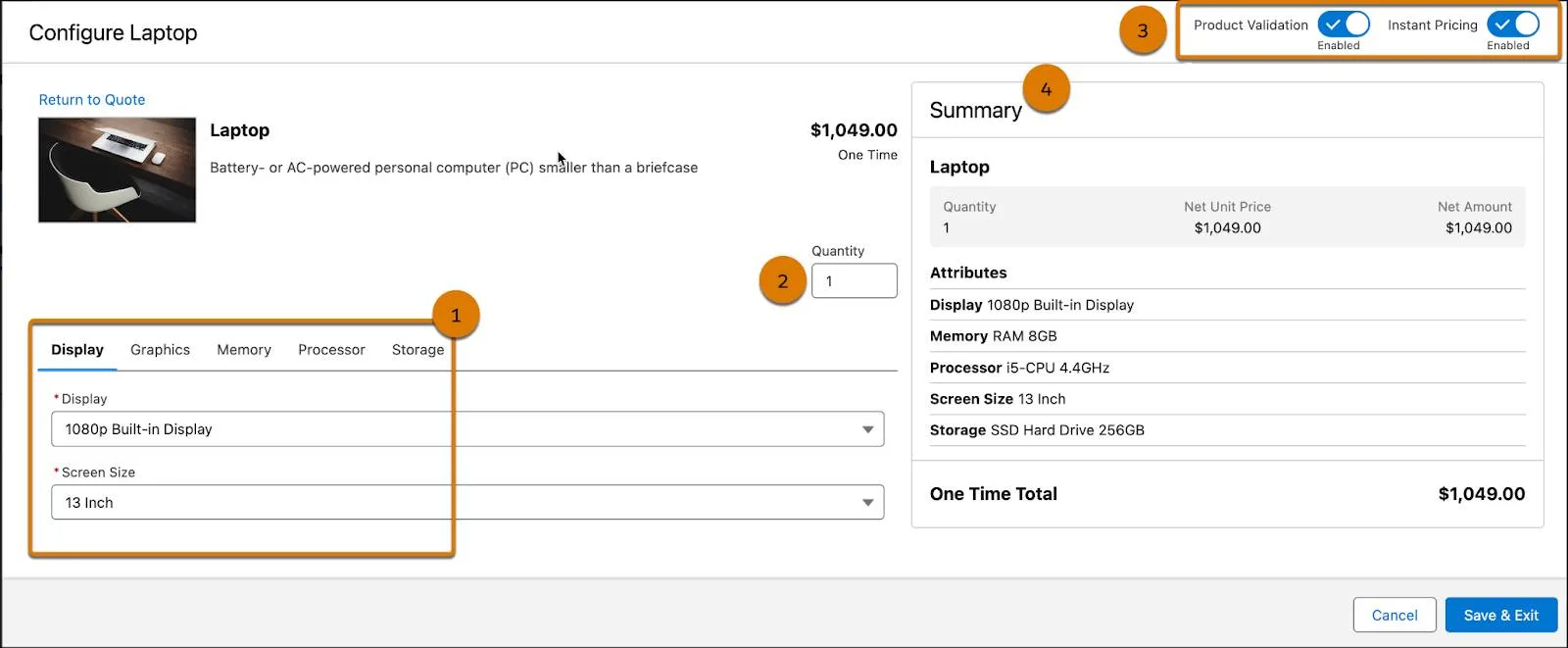
A Salesforce Revenue Cloud product configurator showing options being selected for a quote.
What good looks like: a configurator that answers quickly on a real configuration, not a demo one. Speed here is mostly a consequence of decisions made in the model workshop.Screenshot © Salesforce, Inc., via salesforce.com.

Commercial model workshop

What you sell, how it is priced, what a customer may change and when, written down and agreed with your commercial people before anything is configured.

Catalogue rationalisation

An explicit list of what follows you across and what does not, with the evidence to support retiring the rest. Almost always less than people expect.

CPQ migration

Treated as a re-implementation rather than a data load, sequenced by segment or product line so quoting never stops. If you have not decided yet, start on our Salesforce CPQ page.

Contracts & amendments

Mid-term change, co-terming and renewal designed from the start and tested against the three worst deals in your own history.

Billing & the ERP boundary

What Salesforce may write, when, and what happens when the two systems disagree, agreed with finance before build via MuleSoft or native integration.

Revenue operations

A named team for new products, pricing changes and the three releases a year, optionally as managed services.

Agentforce in the revenue flow

Retrieval, drafting and explanation, with a named human on anything that commits price, discount or contractual language. See Agentforce services.

Book a revenue model workshop

Reference architecture

The commercial model is the foundation. Everything above it is consequence

This is the diagram we bring to the model workshop, and it is read upwards. The catalogue and pricing model determine what configuration can express; configuration determines what quoting feels like; quoting determines whether contracts and amendments hold; and all of that determines whether finance spends its close correcting things by hand. Nothing higher up rescues a decision taken badly lower down. We design for Salesforce Well-Architected outcomes (Trusted, Easy and Adaptable) and document how Revenue Cloud relates to the ERP and finance systems that stay authoritative for the ledger. Every pattern depends on edition, entitlement and GA status; your account team and the release notes remain authoritative.

SynconAI reference topology for workshops. Aligns with Salesforce Architects diagrams language; edition and entitlement still govern what you can configure.

Who we work with

This is a commercial project with a technical delivery, not the other way round

What you sell, how it is priced and what a customer may change mid-term cannot be answered by an administrator. If your commercial people cannot join the model workshop, wait until they can. Tap the closest group to pre-scope the form.

Colleagues discussing a contract renewal in an office.
Operating cue: the hardest question in this project is not technical. It is which products are not coming across, and only somebody with commercial authority can answer it. Getting that person into the first workshop changes the whole timeline.Photo: Pexels (Karolina Grabowska).

Book a model workshop

Governed AI

Agentforce in the revenue flow, stopping short of the commitment

Retrieval and drafting, with a named approver on price and terms

Products, price rules, quotes, contracts and amendments stay on your data model; Agentforce is how Salesforce surfaces governed assistants on top of them, which is exactly what the Agentforce Revenue Management naming signals. We scope agents using topics, actions and instructions your deal desk and finance team can read out loud: product retrieval across a large catalogue, explaining how a price was arrived at, comparing quote versions, and drafting the renewal summary. Committing a price, approving a discount and generating contractual language all stop at a named approver. Availability follows your edition and region. Details on our Agentforce services page.

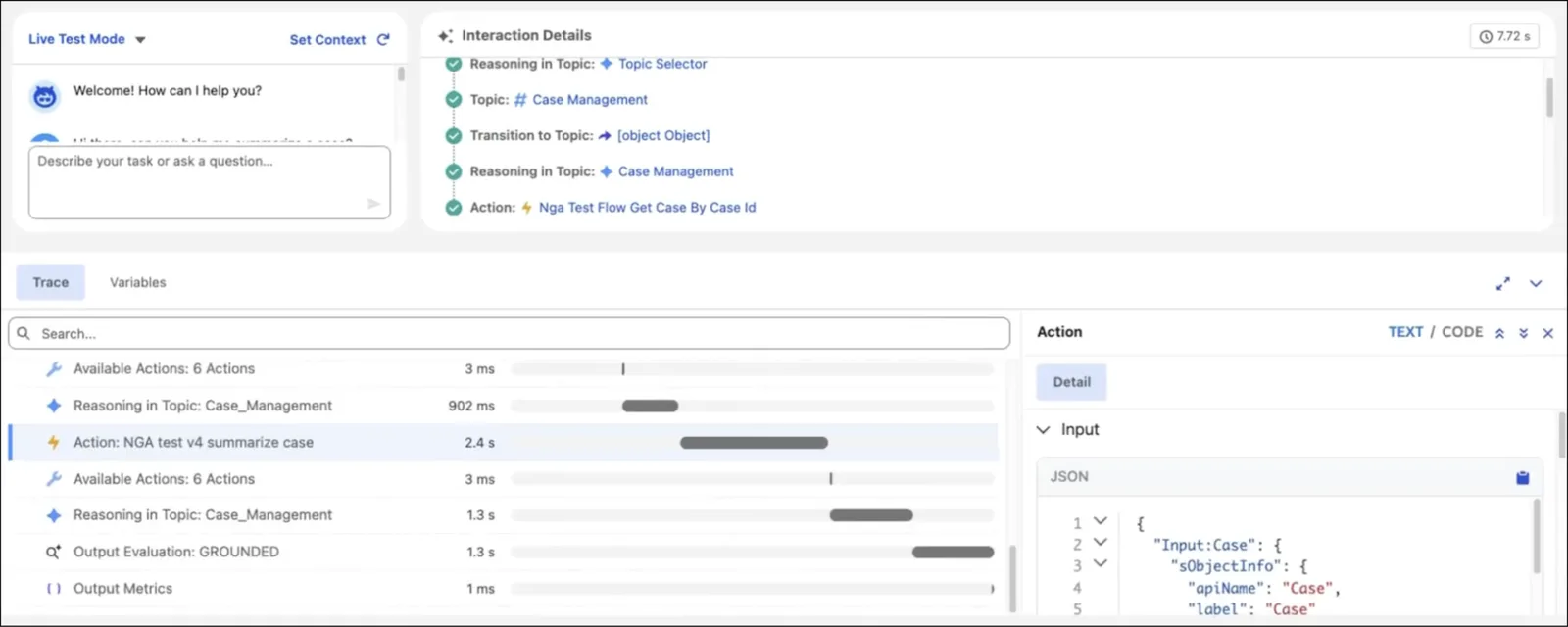
Agentforce agent configuration showing topics, instructions, and the actions an agent is permitted to take.
Where the boundary is set: topics, grounding sources and permitted actions are configuration, not a prompt. That is what lets your finance team verify the commit boundary rather than take it on trust.Screenshot © Salesforce; product UI may vary by edition and release. See Agentforce.

Find and configure

Guided retrieval across the catalogue, which matters most in the estates where the catalogue is still large, and quietly makes the case for reducing it.

Explain the price and the change

Why this number, which rules applied, and what differs between this amendment and the original contract. Useful for the rep, invaluable for whoever maintains the model.

Draft the renewal, then stop

The renewal summary and covering note drafted from the contract. Anything that commits a price, a discount or a contractual term routes to a named approver by design.

Ask what is safe to automate

Honest scoping

Model the licensing before the migration is scoped, not after

Revenue Cloud Advanced is licensed differently from CPQ, and that should shape the migration plan rather than surprise it. We are a consulting partner, not a reseller, so no margin rides on what you buy. Salesforce remains authoritative on entitlements.

Model first, licence second

What you actually need depends on the commercial model you decided in the workshop. Licensing quoted before that conversation is a guess, and it is usually a generous one.

Running CPQ and RCA in parallel

A phased migration means a window where both exist. Worth planning commercially at the start rather than discovering it as an unbudgeted overlap halfway through the cutover.

Agentforce & Data 360 entitlements

Where agent or Data 360 entitlements are in contract, we sequence them after the revenue model and the catalogue are settled. Never before, even when that is the budget that has been approved.

If you do not have a Salesforce account executive yet, we will make the introduction. The FAQ covers what we can and cannot do on licensing, and why we will not quote a Salesforce CPQ end of life date that has not been published.

Have us review your quote

Partnership criteria

Why teams choose SynconAI for Revenue Cloud Advanced

We also run the Salesforce CPQ practice, which means we are perfectly happy to be paid to make your existing CPQ fast again instead of migrating you. That is unusual, and it is the reason our recommendation on this page is worth something. Learn more about our Salesforce consulting partner approach.

The model comes before the platform

Workshop first

What you sell and what a customer may change get written down and agreed before anything is configured, because a setup screen will happily encode an answer nobody decided.

We test amendments first

On your real deals

Your three worst historical amendments, run against the proposed model before build. It is the fastest honest test available and almost nobody does it.

We insist on leaving things behind

Catalogue

Copying the old model across is the most expensive mistake available here, and it is also the path of least organisational resistance, which is why it needs insisting on.

No invented deadline

CPQ has no end of life date

We will tell you when waiting a year and cleaning your catalogue first is the better commercial decision, even though it postpones our own engagement.

Delivery geography

US · AU · worldwide

Hubs in Delaware, Sydney and Hyderabad, a named team on your business hours, and travel onsite for model workshops, go-lives and executive sessions.

Long-term operator

After hypercare

The same architects for new products, pricing changes and the three releases a year, so the model stays deliberate rather than accreting the way the last one did.

Book a revenue model workshop

Delivery method

How we deliver Revenue Cloud Advanced engagements

Six beats we repeat on every engagement, with transparent gates and no surprise scope. Two things are unusual here: the second step is about removing rather than adding, and the estimate for the whole programme arrives after step one rather than before it. Same method as our broader Salesforce consulting practice.

Revenue Cloud Advanced: Model · Reduce · Design · Build · Prove · Run

  1. Model

    How you actually sell: products, options, terms, the pricing that follows, and what a customer is allowed to change and when. Written down and agreed with your commercial people. The programme estimate comes out of this step.

  2. Reduce

    What of the current catalogue genuinely comes across, decided explicitly and authorised by somebody who can say no. Always less than expected, and this is where most of the value of moving actually is.

  3. Design

    Catalogue, price book and rules built for the next ten years rather than reproducing the last ten, with the ERP boundary agreed with finance before anything is built.

  4. Build

    Quoting, contracts, amendments, renewals and invoicing built as one path rather than four projects, because the joins between them are where revenue leaks.

  5. Prove

    Real deals and real amendments run through it, a quarter end simulated before the first one arrives, and a rollback written before any cutover date is promised. Migrations sequence by segment so quoting never stops.

  6. Run

    New products, pricing changes, the periodic catalogue review and three releases a year, so the model stays deliberate. Optionally continue with managed services or ongoing Salesforce administration.

Salesforce Partner

Client reviews

What clients say about working with our architects

Verbatim reviews from SynconAI Salesforce and Agentforce engagements across the United States, Australia and globally. Anonymised clients are labelled by sector.

5.0 average · 5 client reviews

 Salesforce Select Partner16+ architect certificationsDelivery across USA, Sydney & India

Simply Outstanding

“SynconAI Consulting are Simply the Best in the Business When it comes to Salesforce implementation and AI-powered solutions, SynconAI are in a league of their own. Their expertise, dedication, and ability to deliver results that truly move the needle sets them apart from every other consulting partner we've worked with. What they achieved with our Sales Cloud, Service Cloud, and custom Agentforce agent has completely transformed how we operate streamlining our pipelines and our customer service, and automating tasks that used to consume hours of our team's time. They don't just implement technology they transform businesses. If you want the best, you work with their team.”

Sales CloudService CloudAgentforce
Jack BennettConsumer Goods & Retail · United States

“I had a very urgent deadline for our project reporting to be delivered and needed to build the module, dashboard and output reports in Salesforce. SynconAI were very responsive - they met with me online, responded to my emails quickly and took calls - whatever was needed to progress the work quickly. We are thrilled with the outcome and will continue to work with SynconAI in the future to continue to build our Salesforce capability and platform.”

Sales CloudService CloudNonprofit Cloud
Salesforce Managed ServicesAustraliaSalesforce Verified

“The team at SynconAI were fantastic, and promptly delivered on each project. They were able to guide us through every stage and made sure we were satisfied with the outcomes on multiple scopes of work.”

Sales CloudSlackFlowAgentforceMuleSoft
ManufacturingAustraliaSalesforce Verified

“They have been great and helping us transform out business by bringing what I conceptualize to life. Great at translating process/workflow needs into a solution. Been a pleasure work with and they're a critical part of our team and will be instrumental into bringing about my vision.”

Sales CloudFinancial Services CloudArchitectureAI
Financial ServicesUnited StatesSalesforce Verified

“Working with SynconAI was a seamless and highly professional experience from start to finish. They took the time to deeply understand our business processes before designing and implementing a Salesforce solution tailored specifically to our operational needs. The team demonstrated strong technical expertise across Salesforce configuration, automation, integrations, reporting, and user experience design.”

SalesforceExperience CloudCustom DevelopmentAutomationReporting
Salesforce ImplementationSalesforce Verified

Frequently asked questions

Revenue Cloud Advanced, answered honestly.

Straight answers about the Agentforce Revenue Management rename, migrating from Salesforce CPQ, why there is no forced deadline, amendments and renewals, licensing and where we work.

Yes. Revenue Cloud Advanced was rebranded around the Spring 2026 release as Agentforce Revenue Management, and you will see both names used interchangeably in decks, contracts and documentation. It is worth knowing because a proposal that switches between them mid-document is showing naming drift rather than describing two products, and because searching for one name will miss half the material written about the other.

No. Salesforce CPQ went end of sale on 27 March 2025, which means no new customers and no new CPQ licences, and that is genuinely why Revenue Cloud Advanced is the forward path. But end of sale is not end of life: Salesforce has published no end of life date, so if you already run CPQ you can keep running and renewing it. Adopting RCA should be a decision you make on merit and on your own commercial calendar. Anyone selling it to you with a countdown is using a deadline Salesforce has not published.

Not directly, and it is important to plan on that basis. Revenue Cloud Advanced has a different data model, a different pricing engine and a different approach to configuration, so there is no supported one-click migration. A move is a re-implementation of the product and pricing model, informed by what you run today rather than copied from it. Any plan that treats it as a data load has underestimated the work and will discover that late.

The upside is that you get to leave things behind. Most catalogues carry a decade of products, options and price rules that nobody has quoted in years, and every one of them slows quoting down and makes changes riskier. A re-implementation is the only realistic moment to shed that. Teams who copy the old model across get a new platform carrying the old problems, and then wonder why quoting did not get faster.

It depends almost entirely on how complicated your commercial model genuinely is, rather than on how big the company is. A single product line with clean pricing is a different proposition from usage-based pricing with co-termed amendments across regions. What we will not do is quote a duration before reading how you sell, because the estimate that matters comes after the model workshop, not before it.

Amendments. Implementations get tested thoroughly on new business and lightly on change, and then a real customer upgrades mid-term, adds seats in a different currency and co-terms to an existing contract, and the model does not hold. We design amendment, renewal and co-terming paths from the start and test them against real historical deals rather than clean invented ones.

Salesforce, Revenue Cloud, Salesforce CPQ, Agentforce and Data 360 are trademarks of Salesforce, Inc. SynconAI is an independent certified Salesforce consulting partner and is not created by, affiliated with, or endorsed by Salesforce, Inc. Product naming, packaging and release timing are set by Salesforce; the Salesforce release notes and your account team remain authoritative. Screenshots are reproduced for illustrative purposes.

Free architect conversation

Talk to an architect, not a sales rep.

60 seconds to brief us. A certified architect replies within one business day.

What do you need from your revenue lifecycle?

Pick the closest fit. Bring your three worst historical amendments to the model workshop.

Which clouds or systems are in scope?

Optional. Choose any that apply, or skip ahead.

Where does your org stand today?

Optional. A few sentences is plenty: what is working, what is stuck, and what you want to be true. Or skip ahead and tell us on the call.

Who should the architect reach?

A certified architect will reply to these details.

Takes about 30–60 seconds · No obligation · Architect replies within one business day

Protected by reCAPTCHA. Google's Privacy Policy and Terms apply.

Model workshopCallWhatsApp

Solutions, built
for the future

Sales CloudSales Cloud
Service CloudService Cloud
Field ServiceField Service
Experience CloudExperience Cloud
Marketing Cloud NextMarketing Cloud Next
Revenue Cloud AdvancedRevenue Cloud Advanced
Salesforce CPQSalesforce CPQ
Data 360Data 360
Financial Services CloudFinancial Services Cloud
Nonprofit CloudNonprofit Cloud
Health CloudHealth Cloud
CRM Analytics & EinsteinCRM Analytics & Einstein
AgentforceAgentforce