Enterprise Salesforce · multi-org strategy · integration · release engineering · certified partner

The programme is late and the status report says alignment. Underneath that word there is normally one specific definition nobody has the authority to settle.

  • Name a decision owner per contested term. Unglamorous, cheap, and the highest-leverage item on most enterprise programme plans we are shown
  • Multi-org is corporate history, not bad architecture. Each acquisition arrived with an org. Consolidation is a decision on merit, and a forced merge can destroy more value than it releases
  • Three releases a year is an engineering commitment. Treat each as a project and it takes a large share of your annual capacity; automate the regression and it becomes a page of decisions
  • Shadow spreadsheets are a specification. A team keeping records alongside the platform is describing a gap precisely. Policing it removes the evidence and not the cause

At this scale the licence sheet is not the constraint. What stops delivery is unowned decisions, a release process competing with the roadmap, and data whose provenance nobody can name when a regulator or an AI programme asks.

  • We work alongside your incumbent partner
  • Certified Salesforce partner, not a reseller
  • We will recommend stopping a wave

Proven Success With

Pressure we surface early

None of these is a technology problem, which is why more technology has not fixed them

Enterprise estates are rarely limited by the platform. They are limited by decisions nobody owns, a release cadence competing with the roadmap, orgs inherited through acquisition, and data whose provenance cannot be defended. Each has an owner-shaped hole in it.

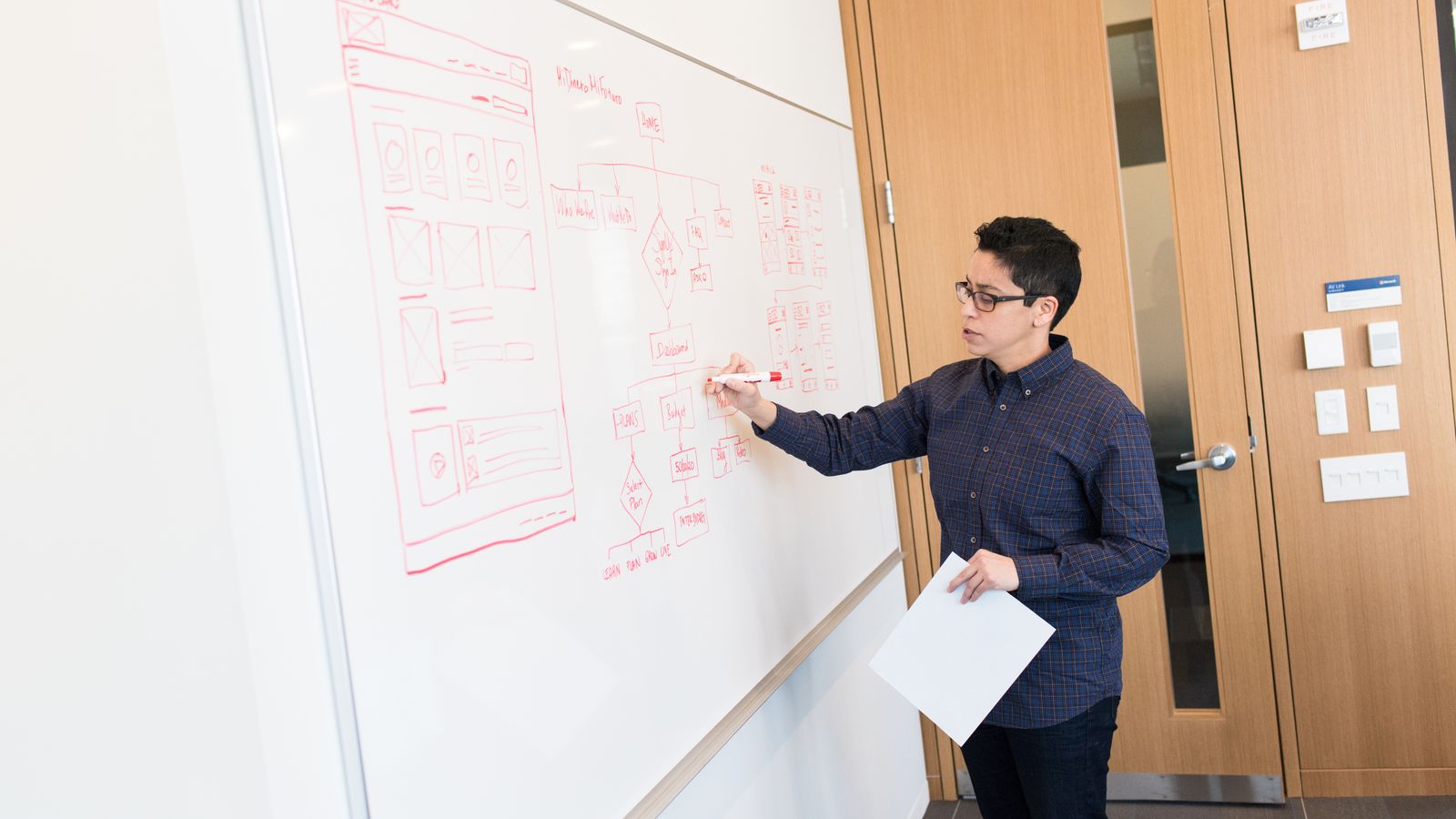
A programme team working across a wall of planning material.
Pressure point: when a programme plan grows a workstream called alignment, that is usually a decision that needed an owner three months earlier. Adding people to it rarely helps.Photo: Pexels.
Decisions

Two functions, one word, no arbiter

Sales and finance mean different things by the same term, both are internally consistent, and neither can overrule the other. The work stops there and resumes as a workshop. This is the most common single cause we find.

Landscape

Orgs inherited, not chosen

Each acquisition arrived with one. Nobody has the mandate to consolidate and nobody has the analysis to argue against it either, so the question gets deferred annually and the integration cost compounds.

Capacity

Three releases a year, treated as three projects

Manual regression testing against a large change-controlled estate consumes a serious share of annual delivery capacity, and because it recurs it never gets funded as the engineering problem it is.

Data

Numbers that cannot be defended

A figure is challenged and answering takes a fortnight, because nobody owns the definition or its lineage. That is survivable in reporting and fatal in front of a regulator or underneath an agent.

Shadow systems

A team keeping its own records

Read as indiscipline, it produces a policy. Read as information, it is a precise specification of what the platform was never configured to support, and usually the cheapest requirements source available.

Spend

Buying what the agreement already covers

Large agreements accumulate entitlements nobody switched on, and business units get quoted separately for capability the enterprise already owns. Auditing that takes days and occasionally changes a purchase materially.

Start with the multi-org question

The multi-org question

One org is an architecture preference. It is not automatically the right answer

Multi-org estates are usually corporate history rather than architecture failure. Each acquisition arrived with an org and each had a reason, so consolidation is a decision on merit. Sometimes one org is right. Often a forced merge destroys more value than it releases.

Consolidation is right when the same customer is served by several units, when regulatory reporting spans them, or when parallel processes cost more than the merge. It is wrong when the orgs serve different regimes, models or customers who never overlap.

So we survey first and answer with a number attached, including when the answer is to leave the estate alone. We design for Salesforce Well-Architected outcomes and document how each org relates to the systems already holding parts of your truth.

SynconAI landscape decision frame for enterprise workshops. Aligns with Salesforce Architects diagrams language; the recommendation still depends on your regulatory and commercial context, which is why it is a survey rather than a template.

Definition ownership

The cheapest item on your programme plan is a name against a word

What stalls enterprise programmes is almost never the platform. Two functions define the same term differently, nobody can settle it, and the work resumes as a slide about alignment. Naming a decision owner per definition is the highest-leverage item on most programme plans.

It sounds like governance theatre and it is the opposite. You list the terms two or more functions define differently — qualified opportunity, recognised revenue, resolved case — put one person against each who can settle it, and write down that their decision stands. That is the whole artefact.

Colleagues reviewing governance documentation together.
Someone has to decide: the test of a definition owner is whether their ruling stands when the function that lost the argument escalates. If it does not, you have named a facilitator rather than an owner.Photo: Pexels.

One owner per contested term

With authority that holds

Named, written down, and explicitly empowered to settle it. The authority is the point; without it you have appointed somebody to run a meeting.

Architecture review and intake

Standards, not gatekeeping

A route for business units to move quickly inside agreed standards. Review boards that only say no get routed around, which is how shadow builds start.

Lineage on decision fields

Answerable in minutes

For the fields that drive decisions, where the value came from and who owns it. So a challenged number is a lookup rather than a two-week investigation.

Retention and residency

Decided, not inherited

Most estates run whatever the first implementation chose years ago. Deciding it deliberately is cheap now and expensive once a regulator has asked.

Sharing at scale

Past the role hierarchy

Architecture that still works when the org chart is not the access model, with least-privilege integration users and an audit story that survives being asked for.

Centre of excellence

The model that outlives us

Intake, standards, enablement and a funded technical debt register, so the estate stays governable after the programme closes and the consultants leave.

Where identity resolution and lineage need hardening before an AI programme, that is a Data 360 engagement running alongside this one under the same change control.

Plan a definitions workshop

What we actually build

The six patterns behind almost every enterprise engagement

Written the way architects, platform leads and programme sponsors describe the problem rather than as a capability matrix. Most engagements start with the first two, because a landscape nobody has surveyed is one where every recommendation is a guess wearing a diagram.

Landscape survey

Every org, mapped

What each org holds, who owns it, what genuinely reads from it, and what it would cost to merge or to leave. The recommendation comes with a number, not a preference.

Definition ownership

The unblocking move

Contested terms listed and a decision owner named against each, with authority that holds under escalation. One page, and it moves more programmes than a workstream does.

Release engineering

Three a year, as routine

Source-driven development, deployment pipelines and automated regression on the critical paths, so releases stop competing with the roadmap for capacity.

Integration architecture

Boundaries before connectors

Which system owns which entity, agreed before anyone writes an interface, and MuleSoft where reuse and central policy genuinely earn the platform.

Data governance and security

Defensible under challenge

Lineage on decision fields, retention and residency decided deliberately, sharing architecture that scales past the role hierarchy, and an audit story that survives being asked for.

Wave delivery

With criteria and a rollback

Business unit by business unit, each wave with a measured baseline, defined exit criteria and a rehearsed reversal, rather than a cutover nobody can undo on the day.

Scope the first wave

Scope of delivery

What we deliver at enterprise scale

From a landscape survey through to a sustaining operating model across the Salesforce platform, Data 360, MuleSoft and Agentforce, scoped with named decision owners, measured baselines and exit criteria your steering group can hold us to.

The least popular part of our method is that we will recommend stopping a wave when the exit criteria are not met. That is precisely the moment programme pressure argues hardest for proceeding, which is why it has to be agreed in advance.

Architects working through a systems diagram together.
What run-state looks like: a release that lands without a war room, a challenged number answered from lineage in minutes, and a business unit able to move quickly inside standards rather than around them.Photo: Pexels.

Landscape survey and diagnosis

Every org mapped with owners and dependencies, a consolidation answer with a number attached, contested definitions listed with proposed owners, and what the release process costs annually. You keep the analysis either way.

Multi-org strategy

Consolidate, federate or leave alone, argued on regulatory, commercial and operational grounds rather than on tidiness, plus merger and divestiture separation planning.

Release engineering

Environment topology, source-driven pipelines, automated regression on the critical paths, package strategy, and a rehearsed rollback and hotfix procedure.

Integration architecture

System-of-record boundaries per entity, event-driven patterns, reconciliation and replay, and MuleSoft where reuse and central policy justify it.

Data governance and security

Definition ownership, lineage, retention and residency, sharing architecture past the role hierarchy, and evidence a regulator will accept. Adjacent Data 360 work where identity resolution needs hardening.

Centre of excellence

Intake, standards, enablement and a funded technical debt register, so the estate stays governable after the programme closes.

AI readiness and Agentforce

Grounded on data whose ownership can be named, with human gates on anything contractual. See Agentforce services.

Book a landscape survey

The work

What an enterprise engagement actually consists of

Not a phase plan. These are the pieces we get brought in for, frequently alongside an incumbent partner running everything else. We do not need to displace anyone to be useful, and we will say when the existing team is doing good work and the problem is elsewhere.

  1. SurveyThe estate mapped before any recommendation, with dependencies and owners
  2. DecideConsolidation and definitions settled by named people, in writing
  3. EngineerPipelines and regression coverage, so releases stop consuming the roadmap
  4. DeliverWave by wave, with exit criteria and a rehearsed rollback

SynconAI engagement spine for enterprise programmes. Agentforce sits after governance and lineage, not before, and nothing contractual or financial completes without a named human.

Answering the consolidation question properly

Every org surveyed, dependencies mapped, and a recommendation with a cost attached for each of consolidate, federate and leave alone. Including the answer that a merge would destroy more value than it releases.

Diagnosing a stalled programme

Finding the decision rather than the defect. In most stalled programmes there is one term two functions define differently and no arbiter, and everything downstream has been quietly waiting on it.

Getting the release cost down

Quantifying what three releases a year currently consume, then building the regression coverage and pipeline that turns most of them into a page of decisions. It pays back inside about a year at this scale.

Integrating an acquisition

Deciding what merges, what stays separate and what simply needs an interface, with the customer-facing continuity plan agreed before anything technical starts moving.

Making the data defensible

Lineage and ownership on the fields that drive decisions, so a challenged number is a lookup rather than an investigation, and so an AI programme has something a regulator would accept underneath it.

Reading the shadow spreadsheets

Going to the teams keeping parallel records and treating what they built as a specification. It is the cheapest requirements-gathering available and it routinely surfaces a real process the platform never supported.

Tell us which of these you need

Governed AI

Agentforce on data whose ownership you can name

The governance is the product, not the overhead around it

Your records stay on your data model; Agentforce is how Salesforce surfaces governed assistants on top of them. At this scale what we deliver is mostly the boundary: which topics an agent may handle, which sources it may read, who owns each decision, and what the rollback is when answer quality drifts. Anything touching price, contract terms or a regulated decision stops at a named approver.

Availability follows your edition and region. Details on our Agentforce services page.

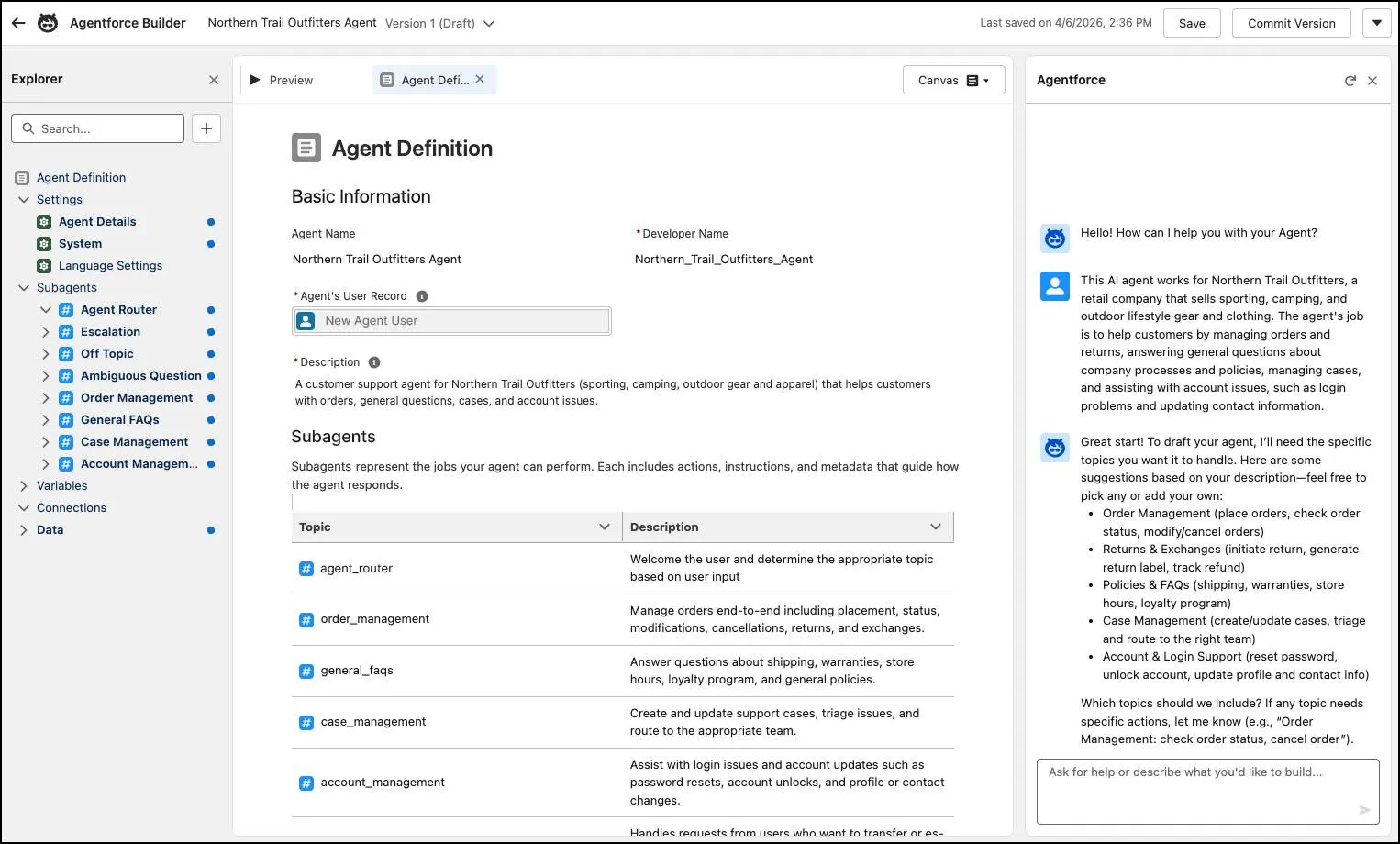
Agentforce agent configuration showing topics, instructions, and the actions an agent is permitted to take.
Where the boundary is set: topics, grounding and permitted actions are configuration, which is what makes them reviewable by risk and auditable afterwards rather than asserted in a prompt.Screenshot © Salesforce; product UI may vary by edition and release. See Agentforce.

An owner per topic and source

Every topic and grounding source has a named owner and a review date, so the answer to who approved this is a lookup rather than an investigation.

Evaluation sets and drift detection

A held-out set the agent is measured against on a schedule, because answer quality degrades quietly as content and process change underneath it.

Gates that survive pressure

Price, contract terms, entitlement and regulated decisions stop at a named approver, set in configuration so the boundary holds when the agent is trying to be helpful.

Ask whether your data is defensible

Who we work with

The programme is late and the status report discusses alignment

That word is usually doing a lot of work. Underneath it there is normally one specific definition that two functions disagree about and nobody has the authority to settle. Architecture, platform, data and the sponsor each see a different face of it. Tap the group closest to you to pre-scope the conversation form.

A programme team working across a wall of planning material.
Operating cue: the highest-leverage item on most enterprise programme plans is not a workstream. It is naming one person who can settle a contested definition and giving them the authority to do it.Photo: Pexels.

Book a landscape survey

Partnership criteria

Why enterprises bring SynconAI in

Usually one of three reasons: a programme has stalled and the internal diagnosis has stopped being credible, a decision needs somebody without a stake, or a specific capability is needed alongside an incumbent who is doing fine. If your estate is smaller than this page assumes, start at Salesforce for medium businesses or the SMB overview. Learn more about our Salesforce consulting partner approach.

We survey before we recommend

Numbers, not preferences

No consolidation advice without a dependency map. Each option gets a cost attached, including leaving the estate alone, which is a recommendation we make regularly.

We name the decision, not the workstream

Definition ownership

When a programme is late and the report says alignment, we find the specific term nobody owns and put it in front of somebody who can settle it. That is usually the whole unblock.

We will recommend stopping a wave

When criteria are missed

Agreed in advance, because nobody agrees to it mid-wave. It is the least popular part of the method and the reason the waves that do proceed are trustworthy.

We work alongside incumbents

Without needing the whole account

Scoped to architecture, release engineering or one domain. We will say when the existing team is doing good work and the problem is elsewhere, which happens often.

Delivery geography

US · AU · worldwide

Hubs in Delaware, Sydney and Hyderabad, with follow-the-sun coverage where the programme needs it and travel onsite for discovery, cutovers and executive sessions.

We design ourselves out

The operating model

Intake, standards, enablement and a funded debt register, so the estate stays governable after the programme closes rather than needing us indefinitely.

Book a landscape survey

Delivery method

How we deliver enterprise engagements

Six beats with explicit gates. Two are unusual for a programme of this size: the third produces a page of names rather than a design, and the fifth includes an agreement about when to stop. Both are cheap to agree in advance and effectively impossible to introduce once a wave is running. Same method as our broader Salesforce consulting practice.

Enterprise engagement: Survey · Decide · Define · Engineer · Deliver · Sustain

  1. Survey

    Every org with what it holds, who owns it and what genuinely reads from it, plus the release cost measured in days of delivery capacity. Read-only, runs alongside delivery, and you keep the analysis.

  2. Decide

    Consolidate, federate or leave alone, argued on regulatory, commercial and operational grounds with a number against each. Tidiness is not an input.

  3. Define

    Contested terms listed and a decision owner named against each, with their ruling explicitly empowered to stand. This step produces a page of names rather than a design, and it is the one that unblocks the programme.

  4. Engineer

    Environment topology, source-driven pipelines and automated regression on the critical paths, so releases stop competing with the roadmap for the same people.

  5. Deliver

    Business unit by business unit, each wave with a measured baseline, written exit criteria, a rehearsed rollback, and an agreement made in advance that failing the criteria means stopping.

  6. Sustain

    Intake, standards, enablement and a funded technical debt register, so the estate stays governable after we leave. Optionally continue with managed services or ongoing Salesforce administration.

Salesforce Partner

Client reviews

What clients say about working with our architects

Verbatim reviews from SynconAI Salesforce and Agentforce engagements across the United States, Australia and globally. Anonymised clients are labelled by sector.

5.0 average · 5 client reviews

 Salesforce Select Partner16+ architect certificationsDelivery across USA, Sydney & India

Simply Outstanding

“SynconAI Consulting are Simply the Best in the Business When it comes to Salesforce implementation and AI-powered solutions, SynconAI are in a league of their own. Their expertise, dedication, and ability to deliver results that truly move the needle sets them apart from every other consulting partner we've worked with. What they achieved with our Sales Cloud, Service Cloud, and custom Agentforce agent has completely transformed how we operate streamlining our pipelines and our customer service, and automating tasks that used to consume hours of our team's time. They don't just implement technology they transform businesses. If you want the best, you work with their team.”

Sales CloudService CloudAgentforce
Jack BennettConsumer Goods & Retail · United States

“I had a very urgent deadline for our project reporting to be delivered and needed to build the module, dashboard and output reports in Salesforce. SynconAI were very responsive - they met with me online, responded to my emails quickly and took calls - whatever was needed to progress the work quickly. We are thrilled with the outcome and will continue to work with SynconAI in the future to continue to build our Salesforce capability and platform.”

Sales CloudService CloudNonprofit Cloud
Salesforce Managed ServicesAustraliaSalesforce Verified

“The team at SynconAI were fantastic, and promptly delivered on each project. They were able to guide us through every stage and made sure we were satisfied with the outcomes on multiple scopes of work.”

Sales CloudSlackFlowAgentforceMuleSoft
ManufacturingAustraliaSalesforce Verified

“They have been great and helping us transform out business by bringing what I conceptualize to life. Great at translating process/workflow needs into a solution. Been a pleasure work with and they're a critical part of our team and will be instrumental into bringing about my vision.”

Sales CloudFinancial Services CloudArchitectureAI
Financial ServicesUnited StatesSalesforce Verified

“Working with SynconAI was a seamless and highly professional experience from start to finish. They took the time to deeply understand our business processes before designing and implementing a Salesforce solution tailored specifically to our operational needs. The team demonstrated strong technical expertise across Salesforce configuration, automation, integrations, reporting, and user experience design.”

SalesforceExperience CloudCustom DevelopmentAutomationReporting
Salesforce ImplementationSalesforce Verified

Frequently asked questions

Enterprise Salesforce, answered honestly.

Straight answers about whether to consolidate multiple orgs, why programmes stall on definitions rather than technology, how to absorb three releases a year at scale, what defensible data governance looks like before an AI programme, and working alongside an incumbent partner.

Only if the merit argument holds, and often it does not. Multi-org estates are usually the record of a corporate history rather than an architecture failure: each acquisition arrived with an org and each org had a reason. Consolidation is genuinely right when the same customer is served by several business units, when regulatory reporting spans them, or when the cost of maintaining parallel processes exceeds the disruption of merging. It is genuinely wrong when the orgs serve different regulatory regimes, different business models or different customers who never overlap. We survey what exists first and give you the answer with a number attached, including when the answer is to leave it alone and invest in the integration between them instead.

In our experience, almost never on technology. They stall where a decision is required and nobody has the authority to make it. Two functions define a qualified opportunity differently, or finance and sales disagree on when revenue is recognised against a record, and the work stops at that point and resumes as a workshop about alignment. The fix is structural rather than technical: name one decision owner per contested term, give them the authority, and write the outcome down. That single item unblocks more enterprise programmes than any architectural change we have made.

As an engineering commitment rather than as three projects. Organisations that treat each release as an event spend a surprising share of their annual capacity on regression testing and negotiation with the calendar. The alternative is automated regression coverage on the critical paths, a preview-window process that reads release notes against what your estate actually uses rather than in full, and a standing owner. That turns most releases into a page of decisions. It is upfront investment, and it pays back within about a year at enterprise scale.

By treating it as information rather than as indiscipline. When a team maintains a parallel record, they are telling you the platform does not support how they actually work, and the spreadsheet is usually a precise specification of the gap. Policing it removes the evidence without removing the cause, and the work simply moves somewhere less visible. We go and read those spreadsheets. It is the cheapest requirements-gathering available, and it routinely surfaces a genuine process the platform was never configured to support.

Both are legitimate and the answer depends on reuse and governance rather than on volume. MuleSoft earns its cost when many systems are involved, when the same interface has several consumers, when there are audit obligations that need policy applied centrally, or when an agent programme needs a controlled way to reach everything. Native tooling, Flow with callouts, External Services, Platform Events and Salesforce Connect, does the job for a modest number of point-to-point requirements and comes with licences you already own. We map the requirement against both. Our MuleSoft integration services page covers how we scope the larger version.

Four things, and none of them is a tool. Somebody owns each critical definition and has authority to settle disputes about it. Lineage is documented for the fields that drive decisions, so when a number is challenged there is an answer rather than an investigation. Retention and residency are decided deliberately rather than inherited from whatever the first implementation did. And data quality is measured and published rather than asserted. That last one matters most before an AI programme, because an agent grounded on a customer profile assembled from unowned data will state something confidently that nobody can defend.

Salesforce, Salesforce Foundations, Shield, Data 360, MuleSoft and Agentforce are trademarks of Salesforce, Inc. SynconAI is an independent certified Salesforce consulting partner and is not created by, affiliated with, or endorsed by Salesforce, Inc. Editions, allocations, entitlements and pricing are set by Salesforce and change; your account team and the Salesforce release notes remain authoritative.

Free architect conversation

Talk to an architect, not a sales rep.

60 seconds to brief us. A certified architect replies within one business day.

What is the programme actually blocked on?

Pick the closest fit. The landscape survey is free at the assessment stage and you keep the written analysis either way.

Which clouds or systems are in scope?

Optional. Choose any that apply, or skip ahead.

Where does your org stand today?

Optional. A few sentences is plenty: what is working, what is stuck, and what you want to be true. Or skip ahead and tell us on the call.

Who should the architect reach?

A certified architect will reply to these details.

Takes about 30–60 seconds · No obligation · Architect replies within one business day

Protected by reCAPTCHA. Google's Privacy Policy and Terms apply.

Free landscape surveyCallWhatsApp

Solutions, built
for the future

Sales CloudSales Cloud
Service CloudService Cloud
Field ServiceField Service
Experience CloudExperience Cloud
Marketing Cloud NextMarketing Cloud Next
Revenue Cloud AdvancedRevenue Cloud Advanced
Salesforce CPQSalesforce CPQ
Data 360Data 360
Financial Services CloudFinancial Services Cloud
Nonprofit CloudNonprofit Cloud
Health CloudHealth Cloud
CRM Analytics & EinsteinCRM Analytics & Einstein
AgentforceAgentforce