Salesforce Nonprofit Cloud consulting · fundraising · programs & outcomes · grantmaking · volunteers · certified partner

20 hours of Salesforce architect time, free to any nonprofit. Salesforce gave you the licences. Nobody funded the part where someone sets it up properly.

  • No catch and no spend commitment. Any registered nonprofit or charity, any size. Use the hours on a health check, a migration assessment, a build, or fixing whatever broke when your last volunteer admin left
  • One supporter, one record. The donor who currently exists in the CRM, the giving platform, the email tool and an events spreadsheet, with four different answers about their last gift
  • Funder reports that come out of the system, built in Nonprofit Cloud fundraising, grantmaking or program management, instead of being rebuilt by hand every quarter
  • Agentforce for the drafting and retrieval that eats a small team's week, switched on after the supporter records are worth grounding on

Salesforce Power of Us already gives eligible nonprofits ten free licences. That solved the software cost, not the implementation cost, which is why so many charities have a Salesforce org and so few have one that works. The 20 hours are for the gap in between.

  • You keep everything we produce, either way
  • Certified Salesforce partner, not a reseller
  • No minimum size, no spend commitment

Proven Success With

Why nonprofit orgs stall

You were given the software. You were never given an administrator

What we find in almost every nonprofit org: a real Salesforce instance, several years old, configured by a succession of well-meaning people who have all since moved on. Nobody did anything wrong. The funding simply never covered the part that makes software work.

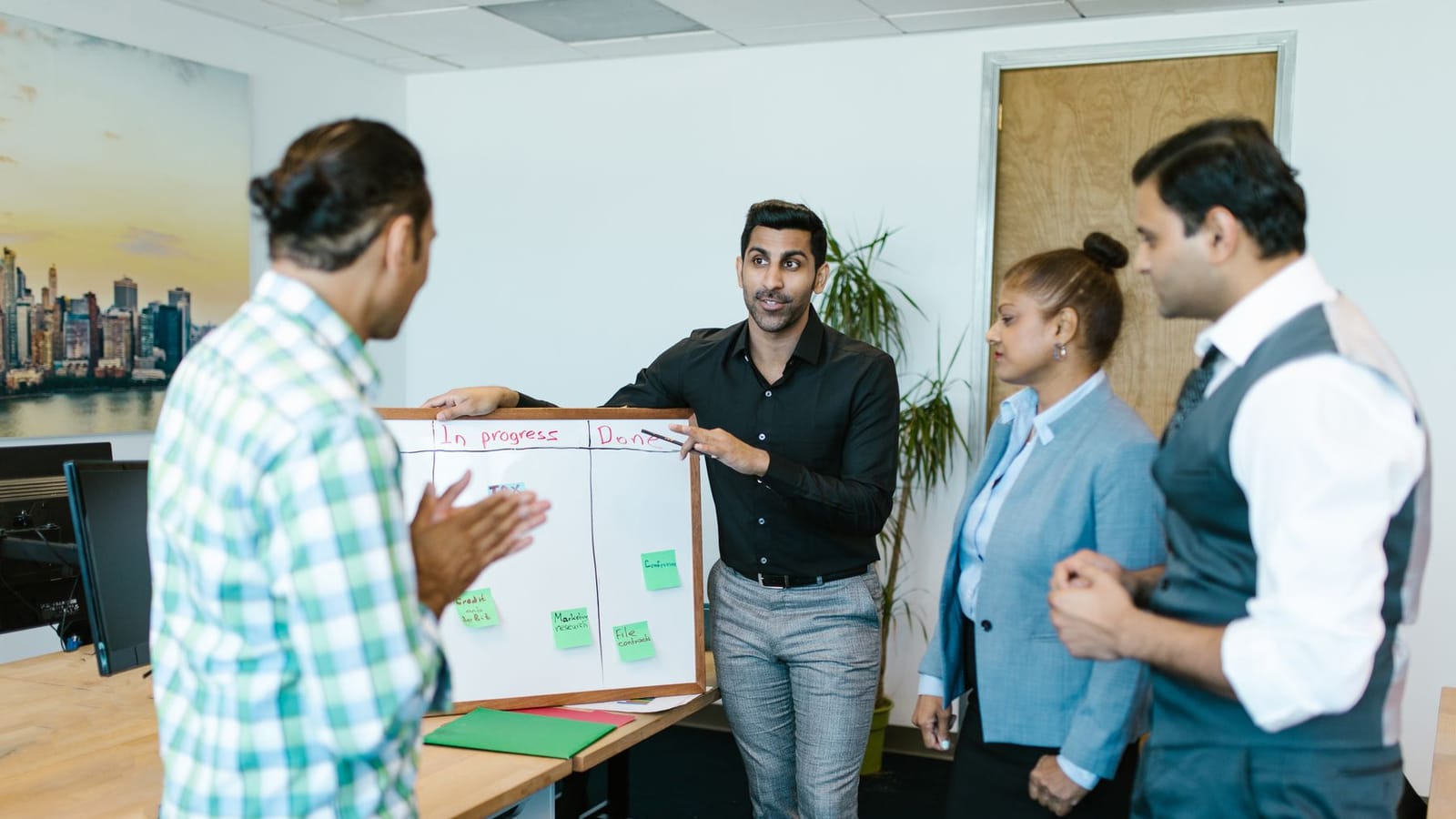
A small team reviewing charts and figures together in a meeting room.
The pattern: restricted funding pays for programmes, not for systems. So the CRM gets configured in the gaps between everything else, by whoever is willing, and it degrades quietly between staff changes.Photo: Pexels.
Capacity

No administrator, and no budget for one

The person who understood the org has left, and the role was never backfilled because it sits in overhead rather than in a grant. Everything still runs, but nobody can change it, so the team works around it instead.

Data

One supporter, five records

The same donor in the CRM, the giving platform, the email tool, an events spreadsheet and somebody's inbox. Every copy disagrees about the last gift, so the thank-you goes to the wrong address and the appeal goes out twice.

Reporting

The funder report is built by hand

Every quarter somebody exports three systems into a spreadsheet, reconciles them by eye, and rebuilds the same report. It works, which is exactly why it never gets fixed, and it costs a week of the team's time every time.

Outcomes

You can count activity, not change

How many people you served is easy. Evidencing that something changed for them requires the outcome to have been designed into the model before the programme ran, and funders are increasingly asking for the second one.

Fragility

Undocumented, and one person deep

An automation nobody can explain, built by a volunteer three years ago, that fires on gift entry. It works until it does not, and the only person who knew why it was built that way stopped answering emails in 2023.

AI readiness

The agent inherits the duplicates

Your board has asked about AI. An agent reading a supporter who exists five times will pick one and state it confidently to whoever asked. That is a fixable data problem, and it is considerably cheaper than the AI project sitting on top of it.

See where we would start

Who we work with

In a nonprofit the same four people are usually the same two people

Commercial orgs have a team for each of these. Most nonprofits have a fundraising lead who also owns the database, and an operations manager who also runs reporting. We build for that reality rather than against it: fewer moving parts, documented, and designed to survive a staff change. Tap the group closest to you to pre-scope the form at the foot of the page.

A small team standing together in a working session.
Operating cue: the measure of a good nonprofit implementation is whether it still works two staff changes from now. That is a design decision made in the first week, not a support contract bolted on at the end.Photo: Pexels (RDNE Stock project).

Claim your 20 free hours

Journeys

From first gift to evidenced outcome, with one record at every step

Every step below is a place where a supporter or a participant either stays one record or quietly becomes two. Where they become two, everything downstream is noise: the segmentation, the thank-you, the funder report. We scope the first phase around whichever step your own data says is leaking.

  1. ReachA supporter arrives once, matched against who you already know
  2. GiveGifts, pledges and recurring giving landing on that one record
  3. ServeProgrammes delivered, with the outcome measure designed in beforehand
  4. EvidenceA funder report that comes out of the system rather than out of a spreadsheet

SynconAI journey spine for Nonprofit Cloud workshops. Agentforce assists inside these steps; nothing thanks a donor, commits your organisation or submits a report to a funder without a named human.

Supporter capture that does not create duplicates

Web forms, event sign-ups, giving platforms and imported lists landing against matching and duplicate rules, so a long-standing donor who gives through a new channel is recognised rather than created again.

Gift processing and recurring giving

Batch entry, recurring schedules, pledges, soft credits and tributes, reconciled against finance so the monthly close does not involve somebody matching two exports by eye.

Major gifts and moves management

A pipeline for relationships rather than transactions: the ask, the cultivation steps, who holds the relationship, and what was promised. Built so a fundraiser leaving does not take the history with them.

Programs and outcome measurement

Participants, sessions, referrals and the indicator you agreed to measure, captured at the points you decided in advance. That last part is what makes evidencing change a report rather than an investigation.

Grantmaking, and grant seeking

Applications through review, award, disbursement and grantee reporting if you give money away. A pipeline of funds, deadlines and reporting obligations if you apply for it. Most organisations we work with do both.

Volunteers, off the shared calendar

Registration, shifts, hours and recognition in one place, with compliance checks held against the volunteer record, so the rota stops being run from a group chat and a coordinator's memory.

Tell us where yours leaks

What we actually build

The six things that come up in almost every nonprofit engagement

These are the areas we most often build or rebuild, described the way fundraising and operations teams describe them rather than as a feature list copied from a product page. Most engagements start with two of them, and the 20 free hours are usually enough to finish the first.

One supporter, one record

Matching · merging · source of truth

The highest-value work on most nonprofit orgs. Deduplication across the CRM, the giving platform, the email tool and the spreadsheets, plus the part people skip: an agreed rule for which source wins when two of them disagree.

Fundraising operations

Gifts · recurring · reconciliation

Gift entry, recurring giving, pledges, soft credits and tributes, modelled around households and relationships, and reconciled with finance so the monthly close stops involving two exports and a pair of tired eyes.

Programs and outcomes

Indicators · baselines · evidence

Designing the outcome into the model in Nonprofit Cloud before the programme runs. Retrofitting it afterwards is genuinely hard, and doing it in advance costs about an hour of design.

Grantmaking and grant reporting

Awards · disbursement · obligations

Applications through review, award and disbursement, with reporting obligations and restricted-fund tracking held against the award, so the deadline does not live in one person's calendar.

NPSP: move, or stay

Assessment · migration · honesty

NPSP remains supported and Nonprofit Cloud is what Salesforce recommends for new customers. Those are different statements. We assess what a move would actually give you and say so if the answer is to stay put this year.

Agentforce, in the right order

Drafting · retrieval · guardrails

Agentforce for the summarising and first-draft work that eats a small team's week, switched on once supporter records are worth grounding on, with nothing committing your organisation unsupervised.

Point your free hours at one of these

Scope of delivery

What we build, and what we take off your team

From a written read of the org through to run-state support across Nonprofit Cloud, NPSP, Flow, Agentforce and Data 360, scoped with named owners and a plan a trustee can read without a glossary.

The measure of a nonprofit implementation is not how much it does on launch day. It is whether it still works two staff changes from now. That is why we build with fewer moving parts, configuration over code wherever the choice exists, and documentation written for whoever inherits it.

A facilitator running a training session for a small group of colleagues.
Handover is part of the build: training is for the staff member who has three other jobs, not for another consultant. If the documentation only makes sense to us, we have not finished.Photo: Pexels.

Nonprofit Cloud implementation

Fundraising, Program Management, Outcome Management, Grantmaking and Volunteer Management configured to the way your organisation actually runs, not to a demo script.

NPSP migration, or an honest case for staying

NPSP remains supported. We assess what a move to Nonprofit Cloud would actually give you, and if the answer is not much this year, we will tell you that and stop.

Supporter data consolidation

The one that matters most. Merging the same donor out of the CRM, the giving platform, the email tool and the events spreadsheet, with a rule for which source wins.

Fundraising operations

Gift processing, recurring giving, pledges, soft credits, household and relationship modelling, and reconciliation with finance that does not need a monthly manual fix.

Grantmaking and grant reporting

Applications, review, award and disbursement tracked in one place, and funder reports that come out of the system instead of being rebuilt in a spreadsheet each quarter.

Program and outcome management

Designing the outcome into the data model before the programme runs, so evidencing change is a report rather than an archaeology project twelve months later.

Volunteer management

Recruitment, scheduling, hours and recognition, built so coordinators stop running the rota from a shared calendar and a group chat.

Agentforce for Nonprofit Cloud

Drafting and retrieval work that gives a small team hours back, switched on once supporter data is worth grounding on and scoped so nothing commits your organisation unsupervised.

Claim your 20 free hours

Governed AI

Agentforce for the admin, never for the relationship

Useful on the paperwork. Kept away from the donor.

Supporters, gifts, programmes and grants stay on your data model; Agentforce for Nonprofit Cloud is how Salesforce surfaces governed assistants on top of them. We fix the supporter records first, then scope agents to the work that genuinely gives a small team hours back: summarising a supporter history before a meeting, drafting a first pass at a grant report from programme data, answering staff questions about your own processes. Anything that thanks a donor, commits your organisation or goes to a funder stops at a named person. Availability follows your edition and region.
Two colleagues reviewing figures on a printed report together.
Why the order matters: an agent reading a supporter who exists five times will pick one version and state it with complete confidence. Fixing the duplicates is the cheaper half of an AI project, and it has to come first.Photo: Pexels.

Supporter briefing

Pull together what is already known about a supporter before a meeting, from the records rather than from memory, so preparing for a major-gift conversation stops being twenty minutes of tab switching.

First-draft reporting

Draft a funder report or a board summary from programme and gift data. A person reviews and signs it, always. The saving is in never starting from a blank page, not in removing the reviewer.

Answers about your own processes

Staff asking how a restricted fund is coded, or which form a referral needs, getting an answer from your documentation instead of interrupting the one person who remembers.

Ask whether your data is ready

Reference architecture

One supporter record at the bottom, everything else on top of it

This is the diagram we bring to the first workshop, and it is deliberately simple because nonprofit builds go wrong through excess rather than through ambition. Read it upwards: nothing on a higher layer is worth building until the layer below it is settled, which is why an AI project approved before the duplicates are fixed usually gets rebuilt. We design for Salesforce Well-Architected outcomes (Trusted, Easy and Adaptable) and document how Nonprofit Cloud, Flow and Data 360 relate to the giving platform, email tool and finance system that already hold parts of your truth. Every pattern depends on edition, region and GA status; your account team and the release notes remain authoritative.

SynconAI reference topology for workshops. Aligns with Salesforce Architects diagrams language; edition and region still govern what you can configure.

How we know it worked

A system is working when nobody rebuilds its reports by hand

There is one clean test for whether a nonprofit CRM is trusted, and it is not how many records it holds. It is whether somebody still exports it into a spreadsheet before the funder report goes out. If they do, the effort in that rebuild is the honest measure of how much the system is believed. We measure that first, because it is also the fastest thing to give back: a week of staff time a quarter, returned to the mission, tends to be a more persuasive case to a board than any feature.

Colleagues reviewing figures and plans together around a table.
Measure what you ship: a report is only as meaningful as the records underneath it. We baseline the hand-built reporting effort before we start, so the saving is a number rather than a claim.Photo: Pexels.

Hours returned to the mission

How long the funder report, the board pack and the monthly reconciliation take today, measured before we touch anything. Every hour the system takes back is an hour the team spends on the work you exist to do.

One supporter, one record

Duplicate rate across the supporter base, and how many systems still hold a competing answer about the last gift. This is the number that gates everything else, including whether AI is worth switching on.

Evidence you can hand a funder

Whether outcome data can be produced from the system rather than reconstructed, and whether the indicator was designed in before the programme ran. That distinction is the whole difference between reporting and archaeology.

Baseline yours in the free hours

Partnership criteria

Why teams choose SynconAI for Nonprofit Cloud

Most consultancies treat nonprofit work as discounted commercial work. It is not the same job. There is usually no administrator, the budget is restricted, overhead is the hardest spend to justify to a board, and the thing you build has to survive staff turnover that a commercial org would consider alarming. We build for that, and we start by giving 20 hours away so you can judge us on the work rather than on a proposal. Learn more about our Salesforce consulting partner approach.

20 hours, given not quoted

No commitment

Any registered nonprofit, any size. Real architect time on real work, and you keep everything we produce whether or not you engage us. It is the least ambiguous way we know of showing what working with us is like.

We will tell you not to buy things

Including from us

If NPSP is working for you, a migration is cost and risk that has to earn its place against everything else the same money could do. Sometimes the right advice is to stay where you are, and we would rather say that than sell a project.

We remove more than we add

Fewer moving parts

The first thing your team should notice is that something they used to do by hand has stopped existing. With no internal administrator, every feature you do not need is a future maintenance problem nobody is funded to solve.

Built to be inherited

Documentation

Configuration over code wherever the choice exists, and documentation written for the staff member who takes this over in two years, not for the next consultant. If it only makes sense to us, we have not finished.

Delivery geography

US · AU · worldwide

Hubs in Delaware, Sydney and Hyderabad, a named team on your business hours, and travel onsite for discovery, go-lives and executive sessions.

Certified, and independent

Partner, not reseller

A certified Salesforce consulting partner, so we advise on fit rather than on licences. Power of Us eligibility is Salesforce's decision and we will point you at them to check it rather than guess on your behalf.

Claim your 20 free hours

Delivery method

How we deliver Nonprofit Cloud engagements

Six beats we repeat on every engagement, with no surprise scope. The first two usually fit inside the 20 free hours, which means you can reach a written assessment and an agreed plan without having spent anything. Same method as our broader Salesforce consulting practice, adjusted for the fact that most nonprofits have no internal administrator.

Nonprofit Cloud engagement: Listen · Find · Build · Test · Teach · Run

  1. Listen, and read the org

    What the mission needs, which admin is eating the team's week, and then the technical read: fields required versus populated, automation mapped, duplicate rates scored. Usually inside the free hours. You keep the write-up either way.

  2. Find every record

    Every system holding a supporter, including the spreadsheets nobody mentions in the first meeting, and then the decision people skip: which source wins when two of them disagree. That is a decision, not a configuration.

  3. Build it properly

    Fundraising, programs, grants or volunteers configured for how your team actually works, duplicate rules in place, and Flow taking the repetitive admin. Built so a non-specialist can safely change it after we leave.

  4. Test with real records

    Scenario runs against your actual messy history rather than invented clean data, gift reconciliation checked end to end against finance, and agent evaluation sets where AI is in scope.

  5. Teach and hand over

    Training for the staff member who has three other jobs, documentation written for whoever inherits this, the baseline compared honestly, and a rehearsed rollback with a named owner. This step is not optional here.

  6. Run

    Hypercare, the ongoing backlog, and three Salesforce releases a year absorbed as a short list of decisions rather than as projects. Where a nonprofit wants a safety net instead of a hire, optionally continue with managed services or ongoing Salesforce administration.

Salesforce Partner

Client reviews

What clients say about working with our architects

Verbatim reviews from SynconAI Salesforce and Agentforce engagements across the United States, Australia and globally. Anonymised clients are labelled by sector.

5.0 average · 5 client reviews

 Salesforce Select Partner16+ architect certificationsDelivery across USA, Sydney & India

Simply Outstanding

“SynconAI Consulting are Simply the Best in the Business When it comes to Salesforce implementation and AI-powered solutions, SynconAI are in a league of their own. Their expertise, dedication, and ability to deliver results that truly move the needle sets them apart from every other consulting partner we've worked with. What they achieved with our Sales Cloud, Service Cloud, and custom Agentforce agent has completely transformed how we operate streamlining our pipelines and our customer service, and automating tasks that used to consume hours of our team's time. They don't just implement technology they transform businesses. If you want the best, you work with their team.”

Sales CloudService CloudAgentforce
Jack BennettConsumer Goods & Retail · United States

“I had a very urgent deadline for our project reporting to be delivered and needed to build the module, dashboard and output reports in Salesforce. SynconAI were very responsive - they met with me online, responded to my emails quickly and took calls - whatever was needed to progress the work quickly. We are thrilled with the outcome and will continue to work with SynconAI in the future to continue to build our Salesforce capability and platform.”

Sales CloudService CloudNonprofit Cloud
Salesforce Managed ServicesAustraliaSalesforce Verified

“The team at SynconAI were fantastic, and promptly delivered on each project. They were able to guide us through every stage and made sure we were satisfied with the outcomes on multiple scopes of work.”

Sales CloudSlackFlowAgentforceMuleSoft
ManufacturingAustraliaSalesforce Verified

“They have been great and helping us transform out business by bringing what I conceptualize to life. Great at translating process/workflow needs into a solution. Been a pleasure work with and they're a critical part of our team and will be instrumental into bringing about my vision.”

Sales CloudFinancial Services CloudArchitectureAI
Financial ServicesUnited StatesSalesforce Verified

“Working with SynconAI was a seamless and highly professional experience from start to finish. They took the time to deeply understand our business processes before designing and implementing a Salesforce solution tailored specifically to our operational needs. The team demonstrated strong technical expertise across Salesforce configuration, automation, integrations, reporting, and user experience design.”

SalesforceExperience CloudCustom DevelopmentAutomationReporting
Salesforce ImplementationSalesforce Verified

Frequently asked questions

Nonprofit Cloud, answered honestly.

Straight answers about the 20 free hours, Power of Us licensing, NPSP versus Nonprofit Cloud, supporter data, outcome reporting, AI and working without an internal administrator.

Twenty hours of certified Salesforce architect time, free to any registered nonprofit or charity. No minimum size, no spend commitment, no requirement to buy anything afterwards. You can spend them on a health check of an org you already run, a migration assessment, a piece of build work, or fixing whatever broke when your last volunteer admin left. Everything we produce is yours to keep and to take to another partner if you would rather. The honest reason we do it: nonprofit work is some of the most satisfying delivery our architects get, and twenty hours is usually enough to show whether we are the right fit for each other.

Because Power of Us solved the licence cost, not the implementation cost. Ten free licences put a powerful, highly configurable platform in the hands of an organisation that usually has no administrator, and configuration is the part that needed funding. That is the single most common situation we are called into: a real Salesforce org, several years old, configured by a succession of well-meaning people who have all since moved on. It is a very fixable problem, and it is not a sign anyone did anything wrong.

Not automatically. NPSP remains supported, and Nonprofit Cloud is what Salesforce recommends for new customers. That is a real distinction and it is not the same as a deadline. If NPSP is working for you, a migration is a project with cost and risk that has to earn its place against everything else your organisation could do with the same money. We will assess it properly and tell you if the answer is to stay where you are this year, which it sometimes is.

With finding every place a supporter record currently lives, including the spreadsheets nobody mentions in the first meeting. Then the part people skip: agreeing which source wins when two of them disagree about the last gift. Merging is the easy half. Deciding the rule is the half that requires someone in the room who can make a decision on behalf of the organisation. Once that exists, the deduplication is ordinary work, and reporting and AI become possible for the first time.

Yes, but only if the outcome was designed into the data model before the programme ran. Counting how many people you served is straightforward. Evidencing that something changed for them requires you to have decided in advance what change you were measuring, at what points you would capture it, and against what baseline. Retrofitting that to a programme already running is genuinely hard. Building it into the next one is not, and it is the highest-value hour of design work in most nonprofit implementations.

Probably yes, eventually, and probably not first. Agentforce for Nonprofit Cloud is genuinely useful for the drafting and retrieval that eats a small team’s week: summarising a supporter history, drafting a first pass at a grant report, answering staff questions about a process. It is not useful on a supporter who exists five times with five different last-gift values, because it will read one of them and say it confidently. Fix the records first. That is also the cheaper half.

Yes, and most of the nonprofits we work with are in exactly that position. It changes how we build rather than whether we build. Fewer moving parts, configuration over code wherever the choice exists, documentation written for the person who inherits it rather than for another consultant, and training for a staff member who has other responsibilities. The measure of a good nonprofit implementation is whether it still works two staff changes from now, and that is a design decision made early, not a support contract bolted on later.

The United States, Australia and worldwide, working in your business hours with a named team. The twenty free hours are available to registered nonprofits in any of those regions. Charity registration and gift-aid style schemes differ by country, so the fundraising configuration differs accordingly, and we will ask about that early rather than assume a US model.

Salesforce, Nonprofit Cloud, NPSP, Power of Us, Flow, Agentforce and Data 360 are trademarks of Salesforce, Inc. SynconAI is an independent certified Salesforce consulting partner and is not created by, affiliated with, or endorsed by Salesforce, Inc. Power of Us eligibility is determined by Salesforce. The 20 free hours are offered by SynconAI and are not a Salesforce programme.

Free architect conversation

Talk to an architect, not a sales rep.

60 seconds to brief us. A certified architect replies within one business day.

What should we point the 20 free hours at?

Pick the closest fit. Any registered nonprofit qualifies, there is no spend commitment, and you keep everything we produce.

Which clouds or systems are in scope?

Optional. Choose any that apply, or skip ahead.

Where does your org stand today?

Optional. A few sentences is plenty: what is working, what is stuck, and what you want to be true. Or skip ahead and tell us on the call.

Who should the architect reach?

A certified architect will reply to these details.

Takes about 30–60 seconds · No obligation · Architect replies within one business day

Protected by reCAPTCHA. Google's Privacy Policy and Terms apply.

20 free hoursCallWhatsApp

Solutions, built
for the future

Sales CloudSales Cloud
Service CloudService Cloud
Field ServiceField Service
Experience CloudExperience Cloud
Marketing Cloud NextMarketing Cloud Next
Revenue Cloud AdvancedRevenue Cloud Advanced
Salesforce CPQSalesforce CPQ
Data 360Data 360
Financial Services CloudFinancial Services Cloud
Nonprofit CloudNonprofit Cloud
Health CloudHealth Cloud
CRM Analytics & EinsteinCRM Analytics & Einstein
AgentforceAgentforce