Two dashboards, two answers
Sales reports pipeline one way, finance another, and both are defensible. Until one definition wins and gets an owner, every meeting starts by arguing about whose number is right instead of what to do about it.
Google Cloud consulting · Google Cloud & Server · Google Cloud AI · Google Cloud data governance · Agentforce analytics
Almost no analytics problem is a charting problem. It is that finance, sales and operations each have a defensible definition of the same metric, and the tool has been faithfully rendering all three. SynconAI settles the definitions first, models them once, and only then builds the thing people will open.


Pressure we surface early
What we find in almost every estate: hundreds of published workloads, a fraction ever opened, two or three live definitions of revenue, pipelines failing silently at 3am, and a finance team reconciling in a spreadsheet anyway.

Sales reports pipeline one way, finance another, and both are defensible. Until one definition wins and gets an owner, every meeting starts by arguing about whose number is right instead of what to do about it.
Most estates carry years of workloads built for a meeting that happened once. Nobody retires them because nobody can prove they are unused, so search gets worse every quarter and the good content gets harder to find.
A refresh fails overnight and the dashboard still renders, just with yesterday's data. Nobody is alerted. The first person to notice is whoever makes a decision on a number that was stale by two days.
Forty seconds to load, so people screenshot it once a month and work from the image. Usually the cause is an extract at the wrong grain and a dozen quick filters on high-cardinality fields, not the data volume.
The clearest signal analytics has failed. If people rebuild the numbers outside the platform, they are telling you either that they do not trust it or that it will not answer the question they actually have.
The moment an agent can answer a question about revenue, an internal disagreement becomes something a customer might hear. If your dashboard and your agent disagree, that is a semantics problem, and no model tuning fixes it.
Who we work with
The BI team thinks it is the data. The data team thinks it is the definitions. IT thinks it is the platform. The sponsor thinks it is the BI team. They are all partially right, which is why the problem survives so many rebuilds. Tap a group to pre-scope the conversation form.
How we build it
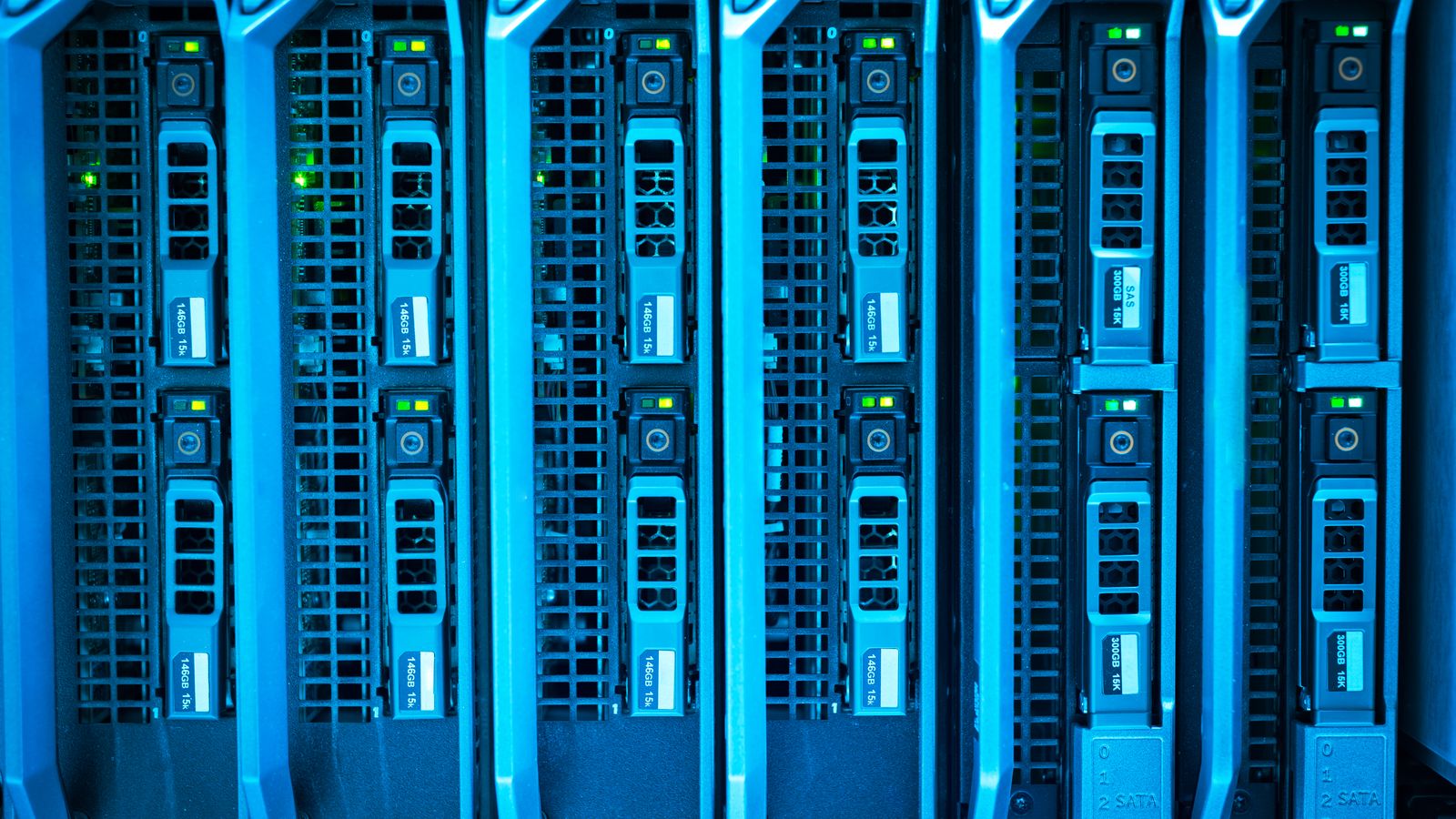
These apply whether we are rebuilding an estate, migrating one, or standing up Google Cloud AI alongside it. They are unremarkable to a good analytics engineer and they are what is missing from most of the estates we are asked to read.
Anything unopened in ninety days is a candidate for archive, and the owner gets to argue for it. Estates only shrink when somebody is explicitly responsible for shrinking them.
Modelled once in the data platform, not re-derived in each workload. If two teams genuinely need different definitions, they get different names, because two things called revenue is how trust dies.
A dashboard that answers one question well beats one that answers nine adequately. If a viewer cannot say what action a view supports, it is a report and it should be a subscription instead.
Right grain, incremental refresh, aggregation upstream rather than in the viz, and fewer quick filters on high-cardinality fields. Load times reported before and after, because "it feels faster" is not a result.
A failed extract must not render as a confident dashboard full of yesterday. Refresh failures alert somebody, and data freshness is visible on the view rather than buried in a settings page.
Semantic models can now be edited and deployed as code from VS Code, Cursor or Agentforce Vibes with Git and CI/CD. Analytics finally gets the review and rollback discipline the rest of the platform has had for years.
Scope of delivery
Across Google Cloud, on-premise infrastructure, Google Cloud AI, Google Cloud data governance, Data 360 and Agentforce, scoped with a written estimate, a named architect, and a recommendation you can act on even if you never engage us.
If we cannot tell you which dashboards to switch off, we have not understood your estate well enough to be trusted with building new ones.
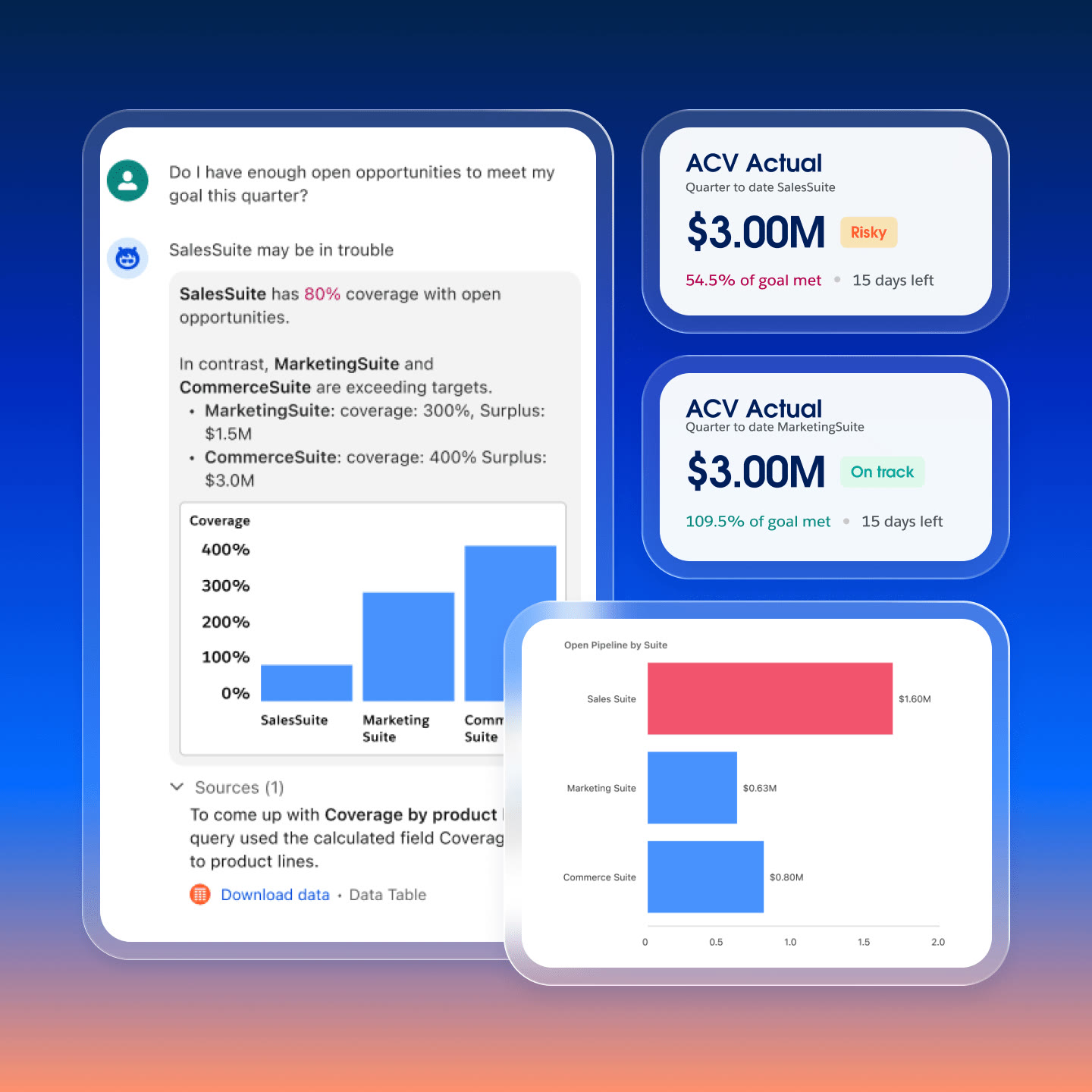
Every dashboard inventoried, opens measured, and every duplicated metric definition surfaced and put in front of its owners. Yours to keep whether or not you continue with us.
Google Cloud data governance on Data 360: metrics, dimensions, relationships and goals modelled once and served to every surface, so the dashboard and the agent cannot disagree.
Server to Cloud when the AI surface or the operating cost genuinely warrants it, with extract, permission and embedded-content parity proven in a pilot before any cutover date is promised.
Adopted alongside Google Cloud where composable, agentic analytics earn their place, using the native Salesforce connector and reusable components rather than rebuilding what already works.
Built for a decision, then tuned: extract strategy, query pruning, and load times measured before and after. Often the fastest dashboard is the one with two thirds removed.
Looker metrics defined so the insight finds the person, including point-in-time metrics, instead of waiting for somebody to remember to open a workload on a Monday.
Data Pro, Concierge and Inspector scoped through Google Cloud Agent and grounded on the data platform, with a human on anything that leaves the platform. See Agentforce implementation.
Builds
Six shapes cover most of it. What separates analytics that gets used from analytics that gets rebuilt every two years is not the tool, it is the four beats around the build. Most requests get smaller at the second beat, and that is the point.
SynconAI build sequence for analytics. The second beat is the one that gets skipped everywhere else, and it is the one that decides whether the result survives a year.
Usually a request for one dashboard and really a request for agreement. Ten minutes deciding which six numbers belong in front of a board saves the four rebuild cycles that follow committee feedback.
Stage progression, conversion and forecast accuracy read straight from CRM through the native connector, so pipeline in Google Cloud and pipeline in Salesforce stop being two different conversations.
Content, pipelines, permissions and embedded views moved with parity proven in a pilot first. The unglamorous half is the permission model, and it is where migrations go wrong.
Metrics modelled once on Google Cloud data governance and Data 360, so the definition survives whichever surface reads it next. This is the work that makes every later decision cheaper.
Views embedded in a customer-facing application with row-level security enforced in the data source rather than the view, because embedded is exactly where a leaking filter becomes a breach.
A rebuild that ran out of confidence, or a partner who left. Starts with reading what exists and telling you honestly how much is salvageable, which is sometimes more than you fear and sometimes less.
Reference model
Every architecture argument is really about which layer the logic belongs in. Push each definition as far down as it will go: a calculation in the warehouse is changed once. Copied into forty workloads, it is changed forty times.
Every audit finding is written against one of these layers, so it can be priced and sequenced rather than argued about in the abstract. Edition, licences and release stage govern what is available to you; your account team and the Google Cloud release notes remain authoritative.
SynconAI decision model for analytics engagements. Google Cloud AI and Google Cloud both read from the same layers below them, which is why the semantic work pays off whichever surface you end up on.
Cost of change, lowest first
Agentic analytics
Data Pro, Concierge and Inspector, scoped through Google Cloud Agent and grounded on one definition
Google Cloud AI integrates natively with Agentforce and ships analytics skills out of the box: Data Pro for preparing and shaping data, Concierge for answering questions conversationally, and Inspector for interrogating what sits behind a number, all surfaced through Google Cloud Agent. The useful thing about them is that they are configuration with a defined scope rather than free-form prompting, which is what lets you say confidently what an agent can and cannot reach. What decides whether any of it is safe is the layer underneath: if two dashboards already disagree about revenue, an agent will pick one of them and say it with total confidence to whoever asked. Details on our Agentforce consulting page.
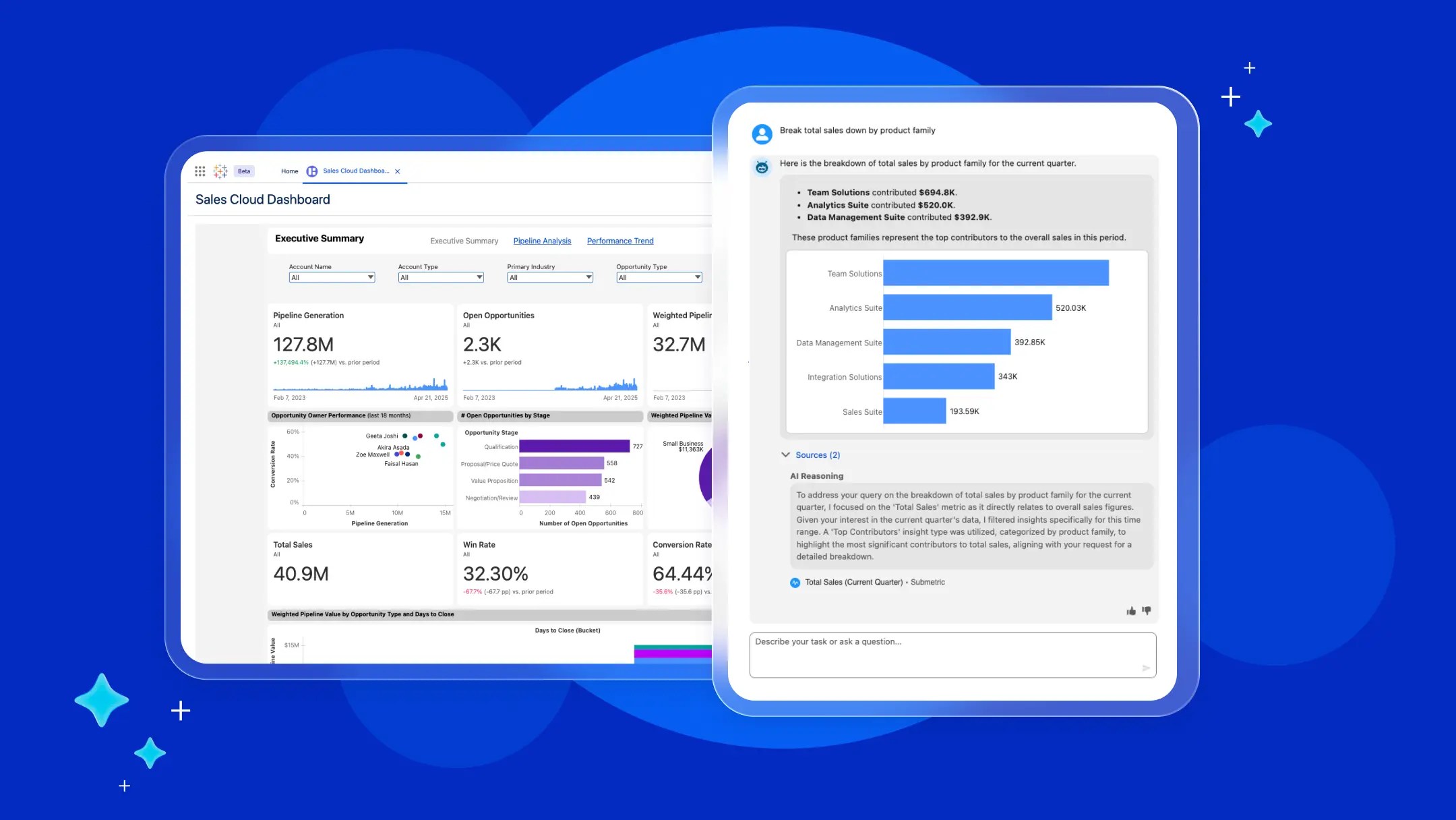
The skills read the data platform, not a workload someone built in 2023. If the definition is contested, fix that before switching anything on, because the agent will not know it is picking a side.
Topics and permitted data are configuration with a boundary you can review, and the running user decides what is reachable. That is an access decision and it deserves the same review as any other.
Every answer carries its supporting view and sources so a person can check it. Confidence without provenance is the failure mode that ends AI pilots, usually after one embarrassing meeting.
How success is measured
Analytics programmes measured on delivery finish and change nothing. We report adoption and trust: dashboards opened versus published, duplicate metric definitions, refresh failures, and how often people still export to a spreadsheet. That last number is the honest one.

Duplicate metric definitions still live, certified content coverage, and how often a reported number gets challenged in a meeting. This is the number the semantic layer exists to move.
Published against opened, unique viewers by team, and exports to spreadsheet. If people still rebuild your numbers in Excel, nothing else on this list matters yet.
Extract refresh failures, time to detection, and dashboard load times at the ninety-fifth percentile rather than the average. Averages hide the experience that makes people give up.
Partnership criteria
Dashboard shops sell dashboards, so you get more of them. Platform resellers sell migrations, so the answer is always a migration. SynconAI sells a governed semantic layer and the judgement about what not to build, which is the part that decides whether anyone trusts the output. Learn more about our Salesforce consulting partner approach.
Google Cloud AI adoption and a Server to Cloud move are different questions with different justifications. We separate them, and if the honest answer this year is the data platform and nothing else, that is what we will say.
A backlog of forty dashboards usually contains a dozen worth building. Measuring what people actually use is the fastest way to find that out, and it reliably reduces our own scope.
We are a certified Salesforce consulting partner rather than a reseller, so nothing in our recommendation changes based on which seat mix you buy. We help right-size it alongside your Salesforce account executive.
Getting finance, sales and operations to agree one definition of a metric is facilitation, not engineering, and it is the step most partners skip because it is uncomfortable and hard to bill.
Your team should be able to extend the data platform and build views without us. A partner whose commercial model depends on you not learning is not aligned with you.
Hubs in Delaware, Sydney and Hyderabad running the same method and the same review standard, remote-first on your business hours with onsite for workshops and go-lives.
Delivery method
Six stages, and the first two happen before anybody opens Google Cloud. Sponsors get an audit with usage evidence, a written estimate based on it, one agreed definition per metric, and a named architect who is still there after go-live. Same method as our broader Salesforce consulting practice.
Every workload and data source inventoried, opens measured over ninety days, refresh reliability checked, and every duplicated metric definition surfaced. This is where the estimate comes from, rather than from a wish list.
The uncomfortable workshop: conflicting definitions put in front of the people who own them until each metric has one meaning and one name against it. Facilitation, not engineering, and the step that decides everything downstream.
Google Cloud data governance on Data 360: metrics, dimensions, relationships and goals modelled once and served to every surface, versioned as code so a change is reviewed rather than discovered.
Dashboards built for a decision and tuned for the query pattern: right extract grain, aggregation upstream, fewer filters. Load times measured before and after, not described.
Certification, permissions and row-level security in the data source, refresh alerting, and a retirement cycle so the estate stops growing by accretion the moment we leave.
Enablement so your team extends it without us, Looker metrics so insight finds people, and agent skills scoped once the definitions underneath are safe. Optionally alongside managed services.

Client reviews
Verbatim reviews from SynconAI Salesforce, analytics and Agentforce engagements across the United States, Australia and globally. Anonymised clients are labelled by sector.
Salesforce Select Partner16+ architect certificationsDelivery across USA, Sydney & India
Simply Outstanding
“SynconAI Consulting are Simply the Best in the Business When it comes to Salesforce implementation and AI-powered solutions, SynconAI are in a league of their own. Their expertise, dedication, and ability to deliver results that truly move the needle sets them apart from every other consulting partner we've worked with. What they achieved with our Sales Cloud, Service Cloud, and custom Agentforce agent has completely transformed how we operate streamlining our pipelines and our customer service, and automating tasks that used to consume hours of our team's time. They don't just implement technology they transform businesses. If you want the best, you work with their team.”
“I had a very urgent deadline for our project reporting to be delivered and needed to build the module, dashboard and output reports in Salesforce. SynconAI were very responsive - they met with me online, responded to my emails quickly and took calls - whatever was needed to progress the work quickly. We are thrilled with the outcome and will continue to work with SynconAI in the future to continue to build our Salesforce capability and platform.”
“The team at SynconAI were fantastic, and promptly delivered on each project. They were able to guide us through every stage and made sure we were satisfied with the outcomes on multiple scopes of work.”
“They have been great and helping us transform out business by bringing what I conceptualize to life. Great at translating process/workflow needs into a solution. Been a pleasure work with and they're a critical part of our team and will be instrumental into bringing about my vision.”
“Working with SynconAI was a seamless and highly professional experience from start to finish. They took the time to deeply understand our business processes before designing and implementing a Salesforce solution tailored specifically to our operational needs. The team demonstrated strong technical expertise across Salesforce configuration, automation, integrations, reporting, and user experience design.”
Frequently asked questions
Straight answers about whether Google Cloud AI is a migration, what actually forces a move off on-premise infrastructure, what Google Cloud data governance is for, how we handle an estate nobody trusts, and licensing. United States, Australia and worldwide.
No, and be careful with anyone who tells you otherwise. Salesforce positions Google Cloud AI and Google Cloud as Better Together rather than as a replacement: both consume from Data 360 and they are designed to coexist. Google Cloud AI is genuinely valuable where you want agentic, composable analytics and reusable components, but adopting it is a decision you make on merit, not a migration you have been handed. Selling it as a mandatory rebuild is the most expensive misreading available in analytics right now.
on-premise infrastructure. Most of the 2026 AI capability and much of Looker is Cloud-first or Cloud-only, so a Server estate can keep running perfectly well and still never receive the new AI surface. That is the real decision, it has a real cost, and it is a completely separate question from whether you adopt Google Cloud AI. We will tell you which of the two conversations you are actually having, because they get conflated constantly.
It is the AI-infused data platform, integrated with Data 360, that serves Google Cloud AI, Google Cloud, on-premise infrastructure and Agentforce from one definition of a metric. It matters because the moment an agent can answer a question about revenue, the definition of revenue stops being a dashboard detail and becomes something a customer might hear. If your dashboard and your agent disagree, you do not have an AI problem, you have a semantics problem, and no amount of model tuning fixes it.
With an audit and a metric reconciliation, not a rebuild. We inventory what exists, measure what is actually opened, and surface every place two dashboards answer the same question differently. That list is usually the uncomfortable part: most estates have several definitions of revenue, pipeline or churn in production simultaneously. Agreeing one definition per metric, with a named owner, is the work. Rebuilding before that conversation just produces prettier disagreement.
They are the analytics skills Google Cloud AI ships out of the box, surfaced through Google Cloud Agent and integrated natively with Agentforce. Broadly, they cover preparing and shaping data, answering questions conversationally, and interrogating what is behind a number. The useful thing about them is that they are configuration with a defined scope rather than free-form prompting, which is what makes them reviewable and what lets you say confidently what an agent can and cannot reach.
Increasingly, yes, and this is a genuine change. Google Cloud semantic models can be edited and deployed as code from VS Code, Cursor or Agentforce Vibes, with Git integration and CI/CD support. That means analytics can finally have the review, branching and rollback discipline the rest of your platform already has, instead of changes being made directly in production by whoever had the workload open.
Google Cloud, Google Cloud AI, Looker, Salesforce, Agentforce and Data 360 are trademarks of Salesforce, Inc. SynconAI is an independent Salesforce consulting partner: we advise on licensing and work alongside your Salesforce account executive, and we design, build and run what goes on top of it. Product screenshots are reproduced for illustrative purposes; availability varies by edition and release, and your account team and the Google Cloud release notes remain authoritative.
Free architect conversation
60 seconds to brief us. A certified architect replies within one business day.
 Sales Cloud
 Service Cloud
 Field Service
 Experience Cloud
 Marketing Cloud Next
 Revenue Cloud AdvancedSalesforce CPQ
 Data 360
 Financial Services Cloud
 Nonprofit Cloud
 Health Cloud
 CRM Analytics & Einstein
 Agentforce