Estimates nobody has checked in years
The single most under-measured input in field service. Somebody wrote ninety minutes at implementation, the job takes a hundred and forty, and every schedule built since has been quietly impossible.
Salesforce Field Service · scheduling & optimisation · offline mobile · parts & warranty · certified partner
Field service is the one cloud where a configuration mistake sends a real person to the wrong address. So we measure before we tune, prove it on one territory before the fleet, and chase first-time fix ahead of raw efficiency.












Pressure we surface early
What we find in almost every estate: durations nobody has revisited since go-live, travel times assuming empty roads, skills recorded aspirationally, van stock that does not match the jobs dispatched, and an app that dies where the work happens.
The single most under-measured input in field service. Somebody wrote ninety minutes at implementation, the job takes a hundred and forty, and every schedule built since has been quietly impossible.
Optimistic travel assumptions compound across a day. Two jobs in, the technician is already behind, and every subsequent appointment window is a promise you are going to break.
Recorded aspirationally, because saying someone cannot do something feels like a judgement. The result is work routed to people who then need help on site, which costs far more than the honest version.
One of the three reasons a visit fails. Van stock, consumption and returns disconnected from the job means dispatching someone who cannot finish, and finding out only when they arrive.
Basements, lift shafts, plant rooms and rural sites are where the work is. If offline was not designed up front, the technician writes it on paper and someone re-keys it two days later.
A technician who can see the last three visits fixes things a technician arriving blind does not. That history exists in your org; whether it reaches the van is a design decision.
The day
The people doing the work judge a programme on one thing: did today make sense. Everything below is somewhere the day breaks. Phase one is scoped around the two your numbers say cost most — rarely the two people expect.
SynconAI journey spine for Field Service workshops. Agentforce assists inside these stages; it does not commit a quote, a warranty position or an appointment on its own.
The job that disrupts a planned day. Whether it absorbs cleanly or destroys the afternoon depends entirely on whether the original schedule had any honest slack in it, which is a policy decision made months earlier.
Maintenance plans generate work correctly and then bunch: every asset commissioned in the same quarter comes due the same week. Generation has to be spread against real capacity, not against the anniversary date.
Installations and complex repairs needing a crew, a sequence, or a return trip. Modelled properly they are routine; modelled as four unrelated appointments they are how a week quietly loses two days.
One of the three reasons a first visit fails. Consumption written back from the job, replenishment that reflects what is actually being dispatched, and returns that do not vanish into the back of a vehicle.
Whether this visit is chargeable, and to whom, decided before the technician is standing in front of a customer guessing. It is also where most avoidable billing disputes originate.
Third-party crews treated as real capacity in the schedule rather than as an overflow tray dispatch remembers when everything is already late, with evidence and cost coming back the same way.
Who we work with
The people closest to the failure can describe it precisely, and are almost never in the room when the scheduling policy is set. Our discovery includes the van park and the dispatch desk. Tap the closest group to pre-scope the form.

What we actually build
These reflect how field operations leaders describe the problem rather than a feature list copied from a product page. Most engagements start with two, and the first is nearly always scheduling inputs, because every other measure inherits them.
Work types, line items and the asset history that follows the equipment, so a technician arriving knows what happened last time rather than starting from zero.
Optimisation tuned on real durations and real travel, with the weighting between cost, SLA and overtime chosen deliberately by the people accountable for it.
A skills matrix gathered so it can be truthful, and a territory model that reflects where the work actually is rather than where the depots happen to be.
Designed so a dispatcher works with it rather than around it, because the override rate is the honest measure of whether the schedule is credible.
Flow, forms and signature capture built around gloved hands, bad light and no signal, with data capture cut back to what somebody downstream genuinely reads.
Van stock and consumption joined to the job, entitlement resolved before the visit, and third-party crews scheduled as real capacity with evidence coming back.
Scope of delivery
From measured durations through to run-state support across Field Service, scheduling policies, the Field Service mobile app, Agentforce and MuleSoft for the ERP join, scoped with named owners, a measured baseline and one territory proving it before the fleet.
A point of first-time fix rate is worth more than most efficiency gains, because every failed visit is a second dispatch, a second travel leg, and a customer who has now taken two days off work for one repair.
Estimated versus actual duration by job type, real travel against assumed, failed visits categorised, and time in the van park and on the dispatch desk. You keep the write-up either way.
Work types, line items, service territories and the asset history that follows the equipment, designed so reporting can tell you which assets keep coming back.
Policies, objectives and capacity rules tuned on measured inputs, with the commercial trade-off between travel, overtime and SLA written down rather than left to a default.
Flow, forms, evidence capture and signatures designed for real sites, tested in the dead spots your technicians could list from memory.
Van stock, consumption, returns and entitlement joined to the job, with the ERP staying authoritative for the ledger via MuleSoft or native integration.
A named team for the run-state backlog, new territories, seasonal capacity and the releases, optionally as managed services.
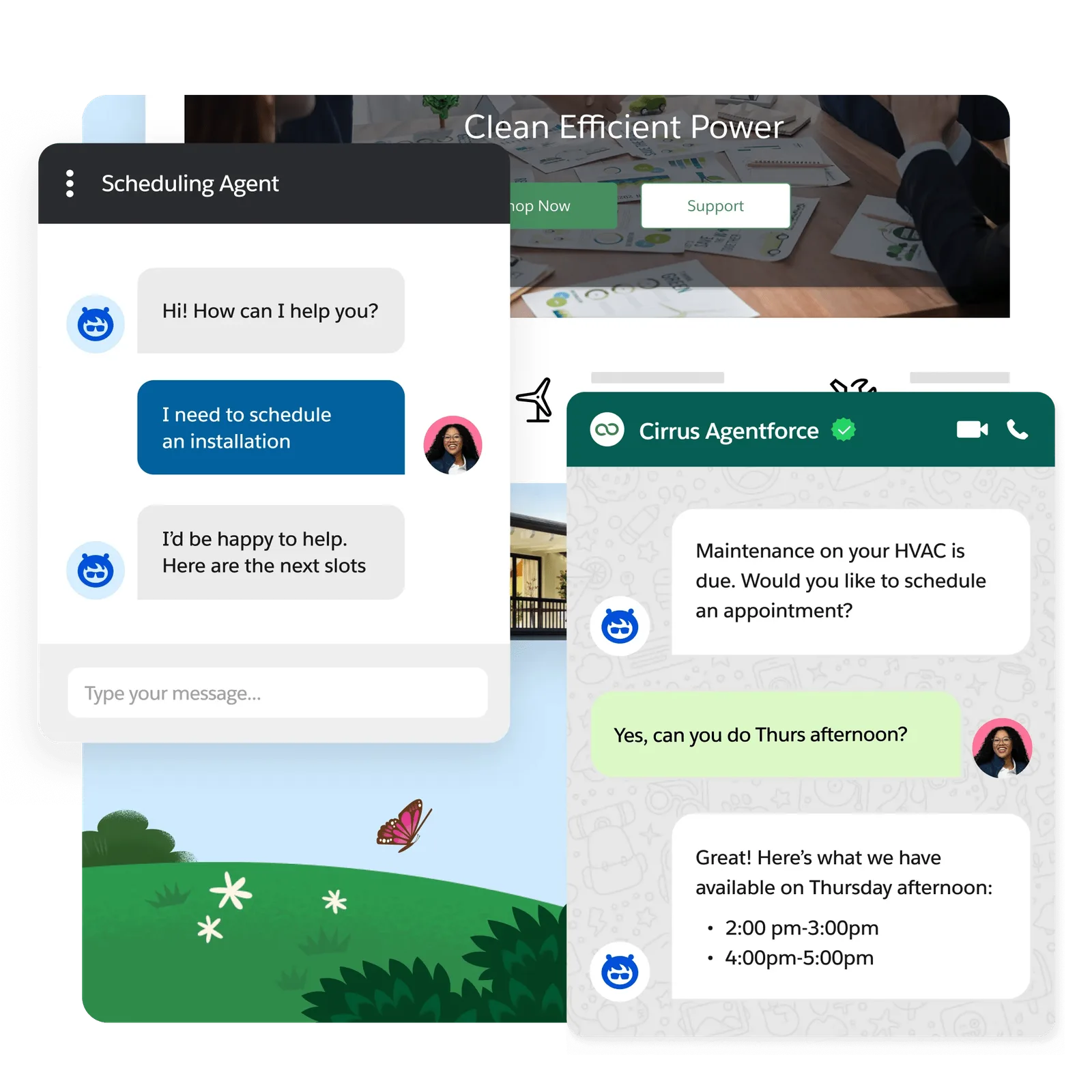
Diagnosis support, job summarisation and drafted reports, scoped so nothing commits an appointment, a quote or a warranty position on its own. See Agentforce implementation.
Reference architecture
This is the diagram we bring to the first workshop, and it explains why so many Field Service rescues never touch the scheduling engine. Read it upwards: optimisation consumes durations, travel, skills and capacity, so if any of those are wrong the engine faithfully produces a day nobody can complete. Mobile sits above it and inherits the same model. We design for Salesforce Well-Architected outcomes (Trusted, Easy and Adaptable) and document how Field Service relates to the ERP, inventory and asset systems that already hold parts of your truth. Every pattern depends on edition, region and GA status; your account team and the release notes remain authoritative.
SynconAI reference topology for workshops. Aligns with Salesforce Architects diagrams language; edition and region still govern what you can configure.
SynconAI Field Service stack
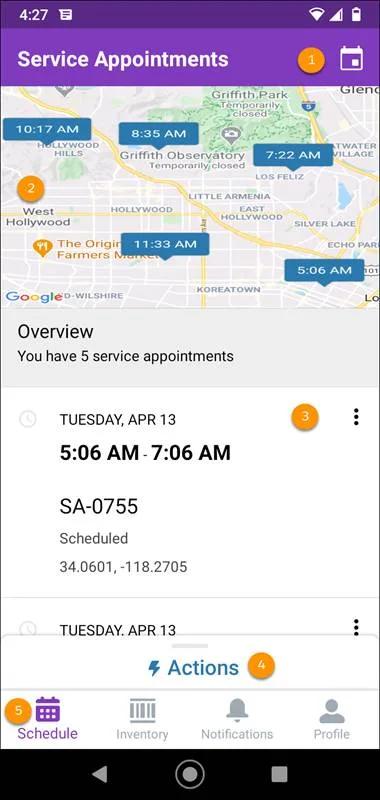
Mobile and offline
Two things stop technicians using the app, and neither is resistance to change. A five-minute repair carrying a fifteen-minute form gets completed in the car park, badly. And it fails in basements and plant rooms — lose an hour once and they return to paper.
Offline behaviour is designed up front, not discovered in the pilot. We decide what works with no signal, what syncs later, and what happens on conflict — then test it in the dead spots your technicians could list from memory.
Governed AI
Assistance on the job, never a promise made on your behalf
Work orders, assets, entitlements and service appointments stay on your data model; Agentforce is how Salesforce surfaces governed assistants on top of them. We scope agents using topics, actions and instructions your operations leadership can read out loud: asset history summarisation, likely-fault and parts suggestion from real history, procedure retrieval, and drafted service reports. Booking or moving an appointment, quoting, and anything that settles a warranty position stops at a named human, because each of those is a commitment to send someone to a physical address or to charge a customer. Availability follows your edition and region. Details on our Agentforce consulting page.
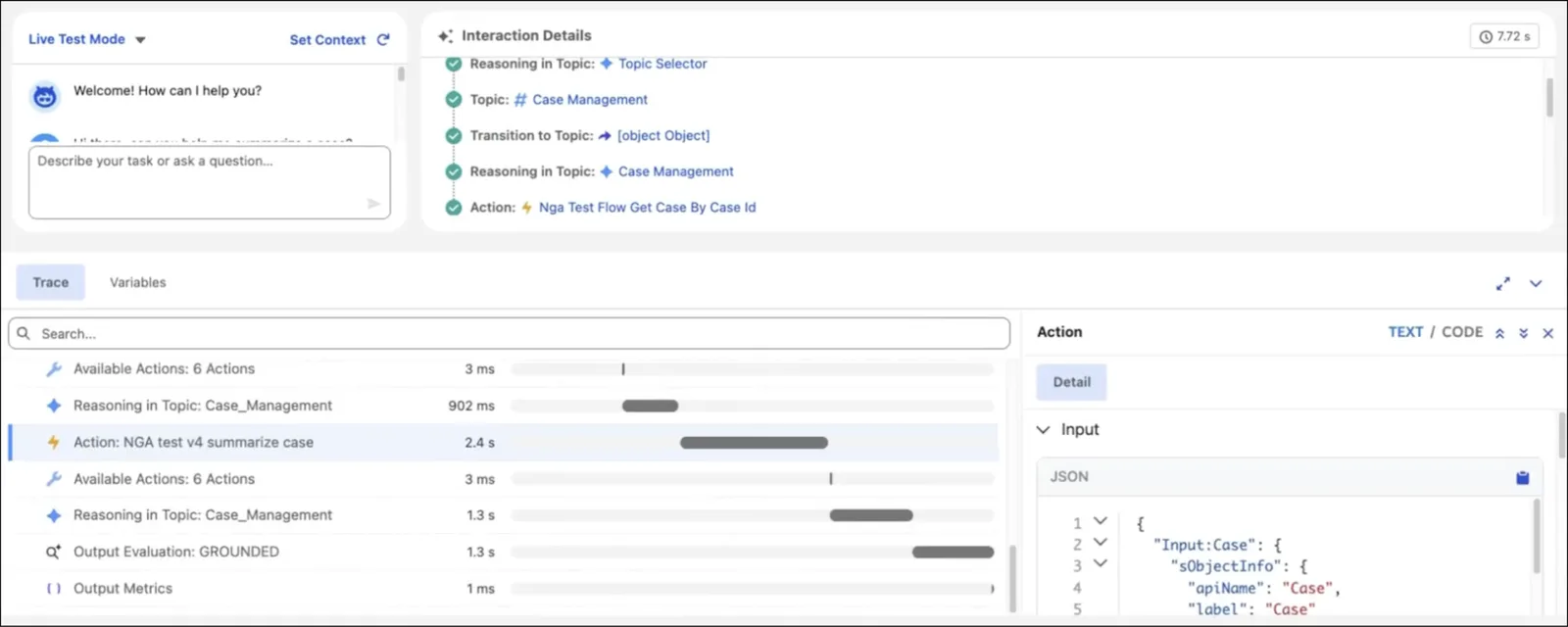
Three previous visits summarised into what the technician actually needs to know, so they arrive informed rather than cold. The cheapest first-time fix improvement available.
Suggested from what this asset and this fault code have needed before, so the van is more likely to leave the depot carrying the right thing.
The service report drafted from what was actually done, so the write-up stops happening at nine in the evening and the record stops being three words long.
Partnership criteria
Global integrators sell a transformation narrative. Contractors sell hours. SynconAI sells architect-led work on the operation you actually run: durations measured rather than assumed, a skills matrix people were willing to be honest in, mobile that survives a basement, and one territory proving it before anything touches the fleet. Learn more about our Salesforce consulting partner approach.
Estimated against actual duration, real travel against assumed, failed visits categorised. You keep the assessment whether or not you engage us, and it often shows the platform is fine.
Technicians and dispatchers can describe the failure precisely and are almost never asked. Their answers are consistent, specific, and cheaper to act on than any assumption.
Not caution, arithmetic. A wrong model discovered on one crew costs an afternoon; discovered across a fleet it costs a season of customer goodwill.
We decide what works with no signal before build, and test in the dead spots your technicians could list from memory rather than in an office with full coverage.
Hubs in Delaware, Sydney and Hyderabad, a named team on your business hours, and travel onsite for depot visits, go-lives and executive sessions.
The same architects for new territories, seasonal capacity, duration re-measurement and the releases, not a handover to a queue that never saw the depot.
Delivery method
Six beats we repeat on every engagement, with transparent gates and no surprise scope. Sponsors get measured inputs, named owners and one territory proving the model before the fleet sees it. Same method as our broader Salesforce consulting practice.
Estimated against actual duration by job type, real travel against assumed, failed visits categorised by reason, and time spent on the dispatch desk and in the van park. You keep the write-up either way.
Work order and asset model, service territories, and a skills matrix gathered in a way that lets people be honest. Plus the commercial trade-off between travel, overtime and SLA, decided by the people accountable for it.
Policies and optimisation objectives built on the measured inputs, with capacity and appointment windows set so the resulting day can genuinely be completed by the people who have to complete it.
Mobile flow, forms and evidence capture designed for gloved hands, bad light and no signal, with parts, warranty and entitlement joined to the job so the van leaves carrying what it needs.
One territory or crew running live on the new model, with first-time fix, travel and override rate measured before and after, and a rehearsed rollback with a named owner.
Hypercare, new territories, seasonal capacity, duration re-measurement on a cadence, and three releases a year absorbed as decisions. Optionally continue with managed services or ongoing Salesforce administration.

Client reviews
Verbatim reviews from SynconAI Salesforce and Agentforce engagements across the United States, Australia and globally. Anonymised clients are labelled by sector.
Salesforce Select Partner16+ architect certificationsDelivery across USA, Sydney & India
Simply Outstanding
“SynconAI Consulting are Simply the Best in the Business When it comes to Salesforce implementation and AI-powered solutions, SynconAI are in a league of their own. Their expertise, dedication, and ability to deliver results that truly move the needle sets them apart from every other consulting partner we've worked with. What they achieved with our Sales Cloud, Service Cloud, and custom Agentforce agent has completely transformed how we operate streamlining our pipelines and our customer service, and automating tasks that used to consume hours of our team's time. They don't just implement technology they transform businesses. If you want the best, you work with their team.”
“I had a very urgent deadline for our project reporting to be delivered and needed to build the module, dashboard and output reports in Salesforce. SynconAI were very responsive - they met with me online, responded to my emails quickly and took calls - whatever was needed to progress the work quickly. We are thrilled with the outcome and will continue to work with SynconAI in the future to continue to build our Salesforce capability and platform.”
“The team at SynconAI were fantastic, and promptly delivered on each project. They were able to guide us through every stage and made sure we were satisfied with the outcomes on multiple scopes of work.”
“They have been great and helping us transform out business by bringing what I conceptualize to life. Great at translating process/workflow needs into a solution. Been a pleasure work with and they're a critical part of our team and will be instrumental into bringing about my vision.”
“Working with SynconAI was a seamless and highly professional experience from start to finish. They took the time to deeply understand our business processes before designing and implementing a Salesforce solution tailored specifically to our operational needs. The team demonstrated strong technical expertise across Salesforce configuration, automation, integrations, reporting, and user experience design.”
Frequently asked questions
Straight answers about why dispatch overrides the optimiser, first-time fix, offline mobile, contractors, preventive maintenance, licensing and where we work.
Almost always because the optimiser was fed inputs it could not honour. It schedules exactly what you told it, so if travel time assumes empty roads and service durations came from a product sheet rather than a stopwatch, it produces a day nobody can physically complete. Dispatch overrides it once, then twice, and within a month the schedule is manual again and everyone concludes the optimiser does not work. We measure durations and travel before touching a policy, because that is where the fix actually is.
By working out why visits fail, which is normally three things: the wrong skill was dispatched, the part was not on the van, or the person arriving did not know what happened on the last visit. Each has a different fix, and each is answerable from your own history if the data is there. We chase first-time fix ahead of raw efficiency because a failed visit costs a second dispatch, a second travel leg and a customer who has now taken two days off work.
Two things. It asks for more than the job needs, so a five-minute repair carries a fifteen-minute form. And it fails where the work happens: basements, lift shafts, plant rooms, rural sites. Offline behaviour is a design decision made up front, not something discovered during the pilot. We design the mobile flow around gloved hands, bad light and no signal, then cut the data capture back to what someone downstream genuinely uses.
Yes, and it is worth designing deliberately rather than bolting on. Contractors need to receive work, see enough to do it, and provide evidence and cost back, without being given the run of your org. We model that access explicitly, and we treat their capacity as real capacity in the schedule rather than as an overflow tray that dispatch remembers to use when everything is already late.
Maintenance plans generate work from the asset, which is the right model, but the practical failure is bunching: every asset commissioned in the same quarter comes due in the same week, and the fleet cannot absorb it. We spread generation against real capacity. Asset history matters just as much, because a technician who can see the last three visits fixes things a technician arriving cold does not.
By making it explicit rather than letting the policy decide it silently. Optimisation objectives are weighted, and those weights encode a commercial choice: minimising travel will sometimes miss a window, and guaranteeing every window will sometimes cost overtime. We put the current trade-off in front of the people who own the P&L and the customer promise, because that decision belongs to them and not to a scheduling policy.
Salesforce, Field Service, Agentforce and Data 360 are trademarks of Salesforce, Inc. SynconAI is an independent certified Salesforce consulting partner and is not created by, affiliated with, or endorsed by Salesforce, Inc. Product screenshots are reproduced for illustrative purposes; the interface varies by edition and release.
Free architect conversation
60 seconds to brief us. A certified architect replies within one business day.
 Sales Cloud
 Service Cloud
 Field Service
 Experience Cloud
 Marketing Cloud Next
 Revenue Cloud AdvancedSalesforce CPQ
 Data 360
 Financial Services Cloud
 Nonprofit Cloud
 Health Cloud
 CRM Analytics & Einstein
 Agentforce