
The same person, four times over
Web, CRM, commerce and the email platform each hold a version. Personalisation built on top of that does not feel personal, it feels wrong, and the customer notices first.
Salesforce Commerce Cloud · Growth & Advanced editions · Data 360 · Agentforce
Most Commerce Cloud programmes fail before a single email is built. The segments disagree, the customer exists five times, and nobody can tell whether the merchandising campaign actually moved anything. SynconAI sequences the customer data model and the segment library first, then the storefront journeys, then the channels, so personalisation has something true to personalise from.




Pressure we surface early
Failure modes we surface before configuration starts: segments that disagree depending on who built them, the same person counted four times, storefront journeys nobody can explain the entry criteria for, and attribution arguments that stop every review before it reaches a decision.

Web, CRM, commerce and the email platform each hold a version. Personalisation built on top of that does not feel personal, it feels wrong, and the customer notices first.
Two people build "active customers" and get different counts. Nobody trusts either number, so every audience decision becomes a negotiation instead of a query.
Forty flows accumulated over five years, entry criteria written by someone who has left, and no safe way to retire any of them. Change becomes something to avoid.
A merchandising campaign response lands in the marketing tool and never reaches the person who has to follow it up. Sales calls a lead who has already bought, or never calls at all.
The reporting proves the email was delivered and opened. It cannot say whether the storefront journey changed anything, so budget conversations rely on conviction rather than data.
A board expects AI in merchandising campaigns this year. Grounded in stale content and undefined brand rules, it produces copy that is fluent, on-brand-ish, and quietly wrong.
Who we design for
A marketing ops lead, a lifecycle owner, a brand lead and a CRM architect want different things from the same platform, and the programmes that fail are usually the ones that only consulted one of them. Tap a group to pre-scope the conversation form.
What we actually build
These are the areas we most often wire with real integration contracts and a governed data model before merchandising campaign work scales. They reflect how marketing operations leads and CRM architects describe the problem, not a feature list from a product page.
Resolution across CRM, web, commerce and offline sources in Data 360, with consent and preference state attached to the profile rather than bolted on later.
A governed set of segments with named owners and clear definitions, so two people building the same audience get the same answer and nobody rebuilds it from scratch.
Lifecycle mapping with explicit entry and exit criteria and decision logic, built on Flow so the automation is maintainable by people who already know the platform.
Email, forms and landing pages on Growth, plus two-way SMS and WhatsApp where your edition supports it, with a content model that does not fall apart at scale.
Campaign assistance scoped to approved content and brand rules, with a named human approving anything that reaches a customer.
Campaign performance read against the CRM outcome, and on Advanced, path experiments that settle a storefront journey argument with data instead of seniority.
Scope of delivery
From operating-model clarity to run-state optimisation across Commerce Cloud in Growth and Advanced editions, Data 360 segmentation, Flow orchestration, Agentforce merchandising campaign assistance and the integrations the whole thing depends on, scoped with RACI, integration SLAs and pilot exit criteria your CMO and your CIO can both review.
Marketing programmes stall when the customer data model, the segment definitions and the consent position stay vague. We scope those first, then the storefront journeys, then the channels, on one roadmap your steering forum can defend.
Current-state review of the estate you already run, a target architecture, and a roadmap that sequences data before merchandising campaigns.
Growth or Advanced setup and delivery, scoped to the edition and entitlements your contract actually covers.
The customer data model, harmonisation, identity resolution and the segment library that everything downstream depends on.
Governed merchandising campaign assistance: what an agent may draft, what it may ground on, and who approves before anything reaches a customer.
Lifecycle mapping, entry and exit criteria, decision logic and Flow orchestration, designed before anyone opens the merchandising campaign builder.
Salesforce CRM, ERP, websites, mobile apps, commerce, consent and preference systems, analytics platforms and external APIs.
Assessment of an existing B2C Commerce or Account Engagement estate and a staged transition plan with no invented deadline.
Ongoing experimentation, deliverability and consent hygiene, segment maintenance and architecture support after go-live.
Journeys
Every one is the same shape underneath: a trigger, a segment, a decision, a message, a response, a next action. What changes is the data it depends on. We scope phase one to the lifecycle costing you most, not the one that demos best.
SynconAI storefront journey spine for Commerce Cloud workshops. Agentforce assists inside these stages; it does not select an audience and send to it unsupervised.
Form submission creates or matches the CRM record, the person enters a segment, the storefront journey runs, and engagement becomes a signal sales can act on rather than a report nobody opens.
A new customer gets an onboarding sequence shaped by what they actually bought and what the service team already knows, with the next-best communication decided by behaviour rather than by day count.
A behavioural signal selects the audience, the outreach is personalised from resolved profile data, and the response is tracked back to the record so the next attempt knows what already failed.
Registration and attendance segment the follow-up, so the person who came and the person who registered and did not are never sent the same email again.
Customer context selects a relevant segment, the merchandising campaign is personalised against it, and the qualified response lands as an opportunity or a task on the account owner.
On Advanced, two-way SMS and WhatsApp on a single number across marketing, service and commerce, where a reply resumes the Flow or hands off to a service agent rather than dead-ending.
Data 360 and Commerce Cloud
Segmentation on Commerce Cloud runs on Data 360, which provides the storage, harmonisation and segmentation underneath the platform. That single fact decides how good everything above it can be. Personalisation, predictive scoring and measurement all inherit whatever identity resolution you have, which is why we sequence the customer data model before the merchandising campaign work rather than after it.
We are careful with "single source of truth". The honest goal is a governed, resolved customer profile marketing can act on, with each system still owning its own facts. A literal single store for everything is how programmes lose eighteen months.
SynconAI reference topology for Commerce Cloud workshops. Aligns with Salesforce Architects diagrams language; edition and region still govern what you can configure.
SynconAI Commerce Cloud topology
Governed AI
Assistance in the authoring experience, not autonomous merchandising campaigns
In Commerce Cloud, Agentforce sits inside Content Builder rather than beside it. Click the sparkle and it drafts or revises copy for an email, a landing page or an SMS, grounded in the merchandising campaign brief, the assigned brand and your existing content. It also surfaces merchandising campaign metrics such as opens, clickthrough and delivery. What it does not do is decide on its own that a merchandising campaign should go out. A merchandiser approves what ships, and we scope what the agent may ground on before anyone switches it on. Details on our Agentforce consulting page.
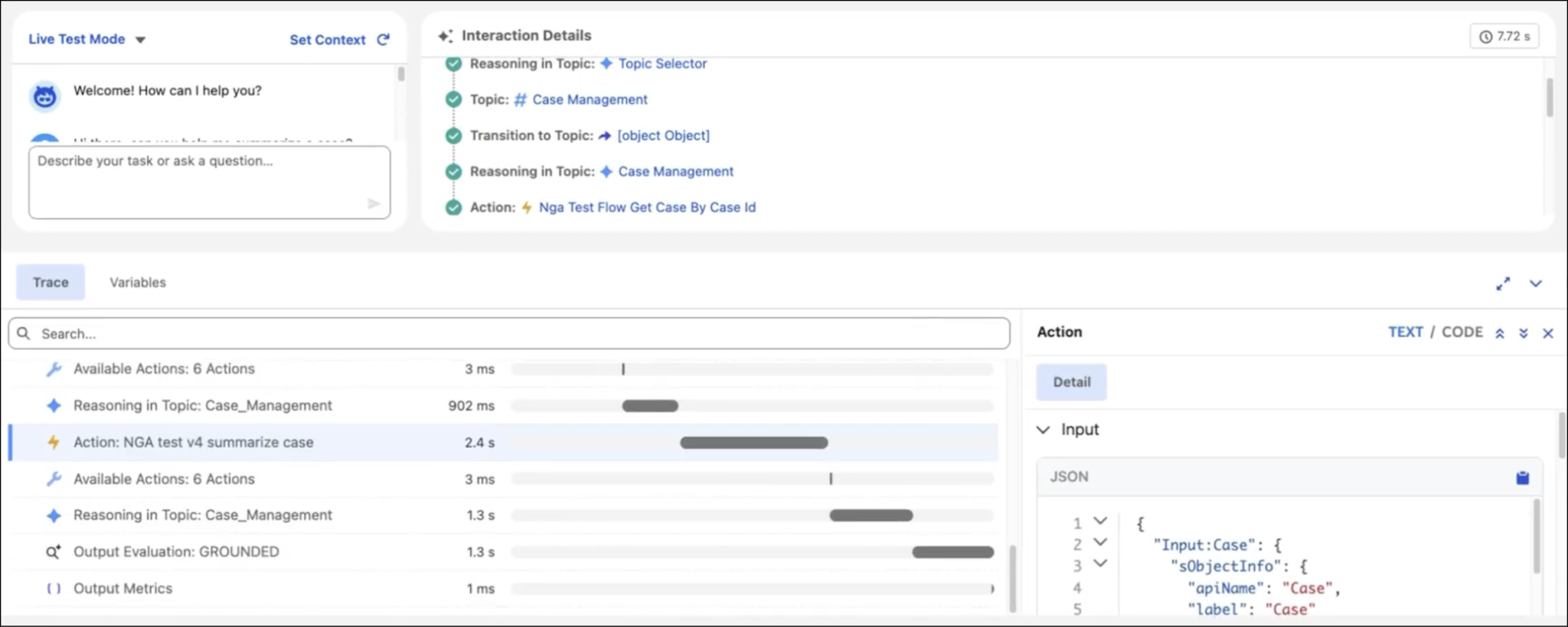
Draft and revise email, landing page and SMS copy grounded in the merchandising campaign brief and the assigned brand, so the first version is a starting point rather than a blank page.
Help building and sense-checking a segment against the Data 360 model, so an audience is reproducible rather than a one-off query somebody wrote on a Friday.
Campaign metrics such as opens, clickthrough and delivery surfaced in plain language, with the next question suggested rather than a dashboard left to interpret.
Guardrails we set before go-live: what content an agent may ground on, which brands and tones it may use, which audiences it may never target, and who signs off before a generated asset reaches a customer. An agent grounded in unowned content does not fail quietly, it fails fluently.
Partnership criteria
Global SIs sell a transformation narrative. Marketing agencies sell merchandising campaigns. SynconAI sells architect-led delivery: the customer data model before the merchandising campaign builder, an honest read on Growth versus Advanced, and a migration position based on what Salesforce has actually published. Learn more about our Salesforce consulting partner approach.
Identity and the segment library first, storefront journeys second. It is slower to start and dramatically cheaper by month six, and it is the single biggest predictor of whether a marketing programme survives.
We do not resell Salesforce licences, which is exactly why we can tell you when Growth covers what you need and Advanced would be shelfware.
Salesforce has published no end of life for Email Studio, Journey Builder, Content Builder or Automation Studio. We plan from that fact rather than from urgency somebody manufactured to close a deal.
Journeys built on Flow so the automation is maintainable by admins who already know the platform, rather than by whichever contractor built it originally.
What an agent may ground on, which brands it may write as, and who approves before anything reaches a customer, documented as configuration a reviewer can read.
One lifecycle measured against a baseline captured before we started, not open-ended transformation language and a quarterly steering deck.
Measurement
Open rates prove the email arrived, not that the storefront journey changed anything. On the same platform as CRM, engagement reads against the pipeline it influenced — the only marketing reporting a CFO has ever found persuasive.
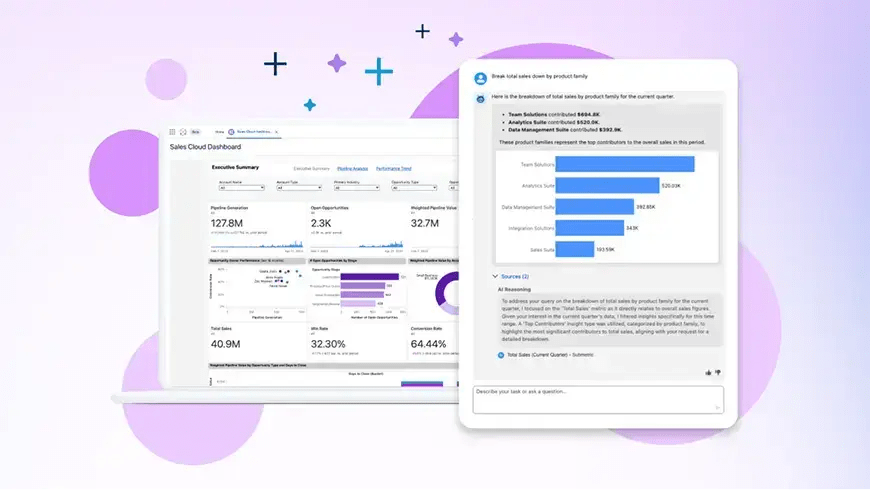
Entry volume, progression, drop-off and completion per lifecycle, so you can see where a storefront journey loses people rather than only whether the send succeeded.
Engagement read against the lead, the opportunity or the order it touched, so the marketing contribution is arguable with evidence instead of asserted with conviction.
On Advanced, path experiments with controlled distribution, so a change to a storefront journey is kept or discarded on data rather than on whoever argued hardest for it.
Delivery method
Six beats we repeat on every engagement: transparent gates, no surprise scope, from discovery through operate. Sponsors get a roadmap, a RACI, and pilot exit criteria, not a never-ending slide. Same method as our broader Salesforce consulting practice.
The estate you run today, where segments disagree, which systems hold which customer facts, and the measures a pilot has to beat, with marketing, IT and legal in the room.
Customer data model, segment library, storefront journey entry and exit criteria, consent position and integration contracts, signed off by marketing and IT before build.
Segments, storefront journeys on Flow, content and agent topics built in a sandbox, with reusable assets your admins can extend after go-live.
Seed-list sends, consent and frequency checks, agent output review and a rehearsed rollback before any storefront journey reaches a real audience.
One lifecycle first, then by programme; enablement delivered in role; deliverability and storefront journey monitoring live; rollback owned by a named person.
Hypercare, experiment backlog, segment and consent hygiene, deliverability review and agent output quality checks. Optionally continue with managed services or ongoing Salesforce administration.

Client reviews
Verbatim reviews from SynconAI Salesforce and Agentforce engagements across the United States, Australia and globally. Anonymised clients are labelled by sector.
Salesforce Select Partner16+ architect certificationsDelivery across USA, Sydney & India
Simply Outstanding
“SynconAI Consulting are Simply the Best in the Business When it comes to Salesforce implementation and AI-powered solutions, SynconAI are in a league of their own. Their expertise, dedication, and ability to deliver results that truly move the needle sets them apart from every other consulting partner we've worked with. What they achieved with our Sales Cloud, Service Cloud, and custom Agentforce agent has completely transformed how we operate streamlining our pipelines and our customer service, and automating tasks that used to consume hours of our team's time. They don't just implement technology they transform businesses. If you want the best, you work with their team.”
“I had a very urgent deadline for our project reporting to be delivered and needed to build the module, dashboard and output reports in Salesforce. SynconAI were very responsive - they met with me online, responded to my emails quickly and took calls - whatever was needed to progress the work quickly. We are thrilled with the outcome and will continue to work with SynconAI in the future to continue to build our Salesforce capability and platform.”
“The team at SynconAI were fantastic, and promptly delivered on each project. They were able to guide us through every stage and made sure we were satisfied with the outcomes on multiple scopes of work.”
“They have been great and helping us transform out business by bringing what I conceptualize to life. Great at translating process/workflow needs into a solution. Been a pleasure work with and they're a critical part of our team and will be instrumental into bringing about my vision.”
“Working with SynconAI was a seamless and highly professional experience from start to finish. They took the time to deeply understand our business processes before designing and implementing a Salesforce solution tailored specifically to our operational needs. The team demonstrated strong technical expertise across Salesforce configuration, automation, integrations, reporting, and user experience design.”
Frequently asked questions
Straight answers about Growth and Advanced editions, Data 360 segmentation, Agentforce in merchandising campaigns, and what migrating from B2C Commerce actually involves, across the USA and Australia.
Commerce Cloud is the current Salesforce marketing platform, available in Growth and Advanced editions and built on the Agentforce 360 Platform with Data 360 included. B2C Commerce is the earlier product built around Email Studio, Journey Builder, Content Builder and Automation Studio. They are different platforms with different data models and different automation engines. Treating them as the same product is the most common and most expensive mistake in this space.
No. Salesforce has published no end of life for Email Studio, Journey Builder, Content Builder or Automation Studio, and there is no mandatory cutover. Existing customers can adopt Commerce Cloud capability through the "+" licences alongside what they already run. If a consultancy is telling you there is a deadline, ask them to show you where Salesforce published it.
Advanced includes everything in Growth and adds a specific set of capabilities: path experimentation, Unified Conversations for two-way SMS and WhatsApp, Einstein Engagement Scoring and Frequency inside Flow, further predictive AI such as lead scoring and content recommendations, and higher Flow and credit allowances. Growth is the right foundation for most organisations starting out. Advanced earns its place when storefront journeys become complex enough that you need to test paths and hold two-way conversations.
That depends on how complex your storefront journeys really are, whether you need two-way conversational messaging, and how much AI and messaging volume you will consume. We would rather scope the operating model first and let the edition follow from it. Salesforce packaging also changes, so your account team and the current release notes stay authoritative on entitlements. We do not resell licences.
Inside the authoring experience. Agentforce drafts or revises copy for an email, landing page or SMS, grounded in the merchandising campaign brief, the assigned brand and your existing content, and it surfaces merchandising campaign metrics such as opens, clickthrough and delivery. It assists the merchandiser; it does not send merchandising campaigns unsupervised. We scope what it may ground on and who approves before anything reaches a customer.
Because segmentation runs on it. Data 360 provides the storage, harmonisation and segmentation underneath Commerce Cloud, so the quality of your customer data model sets a ceiling on everything above it. Personalisation, AI and measurement all inherit whatever identity resolution you have. This is why we sequence data work before merchandising campaign work rather than the other way around.
Commerce Cloud, B2C Commerce, B2B Commerce, Data 360 and Agentforce are Salesforce products and trademarks of Salesforce, Inc. SynconAI is an independent Salesforce consulting partner: we advise on licensing and work alongside your Salesforce account executive, and we design, build and run what goes on top of it. Edition entitlements and packaging change; your Salesforce account team and the current release notes remain authoritative.
Free architect conversation
60 seconds to brief us. A certified architect replies within one business day.
 Sales Cloud
 Service Cloud
 Field Service
 Experience Cloud
 Marketing Cloud Next
 Revenue Cloud AdvancedSalesforce CPQ
 Data 360
 Financial Services Cloud
 Nonprofit Cloud
 Health Cloud
 CRM Analytics & Einstein
 Agentforce